
Find the Right Fireplace for Your Falls Church Home.
Wood, gas, pellet, and electric fireplace resources for Falls Church and the surrounding Northern Virginia communities—from historic masonry conversions to condo-friendly electric units. Find the right option and connect with a trusted local hearth retailer.
Every Project Starts From One of These Five Situations
Mild winters and historic homes across Falls Church, Virginia.
Falls Church is one of Virginia's smallest independent cities—just over two square miles inside the Capital Beltway, with a population of roughly 14,576. Winters here are moderate compared to much of the country: average lows sit around 26°F and the city has a winter heating load that's just a fraction of what colder markets like Duluth, MN or Burlington, VT see each winter. Much of the housing stock is mid-century colonials, capes, and brick rowhouses built with existing masonry fireplaces, and oak, hickory, and maple remain the dominant local firewood species for households that still burn wood seasonally.
This hub rolls up hearth retailers, service technicians, and fuel suppliers covering Falls Church and the immediately surrounding Northern Virginia communities that share its zip codes and Metro corridor—West Falls Church, East Falls Church, and the edges of Arlington and Fairfax County. Pick a fuel below to see local dealers, real installation costs, and unit recommendations suited to the city's older housing stock and tight urban lots.
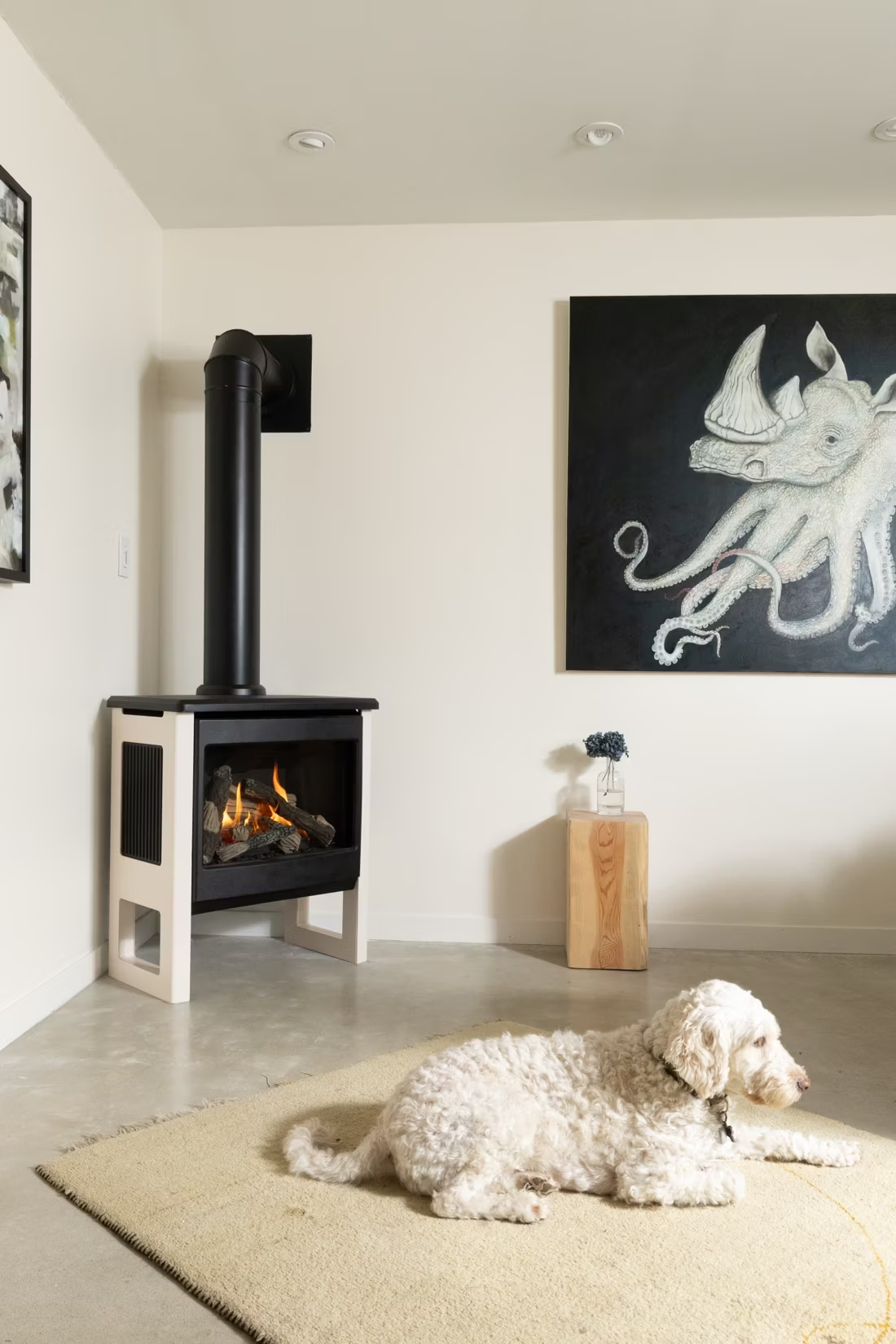
Four fuels. One honest answer for Falls Church County.
Wood
81 models available near Falls Church County.
Find your wood stove →Gas
365 models available near Falls Church County.
Find your gas fireplace →Pellet
See what's available near Falls Church County.
Find your pellet stove →Electric
11 models available near Falls Church County.
Find your electric fireplace →Three steps. No salesperson until you're ready.
Tell us about your project
Your zip code, your situation, and the fuel you're leaning toward—or let the answers point you to one.
See what's actually available
The brands dealers within 100 miles genuinely carry—real options, never a catalog mirage.
Get your dealer & Project Guide
A trusted local dealer, plus the free Project Guide & Parts List that names every component of the job.
Frequently Asked Questions
Which fuel heats a Falls Church home best?
Falls Church's climate is comparatively mild—winter lows average around 26°F and the city's winter heating load is well under half of what a place like Burlington, VT sees. That means no single fuel dominates the way wood does in colder mountain counties. Gas is the most common primary or supplemental choice for city rowhouses and colonials with existing service from Washington Gas—instant heat, no chimney maintenance, and easy conversion of an existing masonry fireplace to a gas insert. Wood remains popular for ambiance and occasional heat in older homes with existing brick chimneys, and oak, hickory, and maple are the local firewood staples. Pellet works well for homeowners who want wood-like heat without the woodpile, though small lot sizes in the city limit storage—brands like Energex, Hamer Pellet Fuel, and Greene Team Pellet Fuel supply the region. Electric is a strong fit for condos and townhomes near the West Falls Church and East Falls Church Metro corridors where chimney access isn't an option.
Do I need a permit to install a fireplace in Falls Church?
Yes, in nearly every case. As an independent city, Falls Church issues its own building permits rather than routing through a county office—work goes through the City of Falls Church's building permits division. New wood stoves, wood inserts, gas fireplaces, gas inserts, gas stoves, and pellet stoves all require a permit, and gas work also needs a licensed gas-fitter and a separate gas line permit. Many of the city's colonials and capes were built with existing masonry fireplaces; converting one to a gas insert still requires permitting even though you're not adding new venting from scratch. Electric fireplaces typically skip the permit unless you're hardwiring a built-in unit into a new circuit. Most local hearth retailers pull the permit as part of the installation quote.
Are there air quality restrictions on wood burning in Falls Church?
No—Falls Church isn't designated a non-attainment area and doesn't have a winter inversion problem the way basin cities out West do, so there are no mandatory or voluntary burn-curtailment days tied to wood smoke. That said, any new wood stove or insert installed in the city still needs to meet EPA 2020 NSPS emissions standards, and Virginia's general open-burning rules (which mostly target yard debris, not indoor appliances) don't affect fireplace use. If you're converting an existing masonry fireplace, a WETT- or NFI-certified inspection before use is a smart step given how much of Falls Church's housing stock predates modern chimney codes.
Can one local retailer handle all four fuel types?
Given Falls Church's small footprint, most homeowners end up working with a hearth retailer based in a neighboring Northern Virginia community—Arlington, Vienna, or Fairfax—that covers the city as part of its service area. Retailers that stock wood, gas, and pellet displays are common; fewer carry a dedicated electric fireplace showroom, since electric units are often ordered direct-to-install for condos and smaller spaces. If you're comparing fuels side by side, look for a dealer with working display units of at least three fuel types so you can see real flame characteristics before deciding.
How does installation work in a dense, small-lot city like Falls Church?
Falls Church's rowhouses, capes, and townhomes near the West Falls Church and East Falls Church Metro stops present different install challenges than a rural county—tight setbacks, shared walls, and limited attic or crawlspace access for venting runs. For gas conversions of existing masonry fireplaces, that usually means running a direct-vent or B-vent line through an existing flue rather than a new chimney. For pellet stoves, storage space for a ton of pellets is a real constraint on smaller lots. Local technicians who regularly work in the city's older housing stock know how to route venting through tight wall cavities and coordinate with the city's inspection process—worth asking about that experience directly when booking.
What's the typical cost range for fireplace installation across fuel types in Falls Church?
Costs run close to broader Northern Virginia and DC-metro pricing, which tends to run a bit above national averages due to labor rates. Wood stove or insert: roughly $4,800–$9,500 for a typical masonry-to-insert conversion. Gas fireplace, insert, or stove: $5,500–$12,000 depending on whether you're running new gas line from an existing Washington Gas service or converting an existing masonry firebox. Pellet stove or insert: $4,500–$8,000. Electric fireplace: $250–$3,200 for the unit itself, plus $400–$1,300 in labor for anything beyond a plug-and-play wall unit—common in condo and townhome installs where no chimney exists. Get a firm quote from a local dealer before budgeting, since older Falls Church homes sometimes need extra flue or structural work.
Can a fireplace actually lower my heating bill?
Yes—by creating a comfort zone. A furnace heats every square foot of the house just to warm the one room you're in; a gas fireplace on low burns roughly a sixth of the gas a typical furnace does. Set the furnace around 55–60 degrees as a baseline, then heat the rooms your family actually uses. Families who heat this way commonly save $20–$60 a month.
Does a fireplace add value to my home?
On average, a fireplace adds back to the home about the same amount you spent installing it. Add the monthly savings from heating the rooms you actually use instead of the whole house—often hundreds of dollars a year—and the value case is strong before you even count what a fire does for how your family uses the room.
What is an in-home preview and do I need one?
It's a visit where a hearth professional measures your space, confirms the model you picked actually works in your home, and walks the specs—framing, gas line, venting, finish work—before anything is ordered. Some details you just can't know until you see the house. Never make a down payment without one; it's the single most-skipped step that burns buyers.
How much should I budget for a fireplace?
For an average home—covering the fireplace, the vent pipe, and basic installation—a budget between $3,900 and $5,500 gives you a lot of options across wood, gas, and pellet. By the time you add finish work, gas line, and electrical, the average complete installation lands between $5,000 and $12,000 all-in. In a remodel or new build, a good rule is to put about 2.5% of the total project cost toward the fireplace.
Stove and Fireplace Dealers in Falls Church County
Listings include WhyFire partner dealers, dealers we have verified as authorized for the brands we recommend, and established local businesses that carry hearth products. Every listing shows which one it is. The ones marked Preferred run on WhyFire's software, so they can show you real pricing and book your appointment right here. No manufacturer pays for placement. How we verify dealers →
Cyprus Air, Indoor Comfort
Aspen Green Gasworks
Genesis Chimney Services
Cyprus Air
Costello's Hearth & Spa - Rockville
Lawn & Leisure
Homeliving Fireplaces
Capitol Chimney Service
Nova Fireplace And Stove
Chimney.com
The Fireplace Shop
Deckscapes Of Virginia
Fireside Hearth & Home - Manassas
Winston's Chimney Service
Tri-County Hearth & Patio
Belair Engineering & Service Co, Inc
Chelsea's Chimney
Masters Pellet Stoves
Find your fireplace match in Falls Church.
Tell us about your home and fuel preference, and we'll match you with a trusted local dealer and send a free Project Guide & Parts List—the exact parts, vent kit, and recommended installer for your Falls Church project.
Find Your Fireplace →