
Find the right fireplace for your home along the Rappahannock.
Wood, gas, pellet, and electric fireplace resources for Tappahannock, Dunnsville, Center Cross, Loretto, and the rest of Essex County. Find the right unit for your home and get matched with a trusted local hearth retailer.
Every Project Starts From One of These Five Situations
Mild winters, hardwood heat traditions in Essex County, Virginia.
Essex County sits on the Middle Peninsula along the tidal Rappahannock River, a landscape of farmland, hardwood woodlots, and small river communities. Climate zone 4A here means a mixed-humid winter—average lows around 28°F and a winter heating load less than half of what a place like Duluth, MN sees in a typical season. That's a climate where a fireplace or stove is a genuine comfort upgrade rather than a survival necessity, and it's part of why so many homes here run a single stove or insert to take the edge off cold nights rather than heat the whole house around the clock. The county's mixed hardwood forests and farm woodlots produce plenty of oak, hickory, and maple—dense, long-burning species that split well and have supplied local wood stoves for generations, often self-cut or sourced from a neighbor's land rather than hauled in from a public forest.
This hub rolls up hearth retailers, service technicians, and fuel suppliers for the whole county—a small, rural population spread across Tappahannock, Dunnsville, Center Cross, Loretto, and the farms and river lots in between. Pick your fuel below to see local dealers, typical installation costs, and the units that fit a home like yours, whether it's a farmhouse heating with a wood insert or a river cottage running a propane fireplace for weekend warmth.
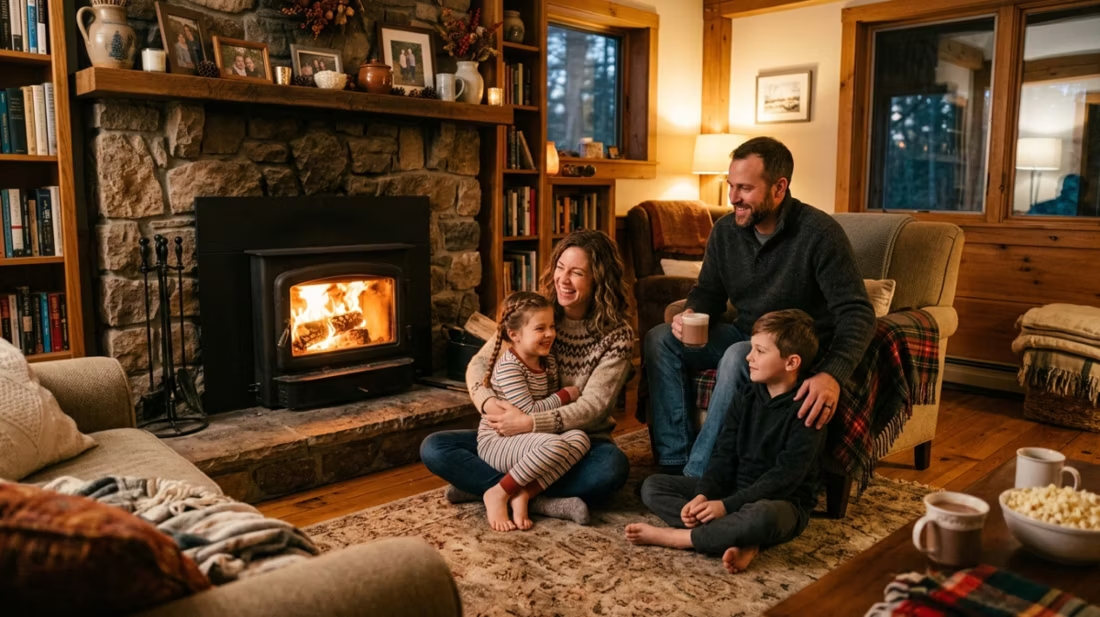
Four fuels. One honest answer for Essex County.
Three steps. No salesperson until you're ready.
Tell us about your project
Your zip code, your situation, and the fuel you're leaning toward—or let the answers point you to one.
See what's actually available
The brands dealers within 100 miles genuinely carry—real options, never a catalog mirage.
Get your dealer & Project Guide
A trusted local dealer, plus the free Project Guide & Parts List that names every component of the job.
Frequently Asked Questions
Which fuel works best in Essex County?
It depends on your home and how you plan to use it. Wood is a strong fit given the county's oak, hickory, and maple woodlots—a lot of Essex County homes still burn self-cut or neighbor-cut firewood, and with a fairly mild winter heating load and average lows near 28°F, a mid-size wood stove or insert is plenty for most houses without running constantly. Gas is the low-maintenance option—since piped natural gas is limited in a rural county like this, most gas installs here run on propane, which still gives you instant heat and thermostat control without a chimney or wood supply to manage. Pellet is a solid middle ground, especially with regional brands like Energex, Hamer Pellet Fuel, and Greene Team Pellet Fuel stocked at area suppliers—less labor than splitting wood, similar cozy look. Electric works well for supplemental warmth in a bedroom or sunroom, and given how mild the winters run here, an electric insert can genuinely carry a smaller room through most of the season on its own.
Do I need a permit to install a fireplace in Essex County?
In most cases, yes. New wood stoves, wood inserts, gas fireplaces, gas inserts, and pellet stoves typically require a building permit through the Essex County building permit office, and any propane line work needs a licensed gas-fitter and its own permit. Wood-burning appliances should meet current EPA emissions standards to pass inspection. Since Essex County has no national forest land requiring a separate cutting permit, most firewood here comes from private woodlots or local tree services rather than a public-land permit process—one less step than counties near national forest boundaries. Electric fireplaces usually skip the permit unless you're doing a built-in installation with new wiring. Most local retailers handle the paperwork as part of the install, so you're not filing it yourself.
Are there air quality restrictions on wood burning in Essex County?
No—Essex County doesn't have the winter inversion or non-attainment issues that trigger burn advisories in some parts of the country. There's no formal curtailment program here, and you won't find yellow or red burn-day alerts tied to this county. That said, it's still a good idea to burn seasoned, dry oak or hickory rather than green wood—it burns cleaner, produces less visible smoke for neighbors on nearby river lots, and gets more heat per log. New stove installations are still expected to meet EPA emissions standards even without a local air-quality mandate driving that requirement.
Can one local hearth retailer handle all four fuel types?
Some can, though given the county's small population, the retailers with the broadest fuel lineup—wood, gas, pellet, and electric—tend to be based in a nearby regional hub like Fredericksburg and service Essex County as part of a wider territory. A retailer focused more narrowly on wood and pellet stoves may be a better fit if you're specifically after a hardwood-burning setup, while a propane specialist is the better call for gas work given the lack of piped natural gas out here. If you're not sure which fuel fits your home yet, a multi-fuel dealer can walk you through working displays and the trade-offs for a rural Rappahannock-area property specifically.
How does fireplace service work in a small, rural county like this?
Most technicians serving Essex County are based outside it—in Fredericksburg or other regional centers—and travel in for chimney sweeps, gas inspections, and pellet stove service. Expect a modest travel fee for calls out to river lots and farm properties, and expect to book ahead: pre-season appointments in late summer and early fall are far easier to land than a January emergency call. Given the drive time involved, it's worth scheduling your annual wood-chimney sweep or gas inspection early, and keeping basic spares—batteries for a gas IPI system, a spare pellet auger belt—on hand rather than waiting on a same-week technician visit.
What's the typical cost range for fireplace installation across all fuel types in Essex County?
Ranges vary by fuel and by how much venting or gas-line work is involved. Wood stove or insert installation: roughly $4,000–$8,500 for a typical setup burning local oak or hickory, more if new chimney construction is needed. Gas fireplace, insert, or stove: roughly $4,500–$10,000, with propane tank setup and line work pushing toward the higher end for homes without existing service. Pellet stove or insert: roughly $4,000–$7,000 for most installs. Electric fireplace: $200–$3,000 for the unit itself, plus $400–$1,200 in labor for anything beyond a plug-and-play wall unit. Because retailers here often travel from outside the county, ask upfront whether a trip fee is folded into the installation quote.
Can a fireplace actually lower my heating bill?
Yes—by creating a comfort zone. A furnace heats every square foot of the house just to warm the one room you're in; a gas fireplace on low burns roughly a sixth of the gas a typical furnace does. Set the furnace around 55–60 degrees as a baseline, then heat the rooms your family actually uses. Families who heat this way commonly save $20–$60 a month.
What are the biggest mistakes people make buying a fireplace?
Five come up constantly: budgeting for the unit but not the full job (vent, gas line, electrical, finish work); drowning in options instead of starting from style and fuel; buying without an in-home preview; handing installation to a handyman instead of a pro; and giving up out of sheer indecision. Every one is avoidable with a clear plan—step one, step two, step three.
Wood, gas, pellet, or electric—how do I choose?
Match the fuel to your life, not the other way around. Wood: lowest fuel cost and total power-outage independence, but you're hauling and stacking. Gas: press a button, set a thermostat, no maintenance to speak of. Pellet: wood economics with automatic feeding, in exchange for weekly cleaning and a need for electricity. Electric: plugs in anywhere with honest supplemental heat. Nobody regrets the fuel that fits how they actually live.
Can I install a fireplace myself?
If you're putting a fire in your house on purpose, it's best to work with an expert. Unless you're genuinely experienced in framing, gas line, vent pipe, and the national code on clearances to combustibles, have a professional do it—and ideally the same company that sells you the fireplace, so warranty, service, and liability all live under one roof.
Stove and Fireplace Dealers in Essex County
Listings include WhyFire partner dealers, dealers we have verified as authorized for the brands we recommend, and established local businesses that carry hearth products. Every listing shows which one it is. The ones marked Preferred run on WhyFire's software, so they can show you real pricing and book your appointment right here. No manufacturer pays for placement. How we verify dealers →
Holtzman Propane
Old Town Stove & Hearth
Nwp Energy
Taylors Gas Company
Hearth & Home Shoppe
Studley Stove And Hearth
Phillips Energy,Inc - Providence Forge
Gas Fireplace Service Of Stafford
Southern States Cooperative
Find your fireplace project in Essex County.
Pick your fuel below and I'll match you with a trusted local dealer and send over a free Project Guide & Parts List—the exact parts, vent kit included, and the dealer I'd recommend for your home.
Find Your Fireplace →