
Heat Your Home Along the James River, Any Season.
Wood, gas, pellet, and electric fireplace resources for every farm, plantation home, and rural community in Charles City County—from the courthouse village to Ruthville and Providence Forge. Find the right unit and connect with a trusted local hearth retailer.
Every Project Starts From One of These Five Situations
Wood heat and colonial roots along Charles City County's James River shore.
Charles City County sits in Virginia's Tidewater, a narrow stretch of farmland and forest wedged along the James River between Richmond and Williamsburg. Climate zone 4A means winters here are moderate compared to the sub-zero stretches of Burlington, VT—most cold snaps sit in the 20s and 30s rather than below zero—but heating season still runs from November into March, and the county's oak, hickory, and maple hardwood stands have fueled wood stoves and open hearths since the plantation era. Homes here range from working farmhouses to 18th-century estates like Shirley Plantation and Berkeley Plantation, many with original masonry chimneys still in use.
What you'll find on this hub: hearth retailers, service technicians, and fuel suppliers who cover the county's small, spread-out communities—Charles City, Ruthville, Providence Forge, and the farms and river-adjacent properties in between. Because Charles City County is one of Virginia's most sparsely populated counties, many of the retailers and technicians listed here are based just outside the county line in Richmond, Williamsburg, or New Kent and travel in for consultations and installs. Pick your fuel below to see local dealers, typical installation costs, and recommended units for your specific project.
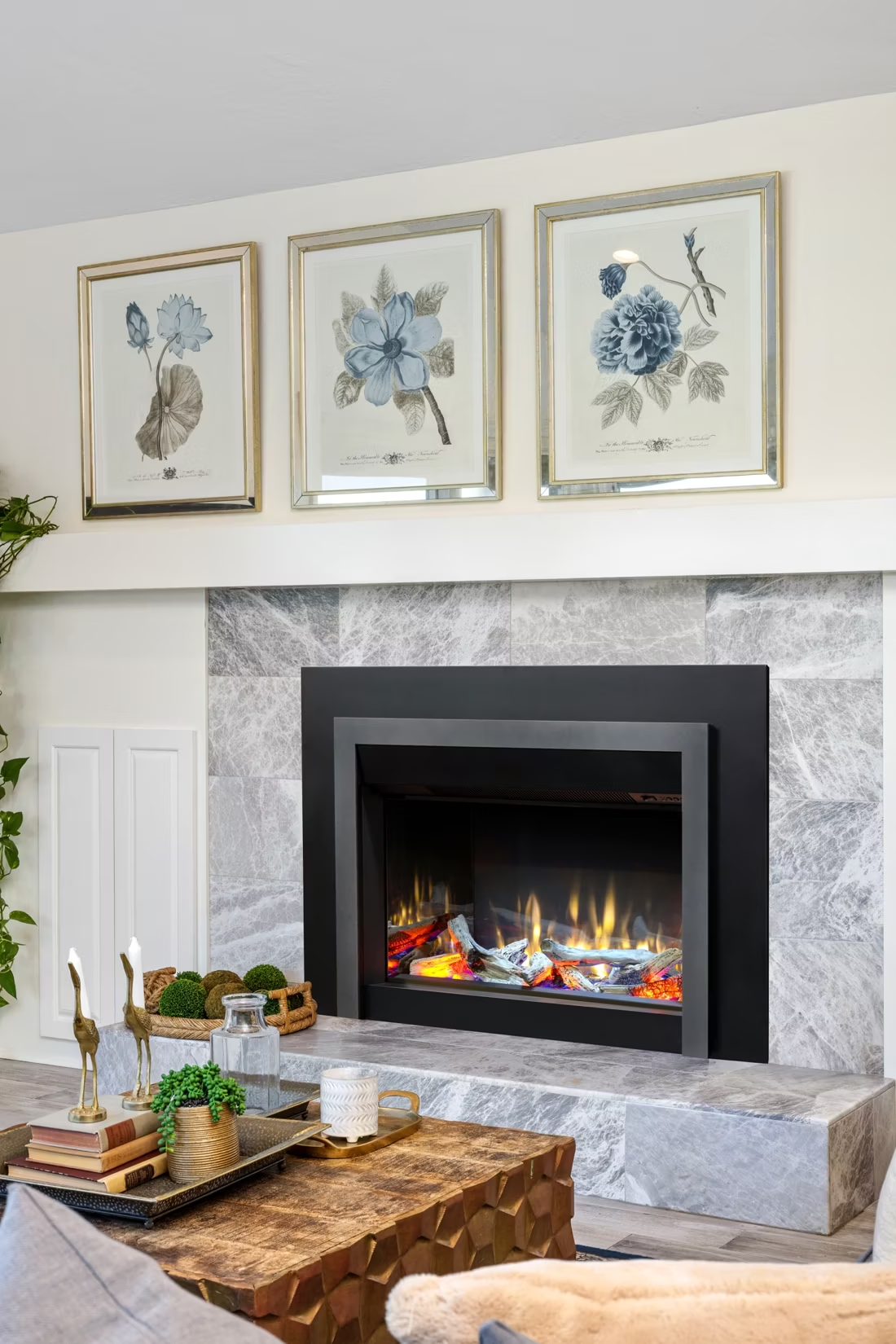
Four fuels. One honest answer for Charles City County.
Wood
See what's available near Charles City County.
Find your wood stove →Gas
See what's available near Charles City County.
Find your gas fireplace →Pellet
See what's available near Charles City County.
Find your pellet stove →Electric
See what's available near Charles City County.
Find your electric fireplace →Three steps. No salesperson until you're ready.
Tell us about your project
Your zip code, your situation, and the fuel you're leaning toward—or let the answers point you to one.
See what's actually available
The brands dealers within 100 miles genuinely carry—real options, never a catalog mirage.
Get your dealer & Project Guide
A trusted local dealer, plus the free Project Guide & Parts List that names every component of the job.
Frequently Asked Questions
Which fuel works best in Charles City County?
It depends on the home and how you plan to use the heat. Wood remains a natural fit here—oak and hickory grow throughout the county, split and seasoned firewood is easy to source locally, and many of the older plantation-style homes still have working masonry fireplaces that a wood insert can bring back into everyday use. Gas is the convenience choice, and because much of rural Charles City County runs on propane rather than piped natural gas, a propane fireplace or insert with a buried tank is the more common gas setup than a natural-gas hookup. Pellet stoves are a solid middle ground—no splitting or stacking wood, and regional brands like Energex, Hamer Pellet Fuel, and Greene Team Pellet Fuel are available through nearby suppliers. Electric fireplaces work well as supplemental heat or ambiance in historic homes where adding new venting or a flue isn't practical. Given the county's mild 4A winters—nowhere near the extremes of a place like Burlington, VT—most homes here use wood or gas as primary heat and treat pellet or electric as a secondary or backup option.
Do I need a permit to install a fireplace in Charles City County?
Generally yes. New wood stoves, wood inserts, gas fireplaces, gas inserts, and pellet stoves typically require a building permit through the county's building department, and gas installations need a separate line permit handled by a licensed gas-fitter. Electric fireplaces usually don't need a permit unless you're hardwiring a built-in unit into a new circuit. One wrinkle specific to this county: because so many homes are 18th- and 19th-century structures with original masonry chimneys, permit review often includes a flue liner inspection before a wood insert or gas unit can be installed safely into an existing chimney. Most local retailers who work regularly in Charles City County are familiar with this step and can handle the permitting and inspection scheduling as part of the install.
Are there air quality restrictions on wood burning in Charles City County?
No—Charles City County has no air quality nonattainment designation and no local wood-burning curtailment ordinance, unlike counties in inversion-prone valleys or major metro nonattainment zones. That said, given how spread out properties are along the James River, most homeowners still use common sense about smoke drifting toward a neighbor's farmhouse or field. If you're replacing an old, uncertified stove, it's worth choosing an EPA-certified unit anyway—not because it's required here, but because a modern catalytic or non-catalytic stove burns roughly a third of the wood for the same heat output, which matters if you're cutting and splitting your own oak and hickory.
Can one local hearth retailer handle all four fuel types?
Most retailers who actively serve Charles City County—typically based in Richmond, Williamsburg, or New Kent County—carry three or four fuel types, since the drive out to rural Tidewater properties makes it worth stocking a full range. A dealer offering wood, gas, pellet, and electric can walk you through trade-offs in one visit, which matters here given how varied the housing stock is, from working farmhouses that suit a wood insert to newer construction better suited to a propane or electric unit. If you're restoring an original chimney in a historic home, ask specifically whether the dealer has experience with older masonry flues—not every retailer does.
How does service work in such a sparsely populated, rural county?
Because Charles City County has so few households relative to its land area, technicians who service it are usually covering a wider Tidewater route that includes New Kent, James City, and parts of Henrico County. Expect to schedule a bit further ahead than you would in a denser suburb, and budget for a modest travel fee on service calls. Pre-season sweeps and inspections (late summer through early fall) are easier to book than mid-winter emergency calls. If your home has an older masonry chimney, an annual sweep and inspection is especially worth keeping on schedule—deferred maintenance on a 100-plus-year-old flue is a bigger problem than on a newer chimney system.
What's the typical cost range for fireplace installation across all fuel types in Charles City County?
Costs vary by fuel and by how much chimney or venting work is involved. Wood stove or insert installation: roughly $4,000–$8,500 for a standard install, running higher if an older masonry flue needs relining. Propane fireplace, insert, or stove: roughly $4,000–$10,000 depending on tank setup and venting, since most of the county runs on propane rather than piped gas. Pellet stove or insert: roughly $4,000–$7,000 for a typical install. Electric fireplace: $200–$3,000 for the unit itself, plus $300–$1,000 in labor for anything beyond a plug-and-play placement. For details tied to a specific fuel, see the county + fuel pages above.
Does a fireplace add value to my home?
On average, a fireplace adds back to the home about the same amount you spent installing it. Add the monthly savings from heating the rooms you actually use instead of the whole house—often hundreds of dollars a year—and the value case is strong before you even count what a fire does for how your family uses the room.
Can I install a fireplace myself?
If you're putting a fire in your house on purpose, it's best to work with an expert. Unless you're genuinely experienced in framing, gas line, vent pipe, and the national code on clearances to combustibles, have a professional do it—and ideally the same company that sells you the fireplace, so warranty, service, and liability all live under one roof.
Can a fireplace actually lower my heating bill?
Yes—by creating a comfort zone. A furnace heats every square foot of the house just to warm the one room you're in; a gas fireplace on low burns roughly a sixth of the gas a typical furnace does. Set the furnace around 55–60 degrees as a baseline, then heat the rooms your family actually uses. Families who heat this way commonly save $20–$60 a month.
Should the dealer who sells my fireplace also install it?
Ideally, yes. A fireplace project involves vent pipe, gas line, electrical, and often tile or stone. Hire three or four separate trades and you own the liability and the game of telephone between them. One company selling and installing means one accountable party, start to finish—ask about factory training, on-time completion records, and what happens if an inspection fails.
Stove and Fireplace Dealers in Charles City County
Listings include WhyFire partner dealers, dealers we have verified as authorized for the brands we recommend, and established local businesses that carry hearth products. Every listing shows which one it is. The ones marked Preferred run on WhyFire's software, so they can show you real pricing and book your appointment right here. No manufacturer pays for placement. How we verify dealers →
Phillips Energy,Inc - Providence Forge
Fireplace Innovations - Chester Location
Find your fireplace in Charles City County.
Pick your fuel below and I'll match you with a trusted local dealer serving Charles City County, plus a free Project Guide & Parts List—the exact parts, vent kit, and recommended dealer for your project.
Find Your Fireplace →