
Find the right heat for a hollow home in Buchanan County.
Wood, gas, pellet, and electric fireplace resources for Grundy and every mountain hollow and coal-camp community in Buchanan County. Get matched with a local dealer who knows the terrain and the wood.
Every Project Starts From One of These Five Situations
Steep hollows and hardwood heat in Buchanan County, Virginia.
Buchanan County sits in the far southwestern tip of Virginia, deep in Appalachian coal country, where narrow hollows and steep ridgelines make every home site a little different—some tucked low along creek bottoms, others perched high enough to catch harder wind and colder overnight lows. Climate zone 4A means real winters, though not the brutal sustained cold of places like Duluth or Burlington—this is a region where a well-seasoned load of oak or hickory burns clean and hot for a long evening, and maple rounds out the woodpile when the good stuff runs short. With a population under 1,400 spread across a rugged, sparsely built county, most homes here have relied on wood heat for generations, often paired with a second fuel source for the days when getting a truck up the hollow just isn't happening.
What you'll find on this hub: hearth retailers, service technicians, and fuel suppliers serving Buchanan County's small population across Grundy and the outlying hollow communities. Pick your fuel below to see local dealers, typical installation costs, and recommended units suited to this terrain—whether you're replacing an aging wood stove in a coal-camp house or adding a pellet unit for easier day-to-day heat.
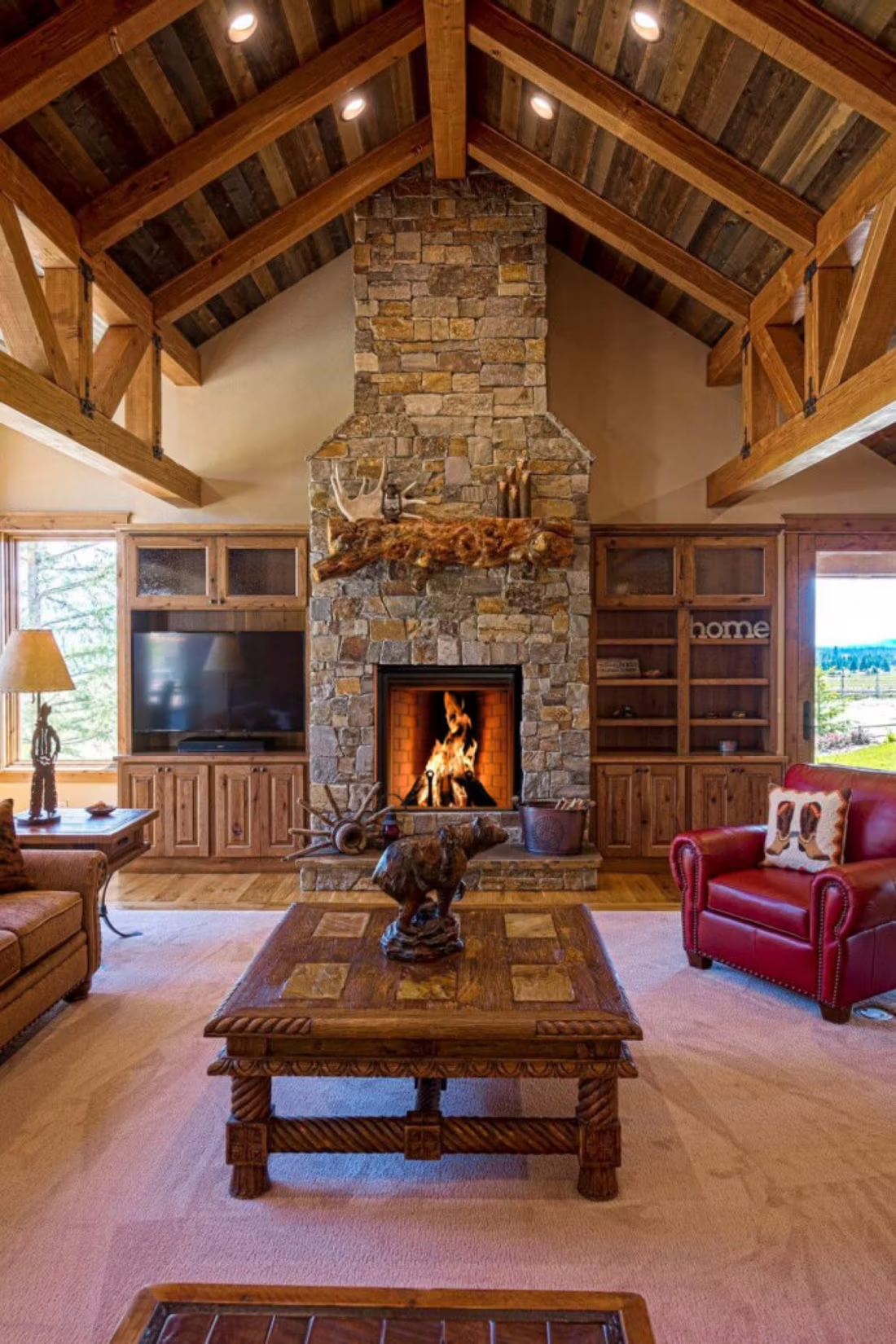
Four fuels. One honest answer for Buchanan County.
Three steps. No salesperson until you're ready.
Tell us about your project
Your zip code, your situation, and the fuel you're leaning toward—or let the answers point you to one.
See what's actually available
The brands dealers within 100 miles genuinely carry—real options, never a catalog mirage.
Get your dealer & Project Guide
A trusted local dealer, plus the free Project Guide & Parts List that names every component of the job.
Frequently Asked Questions
Which fuel works best for a home in Buchanan County?
It comes down to your access and your priorities. Wood remains the backbone fuel here—oak and hickory are abundant locally, burn long and hot, and keep a home warm even when a hollow road is impassable after snow or heavy rain, which matters in a county this rugged. Gas is the convenience option for homes with propane delivery already set up, offering instant heat without splitting or hauling wood. Pellet is a strong middle ground for households that want wood-style warmth without the daily labor—regional brands like Energex and Hamer Pellet Fuel and Greene Team Pellet Fuel are available through area suppliers, though delivery to remote hollow addresses is worth confirming ahead of winter. Electric works well as supplemental heat for a bedroom or a small addition, but given zone 4A winters, it's rarely a home's only heat source. Many Buchanan County households run wood as primary heat with a backup fuel for convenience or power-outage days.
Do I need a permit to install a fireplace or stove in Buchanan County?
In most cases, yes—new wood stoves, wood inserts, gas fireplaces, gas inserts, gas stoves, and pellet stoves typically require a building permit through the county's building department, and gas installations also require licensed gas-fitter work for the line connection. Electric fireplaces usually don't need a permit unless they're a built-in unit requiring new wiring or a dedicated circuit. Given how spread out Buchanan County is, most local hearth retailers who serve the area are familiar with the permitting process and handle it as part of installation, which is especially helpful if your home sits well off the main roads.
Are there air quality restrictions on wood burning in Buchanan County?
No—Buchanan County doesn't have the geographic bowl-and-inversion conditions that trigger air quality advisories in some western basins, and there are no local burn restrictions tied to air quality here. That said, any new wood stove installation should still meet current EPA emissions standards, since that affects both efficiency and how much wood you'll burn through a season. With oak and hickory as the dominant local species, a modern EPA-certified stove will get noticeably more heat out of the same cord than an older, uncertified unit.
Can one local hearth retailer handle all four fuel types in Buchanan County?
It depends on the dealer, and given the county's small population, retailer options are more limited here than in a larger market—many customers end up working with a dealer based in a neighboring county who travels into Buchanan County for consultations and installs. Multi-fuel dealers who carry wood, gas, pellet, and electric can be useful if you're not sure which fuel fits your hollow's access and your household's daily routine—they can walk through the trade-offs of a wood stove against a pellet unit or a propane insert for your specific situation before you commit.
How does installation and service work for homes deep in the hollows?
Access is the main variable. Retailers and service technicians serving Buchanan County are used to narrow hollow roads, steep driveways, and homes that sit well off a state route, but it's worth mentioning your specific road conditions when you schedule—especially in winter when a hollow road can ice before the main roads do. Expect to schedule annual service (chimney sweeping for wood, inspection for gas, cleaning for pellet units) in late summer or early fall, before the first cold snap makes scheduling tighter. If your home is particularly remote, a small travel fee for the visit is common and worth asking about upfront.
What's the typical cost range for fireplace installation across fuel types in Buchanan County?
Costs vary by fuel and by how much chimney or venting work your home needs. Wood stove or insert installation: roughly $4,000–$8,500 for a typical install, more if new chimney construction is required. Gas fireplace, insert, or stove: roughly $4,000–$10,000 depending on propane line work and venting, since natural gas service isn't the default here. Pellet stove or insert: roughly $4,000–$7,000 for a standard install. Electric fireplace: $200–$3,000 for the unit itself, plus $400–$1,200 in labor for anything beyond a simple plug-and-play placement. See the county + fuel pages above for more detail tied to local retailer pricing.
How much should I budget for a fireplace?
For an average home—covering the fireplace, the vent pipe, and basic installation—a budget between $3,900 and $5,500 gives you a lot of options across wood, gas, and pellet. By the time you add finish work, gas line, and electrical, the average complete installation lands between $5,000 and $12,000 all-in. In a remodel or new build, a good rule is to put about 2.5% of the total project cost toward the fireplace.
Does a fireplace add value to my home?
On average, a fireplace adds back to the home about the same amount you spent installing it. Add the monthly savings from heating the rooms you actually use instead of the whole house—often hundreds of dollars a year—and the value case is strong before you even count what a fire does for how your family uses the room.
Can I install a fireplace myself?
If you're putting a fire in your house on purpose, it's best to work with an expert. Unless you're genuinely experienced in framing, gas line, vent pipe, and the national code on clearances to combustibles, have a professional do it—and ideally the same company that sells you the fireplace, so warranty, service, and liability all live under one roof.
What is an in-home preview and do I need one?
It's a visit where a hearth professional measures your space, confirms the model you picked actually works in your home, and walks the specs—framing, gas line, venting, finish work—before anything is ordered. Some details you just can't know until you see the house. Never make a down payment without one; it's the single most-skipped step that burns buyers.
Stove and Fireplace Dealers in Buchanan County
Listings include WhyFire partner dealers, dealers we have verified as authorized for the brands we recommend, and established local businesses that carry hearth products. Every listing shows which one it is. The ones marked Preferred run on WhyFire's software, so they can show you real pricing and book your appointment right here. No manufacturer pays for placement. How we verify dealers →
New-Bos, Inc
Cline Lumber Company
Modern Hardware
Get matched with a Buchanan County dealer.
Pick your fuel below and we'll match you with a trusted local dealer and send a free Project Guide & Parts List—the exact parts, including the vent kit, for your project and home.”
Find Your Fireplace →