
Find your fireplace in Rich County, Utah.
Wood, gas, pellet, and electric fireplace resources for the whole county—from Randolph and Woodruff up through the Bear Lake shoreline towns of Garden City and Laketown. Pick a fuel and get matched with a local dealer who actually installs it in this stretch of the Bear River Range.
Every Project Starts From One of These Five Situations
High valley winters, climate zone 6B, and a county too small for its own retailers.
Rich County sits at roughly 6,000 feet along the Utah-Idaho border in the Bear Lake Valley, ringed by the Bear River Range and the Wasatch-Cache National Forest. Climate zone 6B puts this county in the same cold-winter bracket as International Falls, Minnesota—long, hard winters where a heating system that quits at 2 a.m. is a real problem, not an inconvenience. Pinyon, juniper, and aspen are the wood species most households here burn, much of it cut under Forest Service permits in the surrounding national forest land, which keeps firewood both affordable and, for many longtime residents, part of how they've always heated a Bear Lake Valley home.
With a population of just 2,201 spread across Randolph, Garden City, Laketown, and Woodruff, Rich County doesn't support its own dense network of hearth retailers—most dealers who install and service fireplaces here are based across the Idaho line near Bear Lake's resort towns or down in Logan and Cache Valley, and they run routes north into Rich County for installs, sweeps, and gas inspections. Wildfire smoke is the county's main air-quality concern, more of a late-summer issue tied to regional forest fires than a winter wood-smoke problem, so it factors more into defensible-space planning around a home than into any burn-curtailment rules. This hub rolls up hearth retailers, service techs, and fuel suppliers for the whole county—pick your fuel below for local dealers, install costs, and unit recommendations specific to your town.
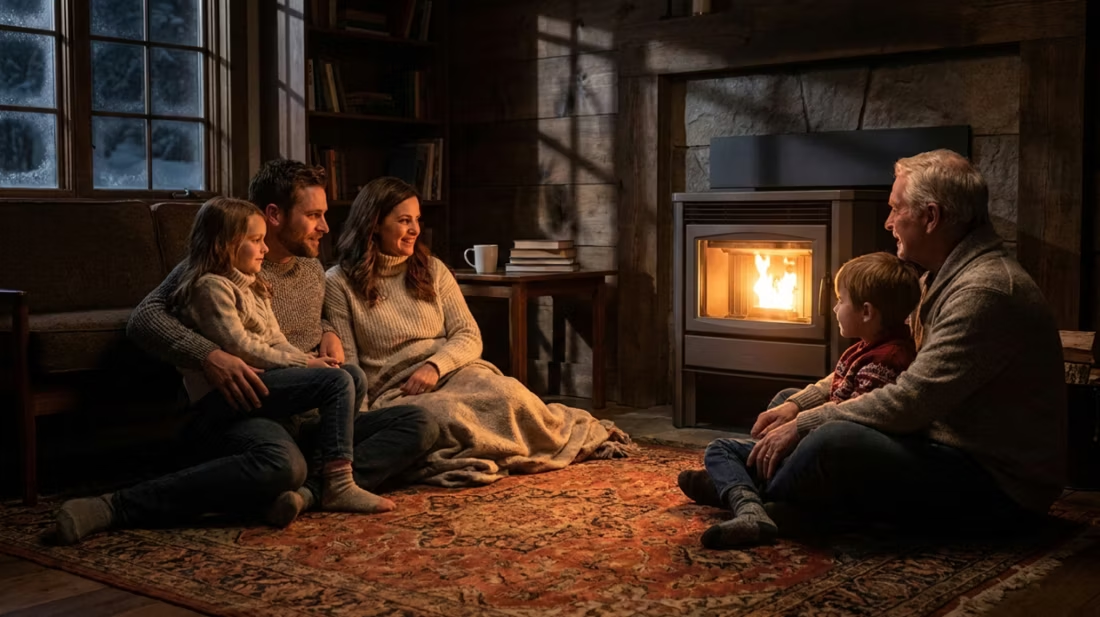
Four fuels. One honest answer for Rich County.
Three steps. No salesperson until you're ready.
Tell us about your project
Your zip code, your situation, and the fuel you're leaning toward—or let the answers point you to one.
See what's actually available
The brands dealers within 100 miles genuinely carry—real options, never a catalog mirage.
Get your dealer & Project Guide
A trusted local dealer, plus the free Project Guide & Parts List that names every component of the job.
Frequently Asked Questions
Which fireplace fuel makes the most sense in Rich County?
All four fuels show up here, but which one fits depends on where in the valley you live and how self-sufficient you want to be through a 6B winter. Wood remains the practical choice for a lot of longtime Rich County households—pinyon, juniper, and aspen cut under Wasatch-Cache National Forest permits keep fuel costs low, and a catalytic stove will hold overnight through the kind of hard valley cold that settles in around Randolph and Woodruff. Gas is workable where propane delivery is reliable, since piped natural gas doesn't reach much of the county; propane fireplaces and inserts are common in newer homes and around Garden City's Bear Lake properties. Pellet stoves have a following too—Bear Mountain, Lignetics, and Forest Energy bags are all distributed regionally, and a pellet stove is a lower-maintenance option for part-time Bear Lake cabins that sit empty for stretches. Electric fireplaces are supplemental almost everywhere in the county; they're a good add for a bedroom or a Bear Lake rental unit, but they're not built to carry a home through this valley's coldest stretches on their own.
Do I need a permit to install a wood stove or fireplace in Rich County?
Yes, in almost every case. New wood stoves and inserts need to meet current EPA emissions standards, and building permits for the installation go through the Rich County Building Department regardless of whether you're in Randolph, Garden City, Laketown, or Woodruff. Propane installations need a licensed gas fitter for the line connection and tank setup, since most of the county runs on bottled or bulk propane rather than piped gas. Pellet stoves are permitted similarly to wood stoves. Electric fireplace installs usually skip the permit process unless you're wiring in a new dedicated circuit for a built-in unit. Most of the retailers we match Rich County homeowners with handle this paperwork as part of the install.
How does wildfire smoke affect fireplace and wood-burning decisions here?
Rich County's air-quality concern is wildfire smoke, which is a late-summer and early-fall issue tied to regional forest fires in the Bear River Range and surrounding national forest, not a winter wood-smoke problem like you'd see in a basin that traps inversions. That means there's no winter burn-curtailment program here the way there is in some Utah counties along the Wasatch Front. What it does mean is defensible-space planning matters—keeping cured firewood stacks and any outdoor wood storage a safe distance from structures, and being mindful of dry conditions if you're doing any cutting or clearing under a Forest Service permit during fire season.
Is natural gas available in Rich County, or does everyone run propane?
Most of Rich County doesn't have piped natural gas service, so gas fireplaces and inserts here typically run on propane—either a buried tank or bottled delivery, depending on the property. This is common for a county this rural; Randolph, Woodruff, and the ranch properties scattered through the valley all lean on propane, and Garden City's Bear Lake side is much the same. If you're comparing gas to wood or pellet, factor in propane delivery logistics and tank sizing rather than assuming a gas line is nearby—your installer can help size a tank based on how the unit will actually run through a 6B winter.
How does installation and service work when there aren't many dealers based in the county?
Because Rich County's population is small, service techs and installation crews mostly come in from Logan and Cache Valley to the south or from the Idaho side of Bear Lake to the north—there's rarely a dealer with a storefront sitting inside county lines. Expect a modest trip charge for the farthest properties toward Woodruff or Meadowville, and expect scheduling to get tight fast once the first real cold snap hits the valley. Booking your annual chimney sweep or propane appliance inspection in late summer, before the Bear Lake tourist season winds down and before winter demand picks up, is the easiest way to avoid a multi-week wait.
What does a fireplace installation typically cost in Rich County?
Costs run close to statewide Utah averages, with a bit added for travel given how few dealers are based in the county. Wood stove or insert installs typically run $4,000–$8,500, factoring in a masonry or class-A chimney if the home doesn't already have one. Propane fireplaces, inserts, and stoves run roughly $4,500–$10,500 depending on whether a new tank or line extension is part of the job. Pellet stove or insert installs generally land at $4,000–$7,000. Electric fireplaces are the least expensive option—$200–$3,000 for the unit, plus $400–$1,200 in labor if it's more than a plug-and-play placement. The county + fuel pages above break these numbers down further with local retailer pricing.
How much should I budget for a fireplace?
For an average home—covering the fireplace, the vent pipe, and basic installation—a budget between $3,900 and $5,500 gives you a lot of options across wood, gas, and pellet. By the time you add finish work, gas line, and electrical, the average complete installation lands between $5,000 and $12,000 all-in. In a remodel or new build, a good rule is to put about 2.5% of the total project cost toward the fireplace.
Can I install a fireplace myself?
If you're putting a fire in your house on purpose, it's best to work with an expert. Unless you're genuinely experienced in framing, gas line, vent pipe, and the national code on clearances to combustibles, have a professional do it—and ideally the same company that sells you the fireplace, so warranty, service, and liability all live under one roof.
Does a fireplace add value to my home?
On average, a fireplace adds back to the home about the same amount you spent installing it. Add the monthly savings from heating the rooms you actually use instead of the whole house—often hundreds of dollars a year—and the value case is strong before you even count what a fire does for how your family uses the room.
What is an in-home preview and do I need one?
It's a visit where a hearth professional measures your space, confirms the model you picked actually works in your home, and walks the specs—framing, gas line, venting, finish work—before anything is ordered. Some details you just can't know until you see the house. Never make a down payment without one; it's the single most-skipped step that burns buyers.
Stove and Fireplace Dealers in Rich County
Listings include WhyFire partner dealers, dealers we have verified as authorized for the brands we recommend, and established local businesses that carry hearth products. Every listing shows which one it is. The ones marked Preferred run on WhyFire's software, so they can show you real pricing and book your appointment right here. No manufacturer pays for placement. How we verify dealers →
Bear Lake Heating
Advanced Fireplace And Stove
Western Mechanical
Standard Plumbing - Logan
Gary Ricks Services
Get matched with a local Rich County dealer.
Pick your fuel below and we'll put together a free Project Guide & Parts List—the right unit, the vent kit it needs, and the local dealer we recommend for your project, whether they're based in Logan, Bear Lake, or closer than you'd expect.
Find Your Fireplace →