
Find the right fireplace for Piute County's high desert winters.
Wood, gas, pellet, and electric fireplace resources for Junction, Circleville, Marysvale, Kingston, and Angle—with pinyon, juniper, and aspen close at hand and cold zone 5B winters settling into the Sevier River valley every year.
Every Project Starts From One of These Five Situations
Small-town heating in Utah's least-populated county.
With roughly 1,600 residents spread across a county wedged between the Tushar Mountains and the Sevier Plateau, Piute County is one of the smallest and least-populated counties in Utah. Elevation runs high—most towns sit between 6,000 and 7,000 feet—and Climate Zone 5B winters bring the kind of sustained cold that keeps a wood stove or pellet stove running for months, not weeks. Pinyon and juniper grow thick on the surrounding BLM and Fishlake National Forest land, with aspen common at higher elevations near Otter Creek and the Tushars; all three are standard firewood species for local households cutting their own supply under Forest Service permits.
What you'll find on this hub: hearth retailers, service technicians, and fuel suppliers serving Piute County's towns—Junction (the county seat), Circleville, Marysvale, Kingston, and Angle. Because the county's population is so small, some categories of local pro are thin on the ground here, and this hub is honest about that: several service calls and dealer visits come from just outside the county line, in Richfield or Beaver. Pick your fuel below to see what's actually installable near you, what it costs, and who covers your town.
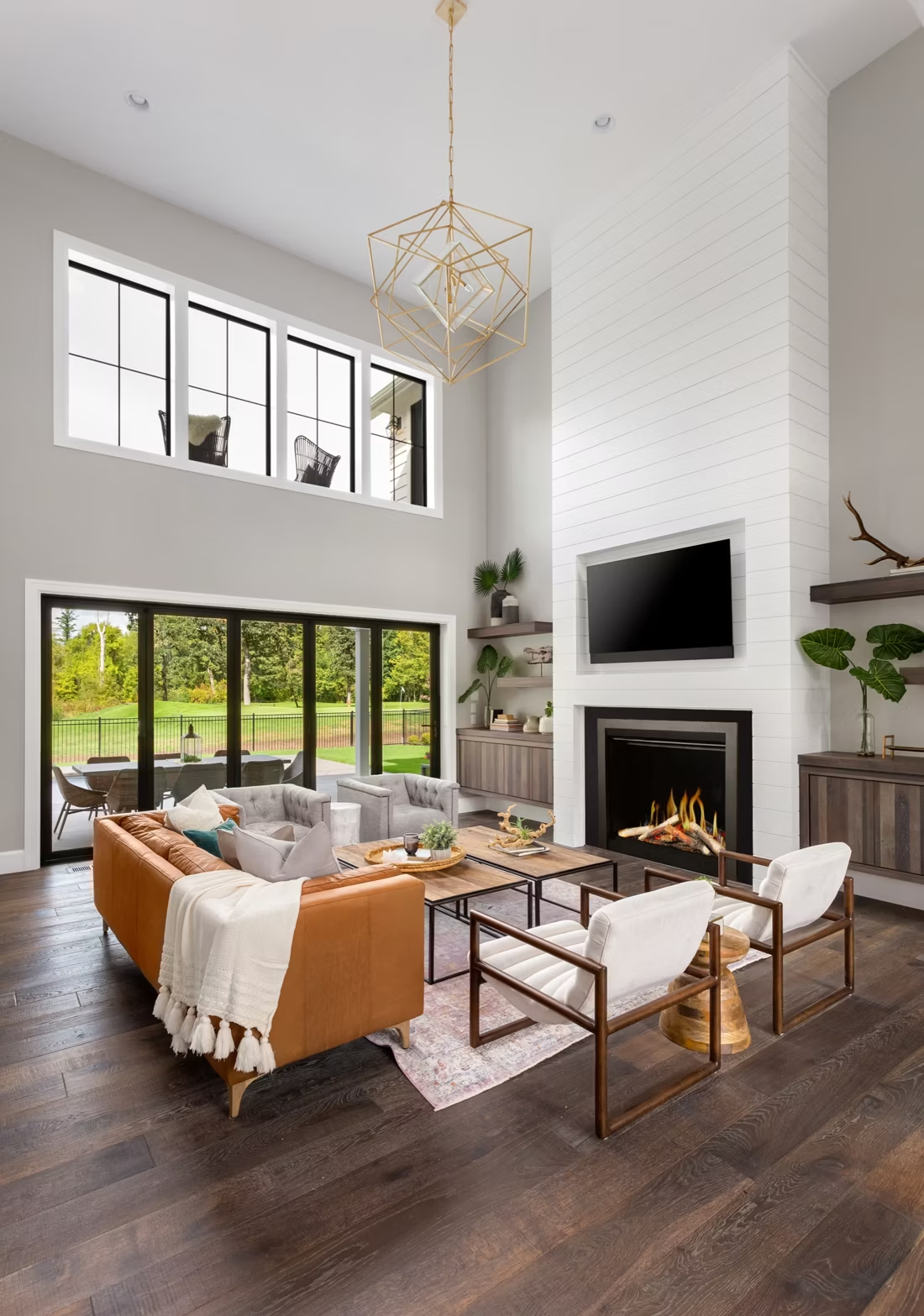
Four fuels. One honest answer for Piute County.
Three steps. No salesperson until you're ready.
Tell us about your project
Your zip code, your situation, and the fuel you're leaning toward—or let the answers point you to one.
See what's actually available
The brands dealers within 100 miles genuinely carry—real options, never a catalog mirage.
Get your dealer & Project Guide
A trusted local dealer, plus the free Project Guide & Parts List that names every component of the job.
Frequently Asked Questions
Which fuel works best in Piute County?
Wood remains the practical backbone fuel here. Pinyon and juniper are abundant on the surrounding BLM and Fishlake National Forest land, aspen is common at higher elevations near the Tushars, and a catalytic or non-catalytic EPA-certified stove burning any of the three handles Zone 5B cold comparably to what you'd see in Bozeman, Montana—long, steady overnight burns matter more here than quick heat. Gas in Piute County usually means propane rather than piped natural gas, since there's no municipal gas infrastructure reaching towns like Circleville or Kingston; propane fireplaces and inserts are the convenience option for homeowners who don't want to manage a woodpile. Pellet stoves are a solid middle path—Bear Mountain, Lignetics, and Forest Energy pellets are all distributed through the region, though stocking up before winter matters more here than in a bigger market. Electric fireplaces are supplemental at best; Garkane Energy Cooperative serves much of the county, and while electric units work fine for ambiance or a single room, they're not a realistic primary heat source through a 5B winter.
Do I need a permit to install a fireplace in Piute County?
Generally yes for anything beyond a plug-in electric unit. New wood stoves, wood inserts, propane appliances with new gas line work, and pellet stoves typically require a building permit through the Piute County Building Department, and wood-burning appliances need to meet current EPA emissions standards. If you're cutting your own firewood on public land—a common practice in a county this close to Fishlake National Forest—that's a separate cutting permit from the Forest Service, not a building permit, and it doesn't cover appliance installation. Most local installers handle the building permit paperwork as part of the job, which matters in a county this size where residents often aren't dealing with a building department every year.
Are there air quality restrictions on wood burning in Piute County?
Piute County doesn't experience the winter temperature-inversion smog that affects places like Salt Lake or Cache Valley, so day-to-day wood burning isn't restricted the way it is along the Wasatch Front. The concern here is different: wildfire smoke. During dry summers and early falls, smoke from regional wildfires can settle into the Sevier River valley for days at a time, and the Utah Division of Air Quality may issue advisories that affect outdoor burning generally, not specifically home heating appliances. Winter wood stove use is largely unrestricted, but it's worth checking state air quality advisories if you're burning brush or debris during fire season, and an EPA-certified stove still burns cleaner and more efficiently than an old uncertified unit regardless of the season.
Can one local hearth retailer handle all four fuel types in Piute County?
Piute County itself doesn't have a dedicated multi-fuel hearth showroom—with a population under 2,000, that kind of specialty retail typically consolidates in a nearby larger market. Most Junction, Circleville, and Marysvale homeowners end up working with a retailer based in Richfield (Sevier County) or Beaver, and the better ones among those do carry wood, gas/propane, pellet, and electric under one roof, which is useful if you're still deciding between fuels. What changes is delivery and install scheduling—expect a longer lead time for site visits than you'd get in a county with its own dealer network, so booking early in the fall matters more here than in bigger towns.
How does fireplace service work in a county this small?
Chimney sweeps and gas/pellet technicians serving Piute County are almost always based elsewhere—Richfield, Beaver, or occasionally Cedar City—and travel in on a set schedule or by appointment. Expect a modest trip charge for service calls, and expect that pre-season scheduling (August through October) is far easier than trying to get someone out during a January cold snap. For a household relying on wood or pellet as primary heat, it's worth keeping a backup plan—a second fuel source, extra pellets on hand, or a stocked woodshed—simply because a same-week service call isn't always realistic given how far technicians are traveling.
What's the typical cost range for fireplace installation across all fuel types in Piute County?
Costs run comparable to other rural mountain-West counties, sometimes slightly higher once travel time for installers is factored in. Wood stove or insert installation: roughly $4,500–$9,000 for a typical install, more for new chimney construction. Propane fireplace, insert, or stove: roughly $4,500–$10,000 depending on whether a new propane line and tank setup is needed. Pellet stove or insert: roughly $4,500–$7,500. Electric fireplace: $200–$3,000 for the unit itself, plus $400–$1,200 in labor for anything beyond a plug-and-play install. Because dealers are traveling in from Richfield or Beaver, ask upfront whether a trip fee is built into the estimate—it usually is, but it's worth confirming before you commit.
Can I install a fireplace myself?
If you're putting a fire in your house on purpose, it's best to work with an expert. Unless you're genuinely experienced in framing, gas line, vent pipe, and the national code on clearances to combustibles, have a professional do it—and ideally the same company that sells you the fireplace, so warranty, service, and liability all live under one roof.
What is an in-home preview and do I need one?
It's a visit where a hearth professional measures your space, confirms the model you picked actually works in your home, and walks the specs—framing, gas line, venting, finish work—before anything is ordered. Some details you just can't know until you see the house. Never make a down payment without one; it's the single most-skipped step that burns buyers.
Wood, gas, pellet, or electric—how do I choose?
Match the fuel to your life, not the other way around. Wood: lowest fuel cost and total power-outage independence, but you're hauling and stacking. Gas: press a button, set a thermostat, no maintenance to speak of. Pellet: wood economics with automatic feeding, in exchange for weekly cleaning and a need for electricity. Electric: plugs in anywhere with honest supplemental heat. Nobody regrets the fuel that fits how they actually live.
What are the biggest mistakes people make buying a fireplace?
Five come up constantly: budgeting for the unit but not the full job (vent, gas line, electrical, finish work); drowning in options instead of starting from style and fuel; buying without an in-home preview; handing installation to a handyman instead of a pro; and giving up out of sheer indecision. Every one is avoidable with a clear plan—step one, step two, step three.
Stove and Fireplace Dealers in Piute County
Listings include WhyFire partner dealers, dealers we have verified as authorized for the brands we recommend, and established local businesses that carry hearth products. Every listing shows which one it is. The ones marked Preferred run on WhyFire's software, so they can show you real pricing and book your appointment right here. No manufacturer pays for placement. How we verify dealers →
Larsen’s Ace Hardware
Blake Electric Company
Peterson Refrigeration & Mechanical
Hill's Heating & Air Con
Get matched with a Piute County-area hearth dealer.
Tell us your fuel and your town—Junction, Circleville, Marysvale, Kingston, or Angle—and we'll send a free Project Guide & Parts List with the exact parts, vent kit included, and the local dealer we recommend for your project.
Find Your Fireplace →