
Pellet Heat in Ogden: A Niche Choice, Not the Norm.
Along Utah's Wasatch Front, natural gas and electric heat cover most homes. A small number of Ogden and Weber County homeowners still choose pellet stoves—mostly for cabins, backup heat, or off-grid properties. We'll help you figure out if it fits, and connect you with a local dealer if it does.
Every Project Starts From One of These Five Situations
Ogden's climate and infrastructure point toward gas and electric.
Ogden sits at 4,342 feet at the base of the Wasatch Range, in a 5B climate zone with a winter heating load on par with places like Cheyenne, WY, and average winter lows near 22°F—cold enough that home heating matters, but not so extreme that a solid-fuel backup is a given. What matters more here is air quality. Weber County sits inside the Wasatch Front's winter inversion belt, where cold air gets trapped against the mountains and PM2.5 builds up for days at a time. That reality shapes local heating choices more than temperature does, and it's a big part of why pellet stoves never became mainstream here the way they have in more rural, forested parts of the Mountain West.
With natural gas infrastructure well established across Ogden and PacifiCorp electric service reliable and reasonably priced at roughly 12.5 cents per kWh, most homeowners default to a gas insert or an electric fireplace rather than a hopper-fed pellet appliance. That said, pellet heat hasn't disappeared entirely—it still shows up in cabins up Ogden Canyon and in the Eden and Huntsville area, where homeowners want a self-contained heat source that doesn't depend on a gas line. If that's your situation, it's worth talking to a dealer before assuming pellet is off the table—just know that the local market for it is thin.
Three steps. No salesperson until you're ready.
Tell us about your project
Your zip code, your situation, and the fuel you're leaning toward—or let the answers point you to one.
See what's actually available
The brands dealers within 100 miles genuinely carry—real options, never a catalog mirage.
Get your dealer & Project Guide
A trusted local dealer, plus the free Project Guide & Parts List that names every component of the job.
Frequently Asked Questions
Are pellet stoves actually available in Ogden, or is this fuel type basically off the table?
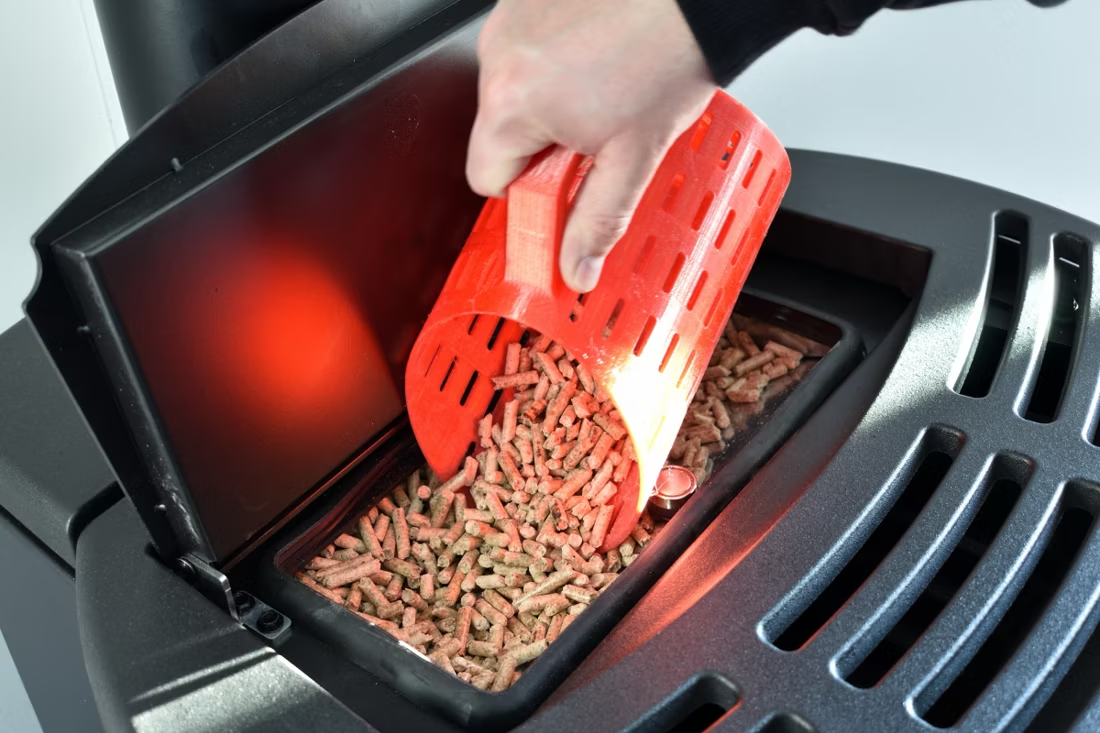
They're available, but genuinely uncommon. Ogden's metro population leans heavily on natural gas and electric heat, and most hearth retailers in Weber County stock far more gas inserts than pellet units. If you specifically want a pellet stove—for a cabin near Huntsville, a shop building, or backup heat in town—a dealer can still order and install one, but expect fewer models on the showroom floor and a longer lead time than you'd see for gas.
Why haven't pellet stoves caught on in Weber County the way they have elsewhere in the Mountain West?
Two things work against pellet stoves in Ogden. First, winter inversions along the Wasatch Front trap fine particulate matter (PM2.5) low in the valley for days at a time, and local air quality guidance during those episodes tends to discourage solid-fuel burning devices generally, including pellet units, even though pellet stoves burn cleaner than open wood fires. Second, natural gas lines and PacifiCorp electric service already reach the overwhelming majority of Ogden homes, so there's little pressure to adopt a fuel that requires bagged pellet storage and hopper loading. In more rural, forested parts of the region without gas access, pellet makes more sense—Ogden mostly isn't that market.
Can I still get a permit to install a pellet stove inside Ogden city limits?
Yes—pellet stove installations are legal and permittable through Weber County and City of Ogden building officials, same as any other solid-fuel appliance. You'll still need to meet clearance and venting code requirements. The bigger obstacle isn't the permit—it's finding a local installer who regularly works with pellet units rather than gas. Ask any dealer directly how many pellet installs they've done in the last year before committing.
How much does a pellet stove installation cost in the Ogden area?
Pricing isn't as standardized locally as it is for gas, since demand is lower, but a typical freestanding pellet stove installation runs roughly $3,000 to $6,500 depending on the unit, venting length, and whether you need a dedicated electrical circuit for the hopper motor and igniter. Pellet inserts into an existing masonry fireplace tend to land in a similar range. Get a firm quote from a dealer who's actually installed pellet units in Weber County—installers who mostly do gas sometimes pad the estimate for unfamiliar work.
What pellet brands can I actually buy near Ogden?
Bear Mountain, Lignetics, and Forest Energy pellets circulate through the region and show up at some hardware and ranch supply stores in northern Utah, even though local stove ownership is low. If you do install a pellet appliance, plan on stocking up during the fall—rural retailers in this part of the state don't always keep heating-grade pellets in stock year-round the way they might in Idaho or western Oregon, where pellet heat is far more common.
If pellet isn't a great fit for my Ogden home, what should I look at instead?
For most Ogden homes, a direct-vent gas fireplace or insert is the more practical choice—natural gas service is widely available across the city, installation is well supported by local dealers, and it sidesteps the winter inversion concerns tied to solid-fuel burning. Electric fireplaces are another solid option, especially for supplemental heat or homes without gas access; PacifiCorp's residential rate of about 12.5 cents per kWh keeps electric units reasonably affordable to run. Both fuel types have a much deeper bench of local installers than pellet does.
Do pellet stoves get restricted during Ogden's winter inversion advisories the same way wood stoves do?
It depends on the specific advisory and the stove's certification, but during the Wasatch Front's mandatory and voluntary no-burn periods, guidance often applies broadly to solid-fuel burning devices rather than carving out an exception for pellet stoves. If you're relying on a pellet stove as a significant heat source in Ogden, check current air quality advisories before burning on red or orange days, and ask your dealer whether the specific model you're considering has an EPA certification that affects how it's treated locally.
Since there's national forest nearby, can I source cheap fuel for a pellet stove the way people do with firewood?
Not really—that's one of the trade-offs. The Uinta-Wasatch-Cache National Forest issues cutting permits for firewood (roughly $5 to $20 per cord, May through October), which is how a lot of Ogden Valley households heat with wood. But pellets are a manufactured product sold in 40-pound bags, not something you can cut and haul yourself. If self-sufficient, low-cost fuel is the goal and you're near the forest, a wood stove may actually serve that purpose better than pellet—though wood carries its own local air quality trade-offs during inversion season.
Pellet vs. gas vs. electric—what's actually right for an Ogden home?
For the typical in-town Ogden home with natural gas already run to the house, a gas fireplace or insert wins on convenience, dealer support, and clean winter-air compliance. For homes without gas access, or as a secondary heat source, electric fireplaces are simple to install and cheap to run on PacifiCorp's rates. Pellet stoves make sense mainly for cabins, shops, or rural properties in the foothills where you want a self-contained heat source and don't mind managing bagged fuel and hopper loading. If that's not your situation, most local dealers will steer you toward gas or electric—and that's honest advice, not a sales pitch.
Why is my open fireplace making my house colder?
Open fireplaces suck—literally. As the fire burns, it consumes air your furnace already paid to heat and pulls it out through the chimney, so the house is actually colder after the fire goes out than before you lit it. An insert fixes this: it seals the chimney, puts fixed glass across the front, and turns that hole in your house into a real heat source.
What does it take to replace an existing fireplace?
Fireplaces are like icebergs—bigger behind the wall than in front of it. Replacement means removing the surrounding tile or stone (the finish material laps onto the fireplace face), pulling the old unit, setting the new one in the same enclosure, and re-finishing the wall. A hearth professional can determine what's behind your wall without demolition during an in-home preview.
Can a fireplace actually lower my heating bill?
Yes—by creating a comfort zone. A furnace heats every square foot of the house just to warm the one room you're in; a gas fireplace on low burns roughly a sixth of the gas a typical furnace does. Set the furnace around 55–60 degrees as a baseline, then heat the rooms your family actually uses. Families who heat this way commonly save $20–$60 a month.
Can I install a fireplace myself?
If you're putting a fire in your house on purpose, it's best to work with an expert. Unless you're genuinely experienced in framing, gas line, vent pipe, and the national code on clearances to combustibles, have a professional do it—and ideally the same company that sells you the fireplace, so warranty, service, and liability all live under one roof.
Nearby Dealers
Hearth shops serving Ogden and the surrounding area. Every listing shows whether it is a WhyFire partner, a dealer we have verified as authorized for the brands we recommend, or a local business carrying hearth products. No manufacturer pays for placement. How we verify dealers →
Rocky Mountain Stove
Stone World Supply
Ogden Lawn & Garden
Hearth & Home Dist. Of UT-Ogden
Comfort Solutions
Utah Air
Timber Ridge Fireplace
Chim Chiminey Fireplace
Croft Fireplaces (Bountiful)
Pellet Brands Stocked Around Ogden
Manufacturers will point you to the nearest stocking dealer.
Find out if pellet heat makes sense for your Ogden home.
Tell us about your home and situation, and if pellet is genuinely the right call, we'll match you with a local dealer and send a free Project Guide & Parts List—the exact parts, including the vent kit, for your pellet project in Ogden. If gas or electric turns out to be the smarter fit, we'll tell you that instead.
Find Your Fireplace →