
Fireplaces for Zapata County homes and lake properties.
With winter lows averaging 47°F and only a light winter heating load overall, Zapata County's hearth market runs on gas and electric—not wood or pellet. Find the right unit and connect with a trusted local dealer serving Zapata, San Ygnacio, Lopeno, and the Falcon Lake communities.
Every Project Starts From One of These Five Situations
Mild winters and low heating demand along the Falcon Lake shoreline.
Zapata County sits on the Rio Grande in deep South Texas, wrapped around Falcon Lake and Falcon International Reservoir. Winters here are short and mild—average lows sit around 47°F and the county sees only a light winter heating load overall, a fraction of what a place like International Falls, MN sees before Thanksgiving. Oak, pecan, and mesquite grow throughout the county, but locally that wood shows up in smokers and backyard pits far more often than in home heating—there just isn't enough cold weather here to make a wood-burning appliance a practical primary heat source, and pellet stoves see the same limited demand.
What you'll find on this hub: gas and electric hearth retailers, service technicians, and fuel suppliers covering every community in the county—from the county seat of Zapata down through San Ygnacio, Lopeno, and Bustamante, and out to the lake-front properties near Falcon. Pick your fuel below to see local dealers, typical installation costs, and recommended units for your project, whether it's a primary residence in town or a weekend place on Falcon Lake.
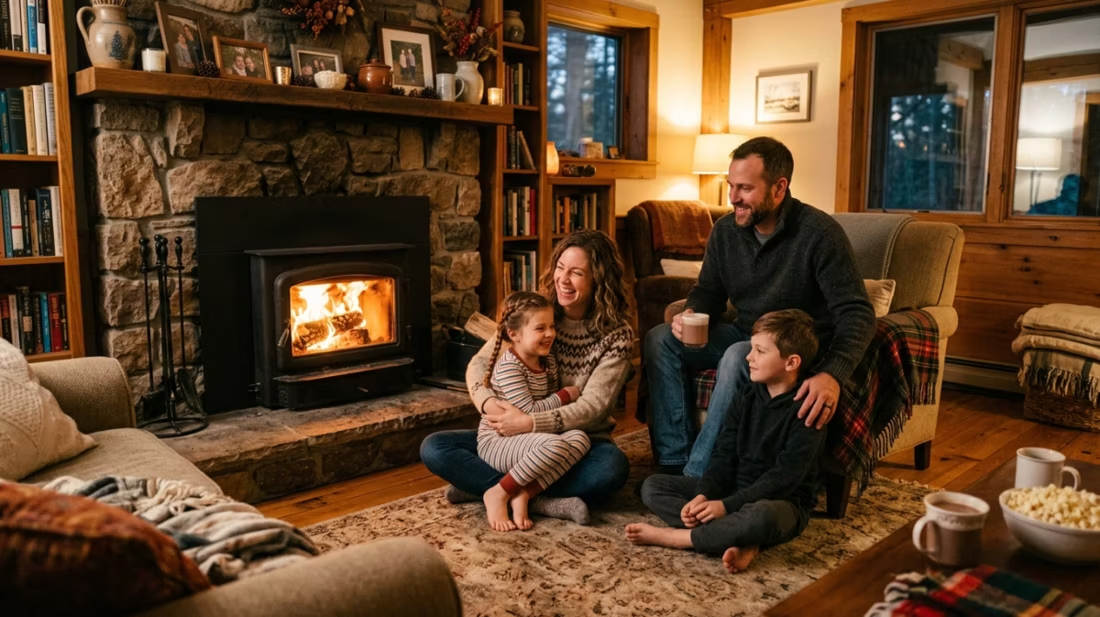
Four fuels. One honest answer for Zapata County.
Three steps. No salesperson until you're ready.
Tell us about your project
Your zip code, your situation, and the fuel you're leaning toward—or let the answers point you to one.
See what's actually available
The brands dealers within 100 miles genuinely carry—real options, never a catalog mirage.
Get your dealer & Project Guide
A trusted local dealer, plus the free Project Guide & Parts List that names every component of the job.
Frequently Asked Questions
Which fuel works best in Zapata County?
Zapata County's climate is mild—a light winter heating load overall and winter lows near 47°F, a fraction of what a place like International Falls, MN sees in a single month. That means wood and pellet stoves, built for long sustained cold-weather burns, don't really fit here, and few local dealers stock them. Gas fireplaces are the practical primary choice—usually propane-fed, since piped natural gas is limited across rural parts of the county—clicking on for a quick fire on a rare cold front or a chilly evening at the lake, then shutting off when you don't need them. Electric fireplaces are the other mainstay: no venting, no fuel storage, well suited to lake cabins, seasonal properties near Falcon, and bedrooms where ambiance matters more than heat output. Most homeowners here pick gas for the main living space and electric for secondary rooms or weekend properties.
Do I need a permit to install a fireplace in Zapata County?
Generally yes, for gas installations. Zapata County requires a building permit for new propane or gas lines and gas appliance installs, and the gas connection itself has to be done by a licensed gas fitter under the same licensing rules that apply statewide in Texas. Inside the city limits of Zapata, permits run through the city; in the unincorporated parts of the county—San Ygnacio, Lopeno, or the communities around Falcon Lake—permits go through the Zapata County building office. Electric fireplaces usually skip the permit process unless you're doing a built-in installation that needs a new circuit or hardwiring, which requires a licensed electrician to pull an electrical permit. Retailers who install regularly typically handle this paperwork as part of the job.
Are there air quality restrictions on burning in Zapata County?
No—Zapata County doesn't have the wood-smoke concerns that come up in basin or valley counties out west. There's no non-attainment designation and no winter inversion pattern here. That's part of why wood heat isn't really part of the local hearth market—it's not that burning is restricted, it's that there's rarely enough cold weather to justify a wood-burning appliance as a heat source. The county does occasionally issue outdoor burn bans during dry spells, but those cover brush and debris burning, not fireplace or stove use, and are announced through the county judge's office when drought conditions call for it.
Can one local dealer handle both gas and electric fireplaces?
Given how the local market breaks down—gas and electric, with almost no wood or pellet demand—most retailers serving Zapata County that carry gas fireplaces also carry electric units, since the customer base overlaps heavily between primary residences that want gas and lake or weekend properties that want electric. You're unlikely to find a dedicated wood-stove specialist here, and pellet stoves are essentially absent from local showrooms—the Forest Energy and Lignetics pellets that do turn up locally tend to be sold for backyard smokers and grills rather than home heating. If a retailer lists all four fuels, it's worth asking directly what they actually stock and install versus what they'd need to special-order.
How does fireplace service work in the more remote parts of Zapata County?
Zapata sits along US-83 roughly 50 miles south of Laredo and a similar distance north of Rio Grande City, and most technicians who service gas and electric fireplaces in the county are based out of Laredo, driving down for installs and repairs. If you're out along Falcon Lake—near Falcon Village, Lopeno, or the more remote stretches by San Ygnacio and Bustamante—expect a modest travel charge and a slightly longer scheduling window than you'd get in a larger market. Booking service ahead of the handful of December and January cold fronts tends to go smoother than trying to get someone out during the one or two weeks a year when everyone wants their gas fireplace working at the same time.
What's the typical cost range for fireplace installation in Zapata County?
Gas fireplaces, inserts, or stoves typically run $4,000–$9,500 installed, with the higher end driven by new propane line runs for homes without existing service—common on newer builds around the lake. Electric fireplace units run $200–$3,000 for the unit itself, plus $400–$1,200 in labor for anything beyond a plug-and-play install, such as a wall-mounted or built-in unit that needs a new circuit. Because wood and pellet appliances are essentially special-order items here rather than stocked inventory, installed costs for those run higher and harder to pin to a typical range—most retailers will quote those case by case.
What is an in-home preview and do I need one?
It's a visit where a hearth professional measures your space, confirms the model you picked actually works in your home, and walks the specs—framing, gas line, venting, finish work—before anything is ordered. Some details you just can't know until you see the house. Never make a down payment without one; it's the single most-skipped step that burns buyers.
Wood, gas, pellet, or electric—how do I choose?
Match the fuel to your life, not the other way around. Wood: lowest fuel cost and total power-outage independence, but you're hauling and stacking. Gas: press a button, set a thermostat, no maintenance to speak of. Pellet: wood economics with automatic feeding, in exchange for weekly cleaning and a need for electricity. Electric: plugs in anywhere with honest supplemental heat. Nobody regrets the fuel that fits how they actually live.
Does a fireplace add value to my home?
On average, a fireplace adds back to the home about the same amount you spent installing it. Add the monthly savings from heating the rooms you actually use instead of the whole house—often hundreds of dollars a year—and the value case is strong before you even count what a fire does for how your family uses the room.
Can a fireplace actually lower my heating bill?
Yes—by creating a comfort zone. A furnace heats every square foot of the house just to warm the one room you're in; a gas fireplace on low burns roughly a sixth of the gas a typical furnace does. Set the furnace around 55–60 degrees as a baseline, then heat the rooms your family actually uses. Families who heat this way commonly save $20–$60 a month.
Stove and Fireplace Dealers in Zapata County
Listings include WhyFire partner dealers, dealers we have verified as authorized for the brands we recommend, and established local businesses that carry hearth products. Every listing shows which one it is. The ones marked Preferred run on WhyFire's software, so they can show you real pricing and book your appointment right here. No manufacturer pays for placement. How we verify dealers →
Grill Street Outdoor Kitchens
Find your fireplace in Zapata County.
Tell us about your home or lake property and we'll match you with a trusted local dealer, plus send a free Project Guide & Parts List—the exact parts, including the vent kit, for your gas or electric fireplace project in Zapata County.
Find Your Fireplace →