
Match with a fireplace dealer anywhere in Wichita County.
From Wichita Falls out to Burkburnett, Iowa Park, and Electra, this hub rolls up hearth retailers, service techs, and fuel suppliers across the whole county. Tell us what you're after and we'll match you with a local dealer who actually installs it here.
Every Project Starts From One of These Five Situations
Mild North Texas winters, 2,897 heating degree days, and a county that leans on gas heat.
Wichita County sits in the Rolling Plains of North Texas, in climate zone 3A with average winter lows around 30°F. At 2,897 heating degree days, the heating season here is short and mild compared to places like Bismarck, ND or Duluth, MN, where HDD totals run three to four times as high. Oak, pecan, and mesquite are the wood species most associated with the region, but they show up mostly in older masonry fireplaces used for occasional ambiance rather than as a household's primary source of winter heat.
Because winters here rarely demand round-the-clock heating, gas fireplaces and inserts are the standard choice across the county, with Atmos Energy serving most of the natural-gas footprint around Wichita Falls. Electric fireplaces are also common, especially in bedrooms, sunrooms, and additions where running a gas line isn't practical. Wood-burning units are a smaller, legacy category—some homeowners keep or restore a masonry fireplace for cold-snap use, and interest ticked up after the February 2021 winter storm made a lot of people think harder about backup heat. Pellet stoves are genuinely uncommon here given the mild climate, though Forest Energy and Lignetics pellets are both distributed regionally for the small number of owners who do run one. This hub covers Wichita Falls, Burkburnett, Iowa Park, Electra, and the unincorporated parts of the county—pick a fuel below for local dealers, cost ranges, and unit recommendations specific to your address.
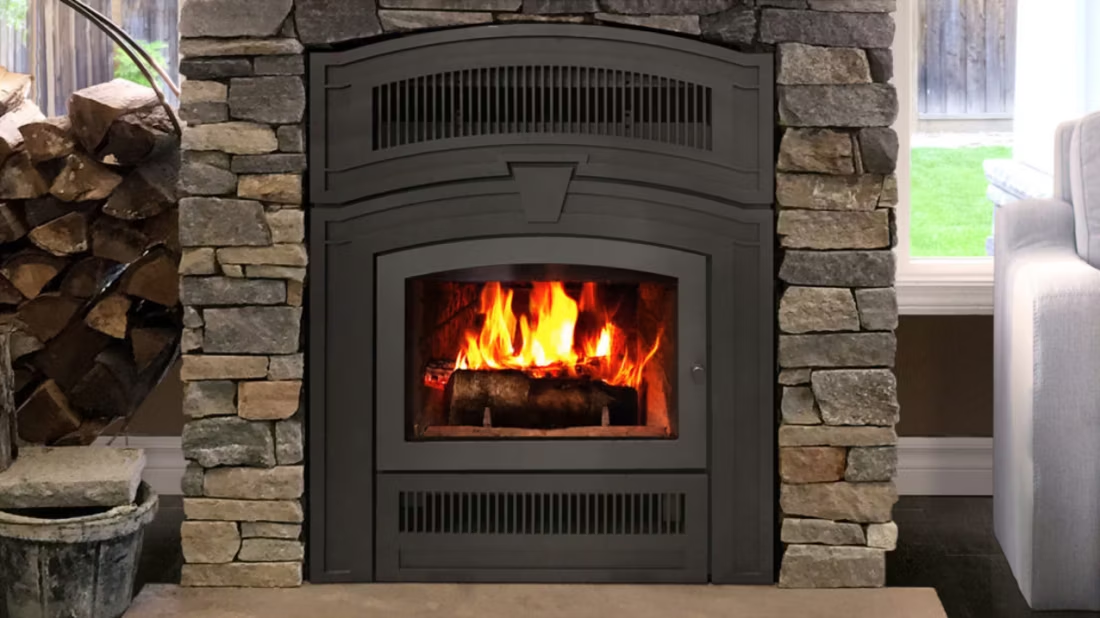
Four fuels. One honest answer for Wichita County.
Three steps. No salesperson until you're ready.
Tell us about your project
Your zip code, your situation, and the fuel you're leaning toward—or let the answers point you to one.
See what's actually available
The brands dealers within 100 miles genuinely carry—real options, never a catalog mirage.
Get your dealer & Project Guide
A trusted local dealer, plus the free Project Guide & Parts List that names every component of the job.
Frequently Asked Questions
Which fireplace fuel makes the most sense in Wichita County?
Gas is the default choice for most homeowners here—with average winter lows around 30°F and only 2,897 heating degree days, a gas fireplace or insert covers the county's actual heating load without the upkeep of a solid-fuel system, and Atmos Energy's service area makes hookups straightforward around Wichita Falls, Burkburnett, and Iowa Park. Electric fireplaces are a close second, especially for bedrooms, additions, or homes without easy gas access, since they need no venting and install almost anywhere. Wood-burning fireplaces still exist in older Wichita Falls and Electra homes, usually as a legacy masonry feature burning local oak, pecan, or mesquite for occasional ambiance rather than daily heat. Pellet stoves are uncommon given the mild climate, but Forest Energy and Lignetics both distribute here for the handful of owners who want a supplemental, standalone heat source.
Do I need a permit for a gas or electric fireplace install in Wichita County?
Yes, in most cases. Inside city limits, gas fireplace installs and any new gas-line work go through the City of Wichita Falls Development Services Department, with similar permitting required in Burkburnett, Iowa Park, and Electra through their respective city offices. Unincorporated parts of the county route through the Wichita County permit office. Electric fireplace installs typically only need a permit if you're adding a dedicated circuit or hardwiring a built-in unit—a simple plug-in unit usually doesn't trigger one. Most retailers we match homeowners with handle the permit paperwork as part of the install.
Are wood-burning fireplaces still installed in Wichita County homes?
They're the exception rather than the rule. With only 2,897 heating degree days and winter lows averaging 30°F, wood isn't necessary as a primary heat source the way it is in colder parts of the country, so most new construction skips it in favor of gas or electric. That said, older homes around Wichita Falls and Electra still have masonry fireplaces burning oak, pecan, or mesquite, mostly for ambiance on the coldest nights, and interest in wood as a backup heat source picked up after the February 2021 winter storm knocked out power across much of North Texas. If you're restoring or upgrading an existing wood fireplace, a local retailer can tell you whether the chimney is sound enough for an insert.
What about pellet stoves—are they worth considering here?
For most Wichita County homes, no—pellet stoves are built for climates with a much longer, harder heating season than what this county sees, and they're genuinely rare here. That said, Forest Energy and Lignetics pellets are both distributed regionally, so if you want a standalone unit for backup heat during outages or a workshop/garage that isn't on the main gas or electric circuit, the fuel supply exists even if the demand is small. It's a niche pick here, not a mainstream one, and we'll tell you honestly if it's not the right fit for your situation.
How does installation and service work for homes outside Wichita Falls?
Most hearth retailers and service techs are based in Wichita Falls but regularly travel to Burkburnett, Iowa Park, Electra, and the unincorporated county in between. Expect a modest trip fee for the farthest calls, and if you're relying on propane rather than Atmos Energy service in a rural stretch of the county, confirm your tank size and delivery schedule with your installer before the install date so the unit isn't waiting on fuel. Scheduling is generally easier here than in colder markets since there's no hard curtailment season driving a fall rush, but booking ahead of a forecast cold snap still helps.
What does a fireplace installation typically cost in Wichita County?
Gas fireplaces, inserts, and stoves generally run $4,000–$9,500 depending on whether you're extending a gas line or converting an existing hearth, with Atmos Energy hookup fees factored in for new service. Electric fireplaces are the most affordable option—$200–$3,000 for the unit itself, plus $300–$1,000 in labor unless you're doing a simple plug-and-play placement. Wood-burning inserts or restorations for the county's older masonry fireplaces typically run $3,500–$7,000. Pellet stove installs, while uncommon, generally land around $4,000–$6,500 when a local retailer does carry one. The county + fuel pages above break these numbers down further with local retailer pricing.
Can a fireplace actually lower my heating bill?
Yes—by creating a comfort zone. A furnace heats every square foot of the house just to warm the one room you're in; a gas fireplace on low burns roughly a sixth of the gas a typical furnace does. Set the furnace around 55–60 degrees as a baseline, then heat the rooms your family actually uses. Families who heat this way commonly save $20–$60 a month.
Does a fireplace add value to my home?
On average, a fireplace adds back to the home about the same amount you spent installing it. Add the monthly savings from heating the rooms you actually use instead of the whole house—often hundreds of dollars a year—and the value case is strong before you even count what a fire does for how your family uses the room.
Should the dealer who sells my fireplace also install it?
Ideally, yes. A fireplace project involves vent pipe, gas line, electrical, and often tile or stone. Hire three or four separate trades and you own the liability and the game of telephone between them. One company selling and installing means one accountable party, start to finish—ask about factory training, on-time completion records, and what happens if an inspection fails.
I know I want a fireplace—where do I actually start?
Do two things today: snap a photo of the wall or fireplace you want to transform, and take a tape measure to the space—width, height, depth. Those two artifacts answer most of a hearth professional's first questions. Then settle fuel (wood, gas, pellet, or electric) and set a realistic budget: $3,900–$5,500 covers fireplace, vent, and basic install for most homes.
Stove and Fireplace Dealers in Wichita County
Listings include WhyFire partner dealers, dealers we have verified as authorized for the brands we recommend, and established local businesses that carry hearth products. Every listing shows which one it is. The ones marked Preferred run on WhyFire's software, so they can show you real pricing and book your appointment right here. No manufacturer pays for placement. How we verify dealers →
The Ember Shop, Inc.
Home Escapes & More
Get matched with a local Wichita County dealer.
Tell us about your home and we'll put together a free Project Guide & Parts List—the right unit for your space, the vent or wiring it needs, and the local dealer we recommend for your project.
Find Your Fireplace →