
Find the right fireplace for your Upton County home.
With mild West Texas winters and Permian Basin energy running through the local economy, fireplaces do the heavy lifting in Upton County. We'll connect you with a trusted local dealer serving McCamey, Rankin, and the ranch country between them.
Every Project Starts From One of These Five Situations
Mild high-desert winters, oil-country practicality.
Upton County sits in the Permian Basin of West Texas, home to about 2,760 people spread across McCamey, Rankin, and long stretches of ranch and oilfield land. Winters here are short and mild by national standards—average lows around 33°F and only a light winter heating load each year, a fraction of what a place like Bismarck, ND racks up in a single hard winter. That climate reality shapes what actually gets installed: wood stoves and pellet appliances are rare here, not because oak, pecan, and mesquite aren't available locally, but because the county simply doesn't need serious wood or pellet heat capacity most years.
What you'll find on this hub: gas and electric fireplace resources—the two fuels that actually make sense for year-round comfort and occasional cold snaps in Upton County—plus retailers, service techs, and fuel suppliers covering the whole county. If you're set on wood for ambiance (a lot of folks here still like a mesquite or oak fire on a cold January night) or curious about pellet stoves from suppliers like Forest Energy or Lignetics, we'll be straight with you about how uncommon that setup is locally and point you toward dealers who can still make it work.
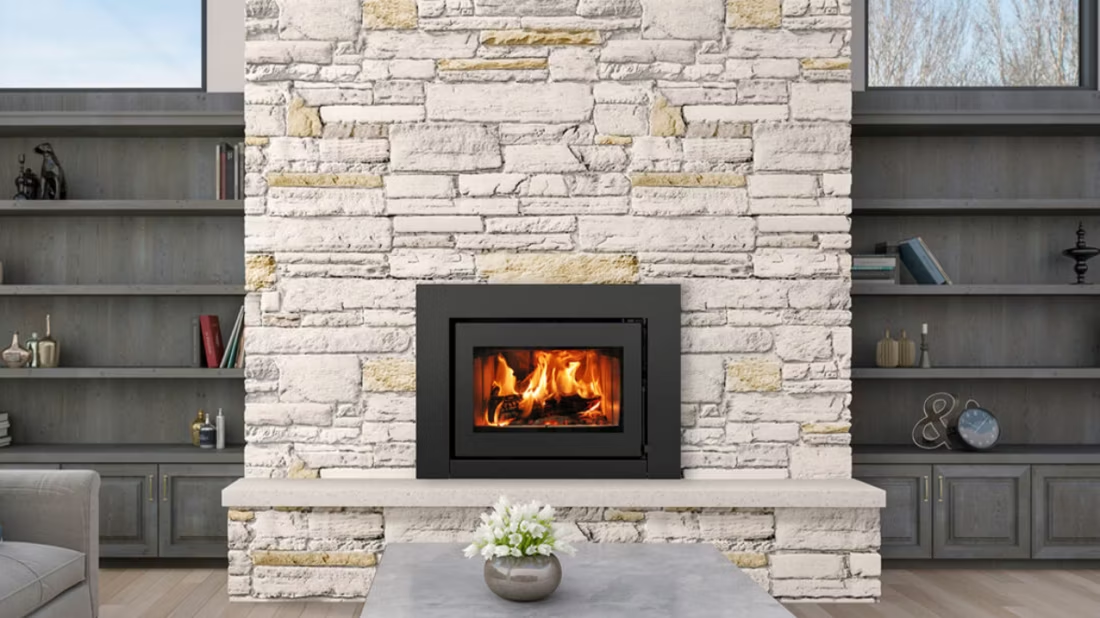
Four fuels. One honest answer for Upton County.
Three steps. No salesperson until you're ready.
Tell us about your project
Your zip code, your situation, and the fuel you're leaning toward—or let the answers point you to one.
See what's actually available
The brands dealers within 100 miles genuinely carry—real options, never a catalog mirage.
Get your dealer & Project Guide
A trusted local dealer, plus the free Project Guide & Parts List that names every component of the job.
Frequently Asked Questions
Which fuel works best in Upton County?
For most Upton County homes, it comes down to gas or electric. Gas fireplaces and inserts—whether run on propane or natural gas depending on what's available at your address—give you reliable heat on the county's occasional cold mornings without any wood-hauling or ash cleanup, which matters in a county this spread out. Electric fireplaces are a strong fit for supplemental warmth in bedrooms, offices, or smaller homes in McCamey and Rankin, since winter lows here average around 33°F and rarely demand serious heating capacity. Wood stoves and pellet stoves exist in the county, but they're the exception—a handful of homeowners burn local oak, pecan, or mesquite for ambiance rather than as a primary heat source, and pellet appliances from suppliers like Forest Energy or Lignetics are more of a specialty request than a standard install.
Do I need a permit to install a fireplace in Upton County?
Generally yes for gas installations—a gas line permit and licensed gas-fitter are standard practice whether you're in McCamey, Rankin, or unincorporated county land, and permitting runs through the applicable city office or Upton County depending on your address. Electric fireplace installs typically don't require a permit unless you're hardwiring a built-in unit or adding a new circuit, in which case an electrical permit applies. Most local hearth retailers handle the permit paperwork as part of the installation quote, so you're not usually filing anything yourself.
Is burning wood restricted in Upton County?
No—there are no air quality restrictions on wood burning in Upton County, and local oak, pecan, and mesquite are all readily available if you want an occasional wood fire. What limits wood heat here isn't regulation, it's climate: with only a light winter heating load each year, most homes simply don't need a wood stove's heat output the way a house in a place like Duluth, MN would. The wood fires you'll see in Upton County are mostly ambiance-driven—a fireplace insert used a few nights a winter rather than a primary heating appliance running daily from October through April.
Can one local dealer handle both gas and electric fireplaces?
Yes, and that's the norm rather than the exception in a county this size. Given Upton County's population of under 3,000, the retailers and installers serving McCamey and Rankin typically stock both gas and electric lines rather than specializing in a single fuel—there simply isn't enough volume to support fuel-specific shops. If you're comparing a gas insert against an electric wall unit for the same room, a single dealer visit should cover both options and let you look at real display units before deciding.
How does fireplace service work in a rural county like Upton?
Most technicians who service Upton County are based in larger Permian Basin towns nearby and travel in for appointments in McCamey and Rankin, so expect to schedule a bit further ahead than you would in a bigger market and budget for a possible trip fee on rural calls. Gas units benefit from an annual inspection to check the pilot, thermocouple, and venting; electric fireplaces need very little beyond an occasional dust-out and cord check. Because service visits take some lead time out here, it's worth booking pre-season rather than waiting for a mid-winter cold front to force the issue.
What's the typical cost range for gas and electric fireplaces in Upton County?
Gas fireplace, insert, or stove: roughly $4,000–$10,000 installed, with the range driven mostly by whether a new propane or gas line needs to be run versus tying into existing service. Electric fireplace: as little as $200–$1,500 for the unit itself, with labor of $300–$1,000 for anything beyond a simple plug-and-play placement, such as a wall-mount or built-in with new wiring. Wood or pellet installs are quoted case-by-case since so few go in locally—if you want one, ask your dealer for a specific number rather than assuming a countywide average applies.
Can I install a fireplace myself?
If you're putting a fire in your house on purpose, it's best to work with an expert. Unless you're genuinely experienced in framing, gas line, vent pipe, and the national code on clearances to combustibles, have a professional do it—and ideally the same company that sells you the fireplace, so warranty, service, and liability all live under one roof.
What is an in-home preview and do I need one?
It's a visit where a hearth professional measures your space, confirms the model you picked actually works in your home, and walks the specs—framing, gas line, venting, finish work—before anything is ordered. Some details you just can't know until you see the house. Never make a down payment without one; it's the single most-skipped step that burns buyers.
Wood, gas, pellet, or electric—how do I choose?
Match the fuel to your life, not the other way around. Wood: lowest fuel cost and total power-outage independence, but you're hauling and stacking. Gas: press a button, set a thermostat, no maintenance to speak of. Pellet: wood economics with automatic feeding, in exchange for weekly cleaning and a need for electricity. Electric: plugs in anywhere with honest supplemental heat. Nobody regrets the fuel that fits how they actually live.
How much should I budget for a fireplace?
For an average home—covering the fireplace, the vent pipe, and basic installation—a budget between $3,900 and $5,500 gives you a lot of options across wood, gas, and pellet. By the time you add finish work, gas line, and electrical, the average complete installation lands between $5,000 and $12,000 all-in. In a remodel or new build, a good rule is to put about 2.5% of the total project cost toward the fireplace.
Stove and Fireplace Dealers in Upton County
Listings include WhyFire partner dealers, dealers we have verified as authorized for the brands we recommend, and established local businesses that carry hearth products. Every listing shows which one it is. The ones marked Preferred run on WhyFire's software, so they can show you real pricing and book your appointment right here. No manufacturer pays for placement. How we verify dealers →
Bill Placer's Chimney Sweep
Seal’s Energy Depot
Find your fireplace in Upton County.
Tell us about your home in McCamey, Rankin, or elsewhere in Upton County and we'll match you with a trusted local dealer and send over a free Project Guide & Parts List—the exact parts, including the vent kit, and the dealer we recommend for your project.
Find Your Fireplace →