
Heat That Holds When the Grid Doesn't.
Wood, gas, pellet, and electric fireplace resources for every ranch and community in Stonewall County—from Aspermont out along the Double Mountain Fork. Find the right unit and connect with a trusted local hearth retailer.
Every Project Starts From One of These Five Situations
Ranch-country heating on the Rolling Plains of West Texas.
Stonewall County sits in the Rolling Plains of West Texas, with Aspermont as its county seat and roughly 1,057 residents spread across ranch land along the Double Mountain Fork of the Brazos. Climate Zone 3B means hot, dry summers and generally mild winters—but the county isn't immune to hard Arctic blasts. The February 2021 statewide freeze knocked out power across the ERCOT grid for days, and plenty of Stonewall County homes leaned on wood stoves and fireplaces to stay warm while the local electric cooperative worked to restore service. Oak, pecan, and mesquite culled from ranchland are the traditional fuel here, and mesquite in particular burns hot and long—it's as much a heating fuel as it is a cooking wood in this part of Texas.
What you'll find on this hub: hearth retailers, service technicians, and fuel suppliers covering the whole county. Because Stonewall County's population is small and spread thin, most full-service hearth retailers are based 30 to 45 minutes away in Snyder, Abilene, or Sweetwater and travel in for installs and service calls. Pick your fuel below to see local dealers, typical installation costs, and the resources that fit your project—whether you're heating a house in town in Aspermont or a ranch house out past Old Glory.
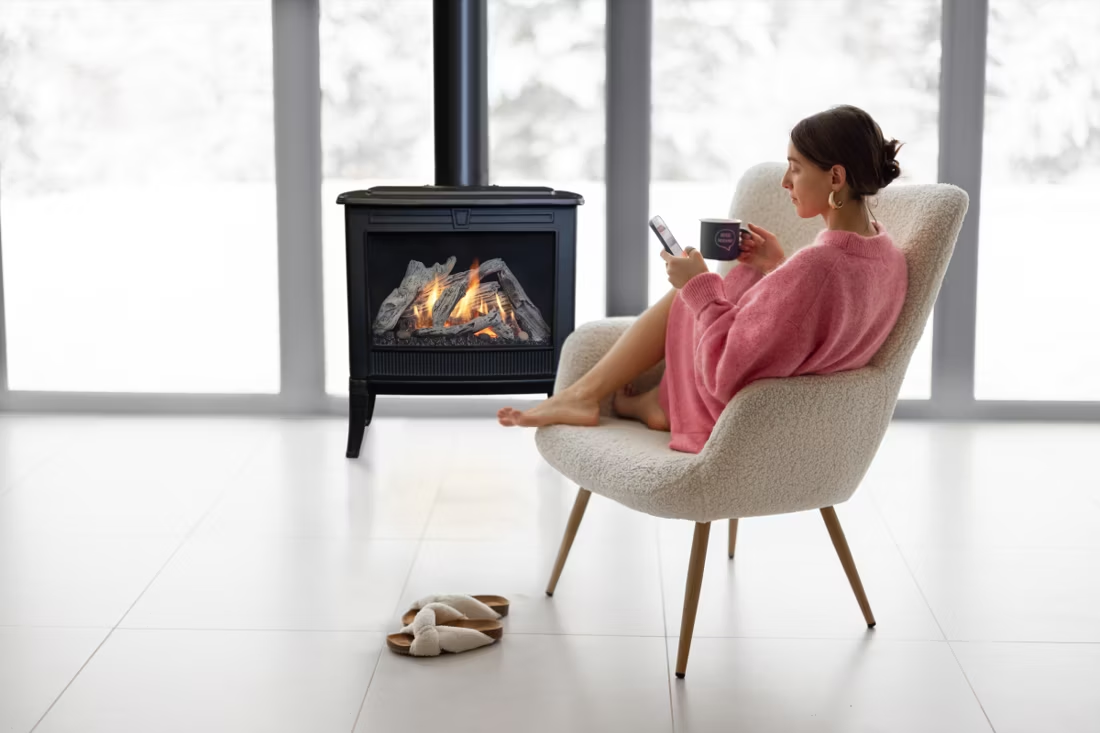
Four fuels. One honest answer for Stonewall County.
Three steps. No salesperson until you're ready.
Tell us about your project
Your zip code, your situation, and the fuel you're leaning toward—or let the answers point you to one.
See what's actually available
The brands dealers within 100 miles genuinely carry—real options, never a catalog mirage.
Get your dealer & Project Guide
A trusted local dealer, plus the free Project Guide & Parts List that names every component of the job.
Frequently Asked Questions
Which fuel makes the most sense for a home in Stonewall County?
It depends on how much you're relying on backup heat versus everyday convenience. Wood is a practical choice here—oak, pecan, and mesquite are all locally available off ranchland, and a wood stove kept a lot of Stonewall County homes warm during the February 2021 grid failure when electric service was out for days. Propane is the common convenience fuel in this part of Texas, since natural gas mains don't reach most of the county—a propane fireplace or insert gives you instant heat without relying on the electric co-op's grid staying up (as long as the unit has a standing pilot or battery-backed ignition). Pellet stoves work fine climate-wise, but pellets have to be trucked in from suppliers like Forest Energy or Lignetics, which is a real consideration when you're 30-plus minutes from the nearest supplier. Electric fireplaces are a good supplemental option for a bedroom or den, but given the county's history with winter grid outages, most homeowners here don't want electric as their only heat source.
Do I need a permit to install a fireplace or stove in Stonewall County?
Generally yes, though the process is simpler here than in a large city. Building permits for wood stoves, inserts, and gas or propane appliances are handled through the Stonewall County Courthouse in Aspermont, and installations still need to meet the same International Residential Code requirements for clearances, hearth pads, and chimney or vent sizing that apply anywhere in Texas. If you're running new propane line to a fireplace, that work typically needs a licensed propane installer regardless of whether the county requires a separate permit for it. Most retailers who install in Stonewall County—even ones based in Snyder or Abilene—are used to working with the county courthouse and can walk you through what's required for your specific project.
Are there any wood-burning restrictions in Stonewall County?
No—Stonewall County doesn't have the kind of winter air-quality inversions or non-attainment status that trigger burn curtailment days in places like the Klamath Basin. The one restriction to watch for is a county-issued outdoor burn ban during drought conditions, which the county judge can declare and which shows up periodically across the Rolling Plains. Those bans apply to outdoor burning—brush piles, agricultural burns—not to contained indoor wood stoves or fireplaces with a proper spark arrestor, so a wood stove or insert in your house is unaffected even during a burn ban.
Is there a local retailer that carries all four fuel types?
Given Stonewall County's population of just over a thousand, you won't find a hearth showroom inside the county itself—the nearest multi-fuel retailers are typically in Snyder, about 30 minutes northeast, or Abilene, roughly 45 minutes southeast. Several of those dealers carry wood, propane/gas, pellet, and electric units and are set up to travel out to Aspermont and the surrounding ranches for installation and service. If you're cross-shopping fuels, it's worth calling ahead to confirm which units they keep on display versus what they can special-order for a rural delivery.
How does installation and service work for homes way out on the ranch?
Most technicians and installers serving Stonewall County are based in Snyder, Abilene, or Sweetwater and build travel time into their scheduling for rural calls. Expect a modest trip fee for ranch properties well outside Aspermont, and expect to book pre-season service—ideally August through October—since mid-winter appointments fill up fast once a cold front comes through. Because a hard freeze can also knock out grid power for days, as it did in February 2021, it's worth keeping a wood or propane backup heat source in the house even if electric is your primary system, along with basic supplies like backup batteries for any IPI-ignition propane units.
What does installation typically cost across fuel types in Stonewall County?
Costs run in line with rural West Texas norms, sometimes with a modest travel premium built in from Snyder or Abilene-based installers. A wood stove or insert typically runs $4,000–$8,500 installed, depending on chimney work. A propane fireplace, insert, or stove usually runs $4,000–$10,000, with the top end reflecting new propane line runs from an existing tank. A pellet stove or insert generally falls in the $4,500–$7,500 range, plus the ongoing cost of trucked-in pellets from suppliers like Forest Energy or Lignetics. An electric fireplace is the least expensive option—often $200–$2,500 for the unit, with $400–$1,000 in labor unless it's a simple plug-and-play install. For a firmer number, see the county + fuel pages above for cost detail tied to specific retailers.
What is an in-home preview and do I need one?
It's a visit where a hearth professional measures your space, confirms the model you picked actually works in your home, and walks the specs—framing, gas line, venting, finish work—before anything is ordered. Some details you just can't know until you see the house. Never make a down payment without one; it's the single most-skipped step that burns buyers.
Can a fireplace actually lower my heating bill?
Yes—by creating a comfort zone. A furnace heats every square foot of the house just to warm the one room you're in; a gas fireplace on low burns roughly a sixth of the gas a typical furnace does. Set the furnace around 55–60 degrees as a baseline, then heat the rooms your family actually uses. Families who heat this way commonly save $20–$60 a month.
Does a fireplace add value to my home?
On average, a fireplace adds back to the home about the same amount you spent installing it. Add the monthly savings from heating the rooms you actually use instead of the whole house—often hundreds of dollars a year—and the value case is strong before you even count what a fire does for how your family uses the room.
I know I want a fireplace—where do I actually start?
Do two things today: snap a photo of the wall or fireplace you want to transform, and take a tape measure to the space—width, height, depth. Those two artifacts answer most of a hearth professional's first questions. Then settle fuel (wood, gas, pellet, or electric) and set a realistic budget: $3,900–$5,500 covers fireplace, vent, and basic install for most homes.
Stove and Fireplace Dealers in Stonewall County
Listings include WhyFire partner dealers, dealers we have verified as authorized for the brands we recommend, and established local businesses that carry hearth products. Every listing shows which one it is. The ones marked Preferred run on WhyFire's software, so they can show you real pricing and book your appointment right here. No manufacturer pays for placement. How we verify dealers →
Coastal Insulation
A & A Chimeny Sweep w/Texas Fp
Find your fireplace in Stonewall County.
Pick your fuel below and we'll match you with a trusted local dealer—one who actually installs in Stonewall County—plus a free Project Guide & Parts List covering the exact parts, vent kit, and recommended installer for your home.
Find Your Fireplace →