
Find the right fireplace for Scurry County's mild winters.
Gas and electric fireplace resources for Snyder, Hermleigh, Ira, Dermott, and every community in Scurry County—plus the honest read on why wood and pellet stoves are a rare fit here.
Every Project Starts From One of These Five Situations
Scurry County's short winters change the fireplace math.
Scurry County sits on the rolling plains of West Texas, anchored by the county seat of Snyder at roughly 2,325 feet elevation. This is Climate Zone 3B—a mild zone where the average winter low sits around 29°F and the heating season totals just 2,853 heating degree days a year. Compare that to Fargo, North Dakota, where homes rack up more than 9,000 HDD annually and a wood stove is a load-bearing appliance for months—Scurry County's heating demand is a fraction of that. Snyder's economy runs on cotton farming and Permian Basin oil and gas work, and most homes here were built for West Texas summer heat first, mild winter cold a distant second.
That climate reality shapes this hub. Gas fireplaces—natural gas within Snyder's city limits, propane on most rural properties around Hermleigh, Ira, and Dermott—and electric fireplaces are the two fuel types that make practical sense for most Scurry County homes, and that's where the retailer, technician, and cost detail below is focused. Wood-burning fireplaces and pellet stoves are technically available but genuinely uncommon here; the mild winters just don't create the demand that supports a local wood or pellet supply chain. If you're set on a wood-burning setup for ambiance or occasional use, the FAQ below covers what that actually looks like, including the oak, pecan, and mesquite that already show up in local firewood and smoker culture.
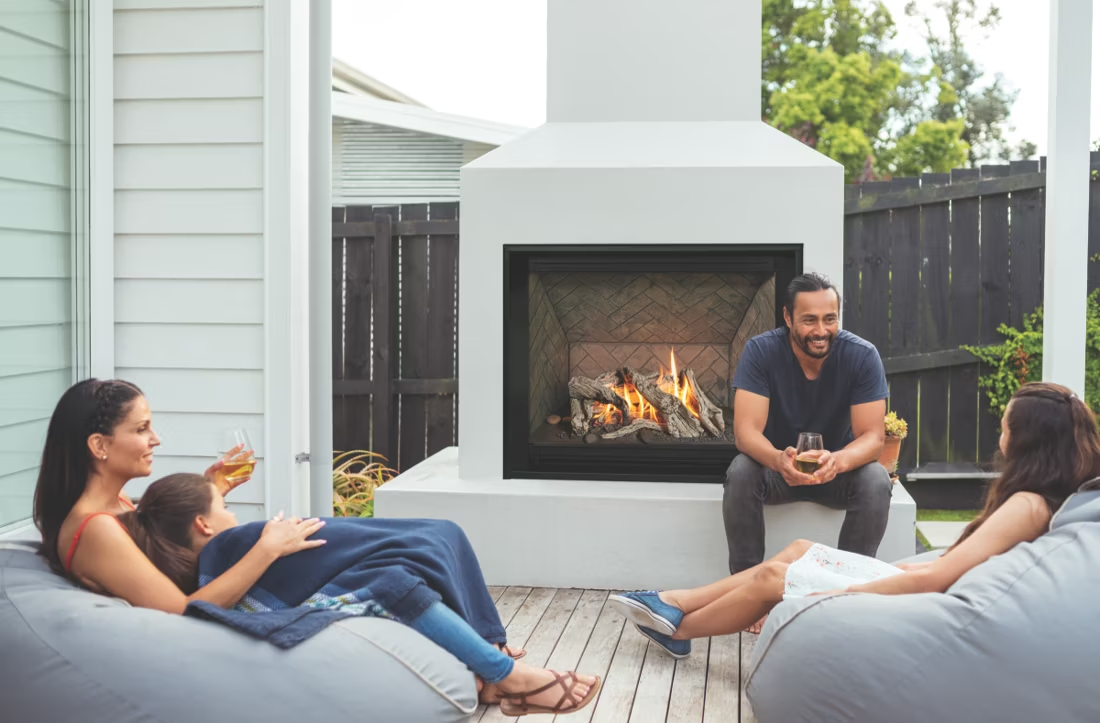
Four fuels. One honest answer for Scurry County.
Three steps. No salesperson until you're ready.
Tell us about your project
Your zip code, your situation, and the fuel you're leaning toward—or let the answers point you to one.
See what's actually available
The brands dealers within 100 miles genuinely carry—real options, never a catalog mirage.
Get your dealer & Project Guide
A trusted local dealer, plus the free Project Guide & Parts List that names every component of the job.
Frequently Asked Questions
Which fuel works best in Scurry County?
For most Scurry County homes, it's gas or electric—not wood or pellet. With an average winter low around 29°F and only 2,853 heating degree days a year, this county's heating season is short and mild compared to places like Bismarck, ND, where wood stoves are load-bearing appliances for months at a time. Gas fireplaces (natural gas within Snyder city limits, propane on most rural properties around Hermleigh, Ira, and Dermott) give instant heat with none of the woodpile labor, and they're the closest thing to a primary supplemental heat source most local homes use. Electric fireplaces work well for bedrooms, sunrooms, and homes that just want ambiance without any venting at all. Wood-burning fireplaces exist, mostly for looks or occasional use with local oak, pecan, or mesquite, but they're not the practical choice for this climate.
Do I need a permit to install a fireplace in Scurry County?
Usually, yes, for gas installations. Gas fireplaces, gas inserts, and gas log conversions typically require a building permit plus a separate gas line permit if new gas piping is involved—and that gas connection work should be handled by a licensed gas fitter. Within Snyder's city limits, permits run through the city building department; outside the city, they go through the Scurry County building permit process. Electric fireplaces are usually permit-free for plug-in units, but built-in electric fireplaces that need new wiring or a dedicated circuit typically require an electrical permit. Most local dealers handle this paperwork as part of the installation quote.
Are there air quality restrictions on burning in Scurry County?
No—Scurry County has no wood smoke nonattainment designation and no winter burning advisories tied to fireplace use. The open West Texas plains disperse smoke well compared to basin or valley locations that trap winter inversions. The one restriction worth knowing about is unrelated to fireplaces: Scurry County, like much of West Texas, periodically issues outdoor burn bans during drought conditions, which apply to brush piles and agricultural burning, not indoor gas or electric fireplace use.
Is a wood-burning fireplace or stove a good fit for Scurry County's climate?
Honestly, not really as a primary heat source. With HDD at just 2,853 and winter lows averaging 29°F, Scurry County doesn't generate the sustained cold that makes a wood stove worth the chimney maintenance and firewood supply chain. That's reflected in the local market—very few dealers stock wood stoves or inserts, and you won't find the wood-specific infrastructure (bulk cordwood delivery, EPA-certified stove specialists) that a colder county would have. That said, wood-burning fireplaces aren't unheard of—some homeowners keep one for ambiance or occasional cool-front use, often burning local oak, pecan, or mesquite, the same species that show up in West Texas smoker and BBQ culture. If that's your goal, expect to work with a dealer who treats it as a specialty request rather than a stock item.
Are pellet stoves available in Scurry County?
They're not a mainstream option here. Pellet stoves need fairly steady heating demand to justify the fuel supply chain, and Scurry County's mild winters don't create that demand—you won't find pellet bags stacked at the local hardware store the way you would in a colder climate. Regional pellet brands like Forest Energy and Lignetics are technically available through wider Texas distribution, but most Scurry County homeowners who want a pellet stove will need to special-order fuel rather than pick it up locally. Gas and electric remain the more practical fit for this county.
What's the typical cost range for gas and electric fireplace installation in Scurry County?
Gas fireplace, insert, or stove: typically $4,000–$9,000 installed, with the higher end reflecting new gas line runs for homes converting from propane tank service or extending a line to a new room. Gas log set conversions in an existing masonry fireplace run lower, often $1,500–$3,500. Electric fireplace: $200–$2,500 for the unit itself, plus $300–$1,000 in labor for anything beyond a simple plug-in—built-ins with new wiring land at the higher end. Wood and pellet installs are rare enough locally that pricing is closer to a custom quote than a standard range—ask a local dealer directly if you're considering either.
What is an in-home preview and do I need one?
It's a visit where a hearth professional measures your space, confirms the model you picked actually works in your home, and walks the specs—framing, gas line, venting, finish work—before anything is ordered. Some details you just can't know until you see the house. Never make a down payment without one; it's the single most-skipped step that burns buyers.
Does a fireplace add value to my home?
On average, a fireplace adds back to the home about the same amount you spent installing it. Add the monthly savings from heating the rooms you actually use instead of the whole house—often hundreds of dollars a year—and the value case is strong before you even count what a fire does for how your family uses the room.
What are the biggest mistakes people make buying a fireplace?
Five come up constantly: budgeting for the unit but not the full job (vent, gas line, electrical, finish work); drowning in options instead of starting from style and fuel; buying without an in-home preview; handing installation to a handyman instead of a pro; and giving up out of sheer indecision. Every one is avoidable with a clear plan—step one, step two, step three.
I know I want a fireplace—where do I actually start?
Do two things today: snap a photo of the wall or fireplace you want to transform, and take a tape measure to the space—width, height, depth. Those two artifacts answer most of a hearth professional's first questions. Then settle fuel (wood, gas, pellet, or electric) and set a realistic budget: $3,900–$5,500 covers fireplace, vent, and basic install for most homes.
Stove and Fireplace Dealers in Scurry County
Listings include WhyFire partner dealers, dealers we have verified as authorized for the brands we recommend, and established local businesses that carry hearth products. Every listing shows which one it is. The ones marked Preferred run on WhyFire's software, so they can show you real pricing and book your appointment right here. No manufacturer pays for placement. How we verify dealers →
Coastal Insulation
A & A Chimeny Sweep w/Texas Fp
Caprock Brick
Ford Insulation And Fireplaces
Find your fireplace in Scurry County.
Tell us about your home and we'll match you with a trusted local dealer serving Snyder and the rest of Scurry County, plus a free Project Guide & Parts List—the exact parts, venting or wiring needs, and dealer recommendation for your project.
Find Your Fireplace →