
A rare choice in a mild climate—but still possible.
San Antonio's winters rarely justify a dedicated pellet stove, so they're uncommon here—but some homeowners still want one for ambiance, an existing fireplace conversion, or backup warmth during a hard freeze. We'll match you with a dealer who can actually get one installed.
Every Project Starts From One of These Five Situations
San Antonio logs about 1,527 heating degree days a year. That's not much to heat for.
San Antonio sits in climate zone 2A at 723 feet elevation, with an average winter low around 40°F and roughly 1,527 heating degree days per year—a fraction of what a city like Duluth, MN or Burlington, VT logs in a single season. Most San Antonio homes lean on central air conditioning and a heat pump or gas furnace for the handful of genuinely cold nights each winter. Oak, pecan, and mesquite are the wood species locals know best, but around here they show up in the smoker more often than the fireplace.
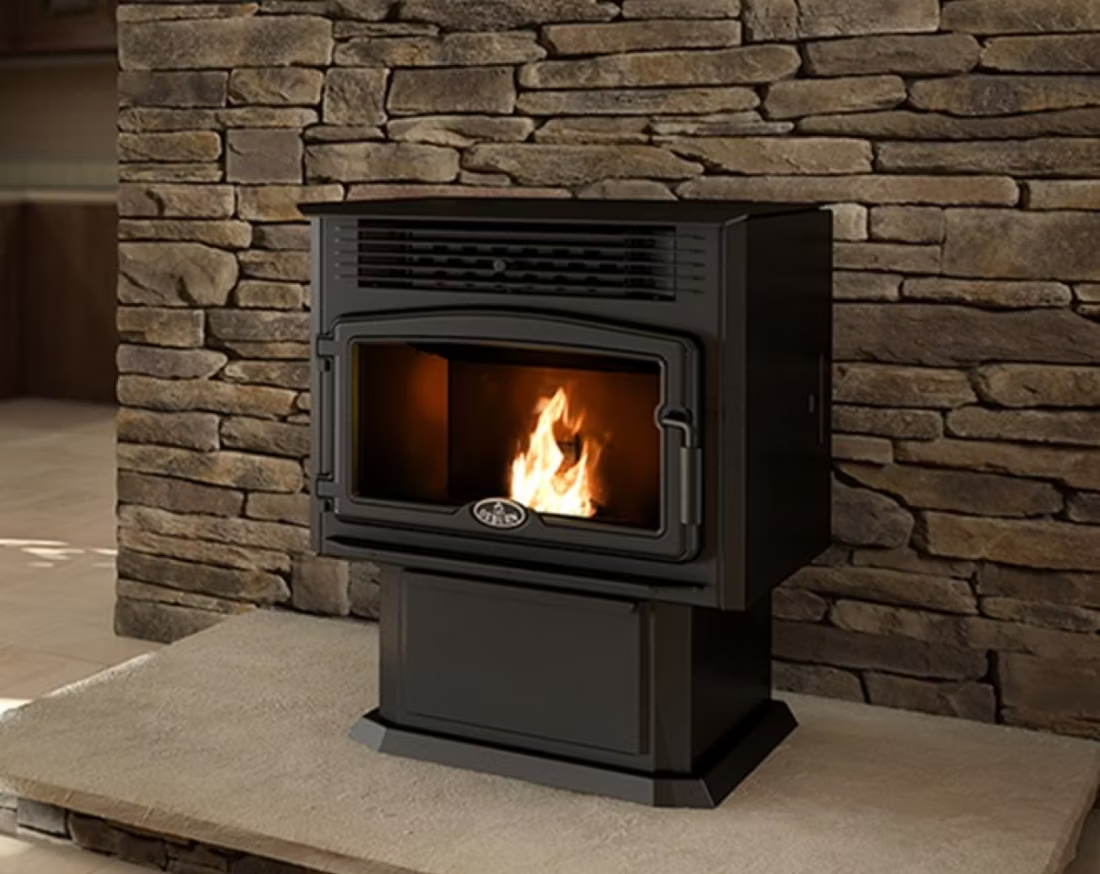
That said, pellet stoves aren't unheard of in San Antonio—homeowners in older neighborhoods like Monte Vista or Terrell Hills with existing masonry fireplaces sometimes install a pellet insert for supplemental heat and the look of a real fire without hauling firewood. Worth knowing up front: pellet stoves run on an electric auger, hopper feed, and blower, which makes them a poor fit as an outage backup—something Texas homeowners think about after Winter Storm Uri in February 2021 knocked out power across the ERCOT grid for days. If backup heat during an outage matters to you, that's a real factor to weigh against a wood-burning option.
Three steps. No salesperson until you're ready.
Tell us about your project
Your zip code, your situation, and the fuel you're leaning toward—or let the answers point you to one.
See what's actually available
The brands dealers within 100 miles genuinely carry—real options, never a catalog mirage.
Get your dealer & Project Guide
A trusted local dealer, plus the free Project Guide & Parts List that names every component of the job.
Frequently Asked Questions
Are pellet stoves actually available in San Antonio, or is this a niche request?
They're available, but genuinely uncommon. With only about 1,527 heating degree days a year and winter lows averaging 40°F, most San Antonio hearth and HVAC dealers don't keep pellet stoves in regular stock the way a dealer in a colder climate would—they special-order them. That doesn't mean it's a bad idea for the right home; it just means you'll want a dealer who's actually installed one before, not someone guessing at venting and hearth clearances for the first time.
What does a pellet stove installation cost in San Antonio?
There isn't a well-established local price range here the way there would be in a market with regular pellet stove demand, since so few get installed. Nationally, a pellet stove or insert with a through-wall vent kit typically runs $3,000 to $6,500 installed, and that range holds reasonably well for San Antonio too. Expect the estimate to shift depending on whether you're converting an existing masonry fireplace (common in older San Antonio homes) or installing fresh, which usually means more hearth pad and framing work.
Will a pellet stove keep working if the power goes out, like during Winter Storm Uri?
No, not without a generator or battery backup sized for continuous use. A pellet stove depends on electricity to run the auger that feeds fuel, the igniter, and the combustion blower—cut the power and the fire stops within minutes. That's an important distinction for Texas homeowners who remember the ERCOT grid failures during the February 2021 freeze. A wood-burning stove or fireplace doesn't have that dependency, which is why some San Antonio homeowners choose wood or gas with a battery-backed ignition system if grid-down heat is the priority.
What pellets are actually sold in the San Antonio area?
Forest Energy and Lignetics are the regional brands you're most likely to find at Ace Hardware, Tractor Supply, or a local hearth dealer. One thing to watch for: because mesquite and oak are so tied to grilling and smoking culture here, a lot of bagged pellets on shelves are BBQ-grade, meant for smokers rather than heating appliances. Heating-grade pellets are typically a hardwood or hardwood-softwood blend certified to a specific ash and moisture content—ask your dealer specifically for heating pellets, not smoker pellets, when you're stocking up.
Do I need a permit to install a pellet stove in San Antonio?
Yes—venting a pellet appliance through an exterior wall requires a building permit through the City of San Antonio Development Services Department (or your county's building department if you're outside city limits in unincorporated Bexar County). Because pellet installs are uncommon here, it's worth confirming your installer has pulled this type of permit before—the inspection focuses on wall penetration clearances and termination point placement relative to windows and doors, which differs from wood chimney inspections.
Does a pellet stove even make sense for my San Antonio home?
It depends on what you're solving for. If you want a primary heat source, it almost certainly doesn't pencil out—San Antonio's mild winters mean most homes are fine on a heat pump or gas furnace, and a pellet stove adds fuel handling and hopper-filling for a handful of cold nights a year. Where it does make sense: an older home with an existing but unused masonry fireplace where you want real flame and some supplemental warmth without the ash and creosote of full wood burning, or a homeowner who specifically likes the lower-maintenance burn of pellets over cordwood.
Pellet stove or pellet insert—which fits an existing San Antonio fireplace?
If you already have a wood-burning masonry fireplace—common in older San Antonio neighborhoods like Alamo Heights or King William—a pellet insert is usually the better fit. It slides into the existing firebox and vents through the chimney with a smaller liner, so you're not cutting a new wall penetration. A freestanding pellet stove makes more sense if you don't have an existing fireplace and are placing a unit fresh, since it just needs floor clearance and a through-wall vent kit rather than a full chimney.
Would gas make more sense than pellet for a San Antonio home?
For most homeowners here, yes. Gas fireplaces and inserts are a standard, well-supported option in San Antonio, with plenty of local dealers who install and service them regularly—unlike pellet, which usually means a special order. Gas also gives you instant on-off heat without hopper refills or ash cleanup, and models with battery-backed ignition can still run during a power outage, which a pellet stove cannot. Pellet still has a place if you specifically want the look and feel of a real wood-style fire without hauling firewood, but gas is the more practical everyday choice in this climate.
What about an electric fireplace instead of pellet?
Worth a look, especially given San Antonio's mild heating needs. Electric inserts install in a fraction of the time a pellet or gas unit takes—no venting required at all—and residential electric rates in the San Antonio area, served in parts of the metro by co-ops like Karnes Electric, Guadalupe Valley Electric, and Bandera Electric, run roughly 10 to 12.5 cents per kWh, which keeps operating costs reasonable for occasional use. You lose the real-flame ambiance of burning fuel, but for a home that just wants supplemental warmth and a fireplace look with minimal installation hassle, electric is often the simplest answer in a climate zone this mild.
How often does a pellet stove need cleaning?
A clean pellet stove is a happy pellet stove. Plan on cleaning the burn pot about once a week when you're burning regularly—ash and clinkers gum up the air holes just like a pellet barbecue. Most pellet stove problems trace back to skipped cleaning that nobody explained up front. Some designs make it easy with a trapdoor burn pot: pull a lever and the gunk drops into the ash pan.
Why is my open fireplace making my house colder?
Open fireplaces suck—literally. As the fire burns, it consumes air your furnace already paid to heat and pulls it out through the chimney, so the house is actually colder after the fire goes out than before you lit it. An insert fixes this: it seals the chimney, puts fixed glass across the front, and turns that hole in your house into a real heat source.
What is an in-home preview and do I need one?
It's a visit where a hearth professional measures your space, confirms the model you picked actually works in your home, and walks the specs—framing, gas line, venting, finish work—before anything is ordered. Some details you just can't know until you see the house. Never make a down payment without one; it's the single most-skipped step that burns buyers.
How much should I budget for a fireplace?
For an average home—covering the fireplace, the vent pipe, and basic installation—a budget between $3,900 and $5,500 gives you a lot of options across wood, gas, and pellet. By the time you add finish work, gas line, and electrical, the average complete installation lands between $5,000 and $12,000 all-in. In a remodel or new build, a good rule is to put about 2.5% of the total project cost toward the fireplace.
Nearby Dealers
Hearth shops serving San Antonio and the surrounding area. Every listing shows whether it is a WhyFire partner, a dealer we have verified as authorized for the brands we recommend, or a local business carrying hearth products. No manufacturer pays for placement. How we verify dealers →
Area – San Antonio, Tx
Orange County Bldg Materl
Installed Building Products, LLC
Home & Patio
Bbq Outfitters
Parrish & Company Inc - San Antonio
Pico Propane Operating
Pellet Brands Stocked Around San Antonio
Manufacturers will point you to the nearest stocking dealer.
Find your pellet stove in San Antonio.
Tell us about your home and we'll match you with a local San Antonio dealer who can actually source and install a pellet stove or insert—and send you a free Project Guide & Parts List with the exact parts, including the vent kit, for your project.
Find Your Fireplace →