
Fireplace heat for Robertson County's mild Texas winters.
Wood, gas, pellet, and electric fireplace resources for every community in Robertson County—from Franklin and Hearne to Calvert, Bremond, and the smaller crossroads towns in between. Find the right unit and connect with a trusted local hearth retailer.
Every Project Starts From One of These Five Situations
Ambiance and occasional cold snaps define heating in Robertson County, Texas.
Robertson County sits in Climate Zone 2A, with an average winter low of 39°F and just 1,764 heating degree days a year—a fraction of what a place like Duluth, Minnesota logs in a single winter. Central heat handles most days here, which means a fireplace or stove in this county is less about surviving January and more about the handful of hard freezes each year, plus the everyday appeal of a real fire. Local oak, pecan, and mesquite—the same woods that fuel the region's smokers and pits—are the go-to firewood, easy to source from area ranches and tree services.
What you'll find on this hub: hearth retailers, service technicians, and fuel suppliers reaching every community in the county—Franklin, Hearne, Calvert, Bremond, Mumford, Wheelock, and the rural addresses in between. Because Robertson County is small (under 8,000 residents) and largely agricultural, many of the retailers and technicians who cover it are actually based in nearby Bryan–College Station or Waco and travel in for installs and service calls. Pick your fuel below to see local dealers, installation costs, and the resources specific to your project.
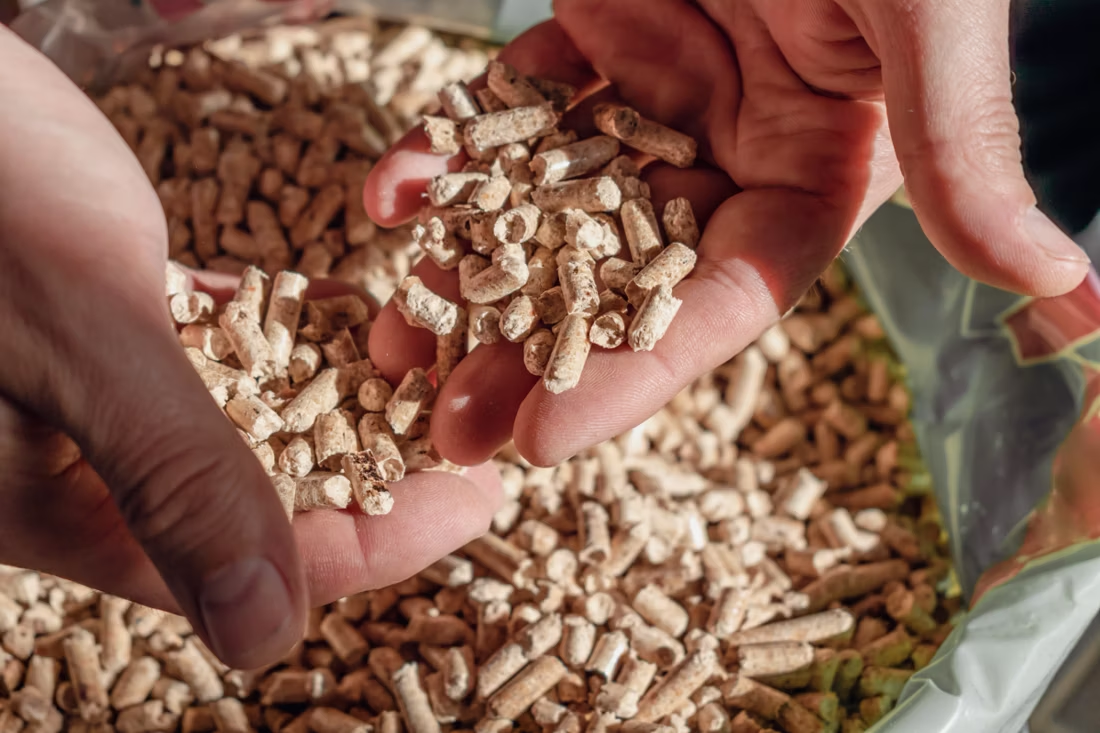
Four fuels. One honest answer for Robertson County.
Three steps. No salesperson until you're ready.
Tell us about your project
Your zip code, your situation, and the fuel you're leaning toward—or let the answers point you to one.
See what's actually available
The brands dealers within 100 miles genuinely carry—real options, never a catalog mirage.
Get your dealer & Project Guide
A trusted local dealer, plus the free Project Guide & Parts List that names every component of the job.
Frequently Asked Questions
Do I even need a fireplace or stove in Robertson County's climate?
Most homes here run on central HVAC for day-to-day comfort—with only 1,764 heating degree days a year and average winter lows around 39°F, a fireplace isn't carrying the heating load the way it would in a place like Bozeman, Montana. That said, interest in wood stoves and inserts picked up noticeably after Winter Storm Uri in 2021, when a lot of rural Robertson County homes lost power for days during a hard freeze. Wood is the fuel of choice for that backup-heat, no-electricity scenario, and oak or pecan splits are easy to source locally. Gas or propane fireplaces are the convenience pick for everyday ambiance since they light instantly with a remote. Pellet stoves need electricity to run the auger and blower, so they're less useful as an outage backup unless paired with a generator. Electric fireplaces are purely supplemental—nice for a den or bedroom, not a cold-snap solution.
Do I need a permit to install a fireplace in Robertson County?
Usually, yes, though the process is lighter-touch than in a larger county. If you're inside city limits—Franklin, Hearne, Calvert, or Bremond—permitting for a new wood stove, insert, gas fireplace, or pellet stove runs through that city's building department. Outside city limits, in unincorporated Robertson County, requirements are less standardized and it's worth a call to the county before you start; many rural installs still need a permit for the gas line or electrical work even if the appliance itself isn't separately permitted. Electric fireplaces that plug into an existing outlet typically don't require a permit; a hardwired built-in with a new circuit usually does. Most local retailers who install here handle this paperwork as part of the job.
Are there any burn restrictions in Robertson County?
There are no air-quality nonattainment issues here—Robertson County isn't subject to the winter inversion or wildfire-smoke advisories you'd see in a place like the Klamath Basin. The restriction to actually watch for is a county burn ban, which Robertson County (like most rural Texas counties) can issue during dry, drought-prone stretches. Those bans apply to outdoor burning—brush piles, agricultural burning, debris—not to a properly installed indoor wood stove or fireplace with a certified chimney system. If you're clearing land or burning debris on a ranch, check the county's current burn ban status before you strike a match.
Can one local hearth retailer handle all four fuel types in a county this small?
It's less common here than in a larger metro. Robertson County's population of under 8,000 doesn't support a large standalone hearth showroom, so most of the retailers who serve Franklin, Hearne, and Calvert are based in the Bryan–College Station area and carry a mix of wood, gas, pellet, and electric units they'll bring out for a consultation. A handful of feed stores and farm-supply outlets in the county sell wood stoves or pellets but aren't full-service installers. If you want to compare fuel types side-by-side on a working display, that generally means a short drive to a Bryan–College Station showroom; local installers then handle the actual work in your Robertson County home.
How does installation and service work for rural Robertson County addresses?
Expect a travel charge built into most quotes—technicians and installers are commonly coming from Bryan–College Station, roughly 30-45 minutes from Franklin or Hearne depending on the route, or occasionally from Waco to the north. For a ranch property off a county road rather than a paved city street, mention that up front when you schedule; it can affect how a crew plans a chimney or vent installation. Fall (September–October) is the easiest time to book, before the first real cold front sends everyone calling at once. If you're relying on wood heat as a power-outage backup, get your annual chimney sweep done before storm season rather than waiting for a freeze warning.
What does fireplace installation typically cost across fuel types in Robertson County?
Costs run a bit lower here than in higher-HDD counties, since venting and clearance work tends to be simpler on the area's mostly single-story homes. Wood stove or insert: roughly $3,500–$7,500 installed, more if a new masonry chimney chase is needed. Propane fireplace, insert, or stove: roughly $4,000–$9,000, with tank setup and gas line run being the biggest cost swing for rural properties without existing propane service. Pellet stove or insert: roughly $4,000–$6,500 for a typical install. Electric fireplace: $200–$2,500 for the unit itself, plus $300–$900 in labor unless it's a simple plug-and-play wall unit. Ask any quoted retailer whether their travel fee from Bryan–College Station or Waco is already included.
Can a fireplace actually lower my heating bill?
Yes—by creating a comfort zone. A furnace heats every square foot of the house just to warm the one room you're in; a gas fireplace on low burns roughly a sixth of the gas a typical furnace does. Set the furnace around 55–60 degrees as a baseline, then heat the rooms your family actually uses. Families who heat this way commonly save $20–$60 a month.
Wood, gas, pellet, or electric—how do I choose?
Match the fuel to your life, not the other way around. Wood: lowest fuel cost and total power-outage independence, but you're hauling and stacking. Gas: press a button, set a thermostat, no maintenance to speak of. Pellet: wood economics with automatic feeding, in exchange for weekly cleaning and a need for electricity. Electric: plugs in anywhere with honest supplemental heat. Nobody regrets the fuel that fits how they actually live.
Can I install a fireplace myself?
If you're putting a fire in your house on purpose, it's best to work with an expert. Unless you're genuinely experienced in framing, gas line, vent pipe, and the national code on clearances to combustibles, have a professional do it—and ideally the same company that sells you the fireplace, so warranty, service, and liability all live under one roof.
Does a fireplace add value to my home?
On average, a fireplace adds back to the home about the same amount you spent installing it. Add the monthly savings from heating the rooms you actually use instead of the whole house—often hundreds of dollars a year—and the value case is strong before you even count what a fire does for how your family uses the room.
Stove and Fireplace Dealers in Robertson County
Listings include WhyFire partner dealers, dealers we have verified as authorized for the brands we recommend, and established local businesses that carry hearth products. Every listing shows which one it is. The ones marked Preferred run on WhyFire's software, so they can show you real pricing and book your appointment right here. No manufacturer pays for placement. How we verify dealers →
Aaa Overhead Door Company
Denio's Furniture Flooring
Lyne Home Products
Find your fireplace in Robertson County.
Pick your fuel below and we'll match you with a trusted local dealer and send over a free Project Guide & Parts List—the exact parts, vent kit included, and the dealer we recommend for your Robertson County home.
Find Your Fireplace →