
Find the right fireplace for Polk County's mild winters.
Wood, gas, pellet, and electric fireplace resources for Livingston, Onalaska, Corrigan, Goodrich, and the lake communities around Lake Livingston. Get matched with a trusted local hearth retailer who knows what actually works here.
Every Project Starts From One of These Five Situations
Piney Woods heating in Polk County, Texas.
Polk County sits in the East Texas Piney Woods, wrapped around the shoreline of Lake Livingston, in a humid subtropical climate zone (2A) where the average winter low hovers near 40°F and the winter heating load is light over the year—a fraction of what a place like Minneapolis, Minnesota logs in a single hard winter. That means most Polk County fireplaces aren't fighting single-digit nights; they're built for the occasional hard freeze, the damp cold front off the Gulf, and the January ice storm that can knock out power for days. Oak, pecan, and mesquite are the wood species people already know from smoking a brisket or clearing a lot—they burn just as well in a stove or fireplace insert, and firewood is cheap and local for anyone with a truck and a chainsaw.
This hub rolls up hearth retailers, service technicians, and fuel suppliers across the whole county—from Livingston down to Onalaska and Corrigan, out to Goodrich and the smaller communities that ring the lake. Pick your fuel below to see local dealers, typical installation costs, and the units that fit your home, whether that's a lake house that only needs heat on the coldest weekends or a year-round residence that leans on a stove during ice storms.
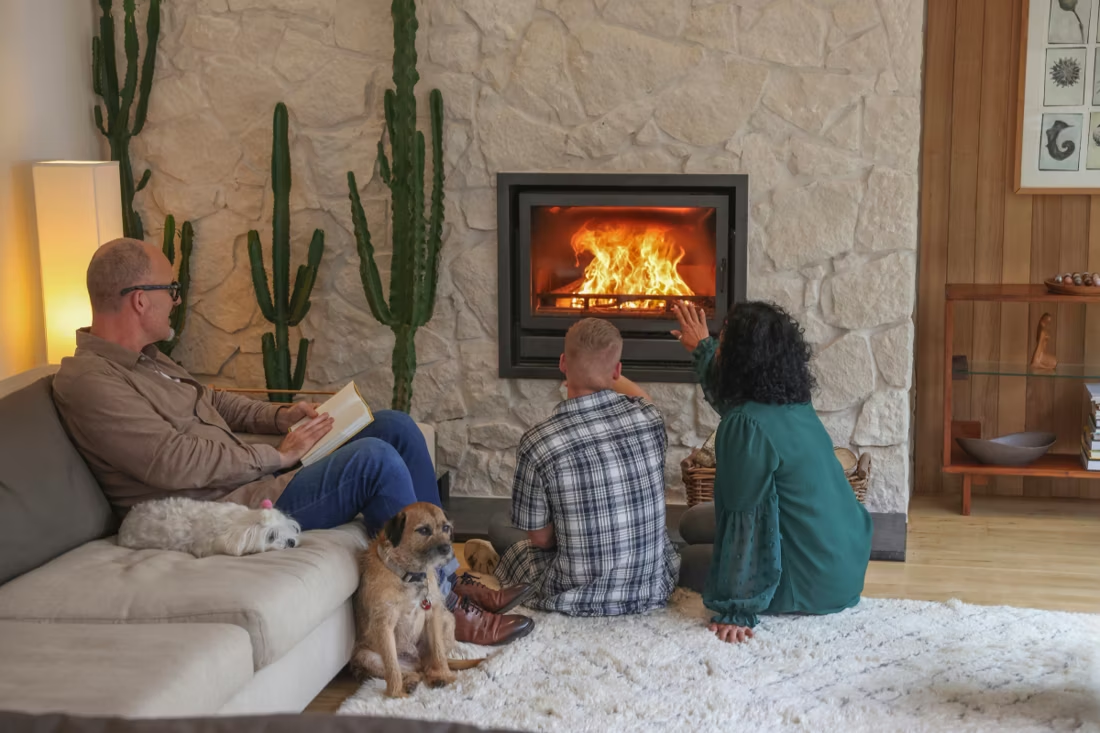
Four fuels. One honest answer for Polk County.
Three steps. No salesperson until you're ready.
Tell us about your project
Your zip code, your situation, and the fuel you're leaning toward—or let the answers point you to one.
See what's actually available
The brands dealers within 100 miles genuinely carry—real options, never a catalog mirage.
Get your dealer & Project Guide
A trusted local dealer, plus the free Project Guide & Parts List that names every component of the job.
Frequently Asked Questions
Which fuel works best in Polk County?
It depends on how you use your home. Wood remains a strong, low-cost choice here—oak, pecan, and mesquite are already the go-to species for smoking and firewood, so fuel is cheap and easy to source locally, and a wood stove or fireplace insert gives you heat that works even when the power's out after an ice storm or a tropical system moves through. Gas, mostly propane in the more rural parts of the county, is the low-maintenance option for full-time residents who want heat at the flip of a switch without splitting wood. Pellet stoves are a solid middle ground—Forest Energy and Lignetics bags are both available regionally, and pellet appliances give you wood-like ambiance without the labor. Electric fireplaces do well here precisely because the heating season is short—with such a light winter heating load over the year, many Polk County homeowners want the look of a fire more than they need a serious heat source, and electric delivers that without any venting or fuel storage.
Do I need a permit to install a fireplace in Polk County?
In most cases, yes, though the process is straightforward. New wood stoves, inserts, gas fireplaces, gas inserts, and pellet stoves typically require a building permit, and gas installations need a licensed gas-fitter to handle the line connection and pressure testing. Whether you go through the City of Livingston or the Polk County building department depends on whether your property sits inside city limits or out in one of the unincorporated lake communities. Electric fireplaces usually skip the permit process unless you're doing a built-in installation that requires new wiring or a dedicated circuit. Most local retailers pull the permit as part of the install, so you're not typically handling paperwork yourself.
Are there air quality restrictions on wood burning in Polk County?
No—Polk County doesn't carry the non-attainment status or winter inversion problems that restrict wood burning in some other parts of the country, and there are currently no mandatory burn curtailment days here. That said, an EPA-certified wood stove or insert still burns cleaner and more efficiently than an open fireplace or an old uncertified unit, which matters for a home right on Lake Livingston where smoke can settle over the water on calm, humid nights. It's less a regulatory issue here and more a matter of getting the most heat out of the oak and pecan you're already burning.
Can one local hearth retailer handle all four fuel types?
Many dealers serving Polk County carry at least two or three fuel types, since a lot of customers here are choosing between a wood stove for backup heat and a gas or electric unit for everyday convenience. If you're not sure which fuel fits your situation—a full-time house near Livingston versus a weekend place on the lake—a multi-fuel dealer can walk you through working displays and talk through what actually makes sense for how you use the home, rather than just what they happen to have in stock.
How does service work in the lake communities around Polk County?
Most technicians are based near Livingston and drive out to Onalaska, Corrigan, Goodrich, and the smaller communities ringing Lake Livingston—expect a modest travel charge for anything well outside town. Timing matters more than distance here: Polk County's mild winters mean most service calls aren't weather emergencies, but the county does get hit periodically by ice storms and the occasional remnant of a Gulf hurricane that knocks out power for days. That's exactly when a working wood or gas appliance stops being decorative and starts being the only heat in the house—which is why a lot of residents schedule their annual chimney sweep or gas inspection in early fall, before storm season winds down and cold fronts start rolling through.
What's the typical cost range for fireplace installation across all fuel types in Polk County?
Costs run lower here than in colder-climate markets since venting and chimney work tend to be simpler. Wood stove or insert installation typically runs $3,500–$7,500, depending on chimney condition and whether you're adding a full liner. Gas fireplace, insert, or stove installs run roughly $4,000–$9,000, with propane tank setup or line work adding to the higher end for homes without existing service. Pellet stove or insert installation generally falls between $3,500–$6,500. Electric fireplaces are the least expensive route—$200–$2,500 for the unit itself, plus $300–$1,000 in labor for anything beyond a plug-in install. Ask your local dealer for a firm quote once they've seen the space—chimney condition and venting path affect the number more than the fuel choice itself.
Can I install a fireplace myself?
If you're putting a fire in your house on purpose, it's best to work with an expert. Unless you're genuinely experienced in framing, gas line, vent pipe, and the national code on clearances to combustibles, have a professional do it—and ideally the same company that sells you the fireplace, so warranty, service, and liability all live under one roof.
Can a fireplace actually lower my heating bill?
Yes—by creating a comfort zone. A furnace heats every square foot of the house just to warm the one room you're in; a gas fireplace on low burns roughly a sixth of the gas a typical furnace does. Set the furnace around 55–60 degrees as a baseline, then heat the rooms your family actually uses. Families who heat this way commonly save $20–$60 a month.
How much should I budget for a fireplace?
For an average home—covering the fireplace, the vent pipe, and basic installation—a budget between $3,900 and $5,500 gives you a lot of options across wood, gas, and pellet. By the time you add finish work, gas line, and electrical, the average complete installation lands between $5,000 and $12,000 all-in. In a remodel or new build, a good rule is to put about 2.5% of the total project cost toward the fireplace.
Should the dealer who sells my fireplace also install it?
Ideally, yes. A fireplace project involves vent pipe, gas line, electrical, and often tile or stone. Hire three or four separate trades and you own the liability and the game of telephone between them. One company selling and installing means one accountable party, start to finish—ask about factory training, on-time completion records, and what happens if an inspection fails.
Stove and Fireplace Dealers in Polk County
Listings include WhyFire partner dealers, dealers we have verified as authorized for the brands we recommend, and established local businesses that carry hearth products. Every listing shows which one it is. The ones marked Preferred run on WhyFire's software, so they can show you real pricing and book your appointment right here. No manufacturer pays for placement. How we verify dealers →
Fireplace & Patio Shop
Tri-Supply - Conroe
All Fired Up Fireplace & Outdoor
Creekstone Outdoors
Creekstone Custom
Find your fireplace in Polk County.
Tell us about your project and we'll match you with a trusted local dealer and send a free Project Guide & Parts List—the parts, the vent kit, and the recommended installer for your fuel and your home.
Find Your Fireplace →