
Find your fireplace fit for Panola County's mild East Texas winters.
Wood, gas, pellet, and electric fireplace resources for Carthage, Beckville, De Berry, and every community in Panola County—matched to a heating season that's short but still worth doing right.
Every Project Starts From One of These Five Situations
Mild-winter heating in the East Texas piney woods.
Panola County sits in the East Texas piney woods along the Louisiana border, with a climate zone of 3A and a light winter heating load—a fraction of what a place like Bismarck, ND logs in a single season. Winter lows average a mild 36°F, so this isn't a county built around all-night overnight burns. It's a county where a fireplace or stove gets real, regular use on cold snaps and shoulder-season evenings, backed by an abundance of local oak, pecan, and mesquite for those who burn wood.
What you'll find on this hub: hearth retailers, service technicians, and fuel suppliers serving Carthage and every smaller community across the county, from Beckville to De Berry and Gary. Pick your fuel below to see local dealers, typical installation costs, and recommended units for a Panola County home. Whether you're outfitting a lake house near Lake Murvaul or a farmhouse outside Carthage, this is the place to start.
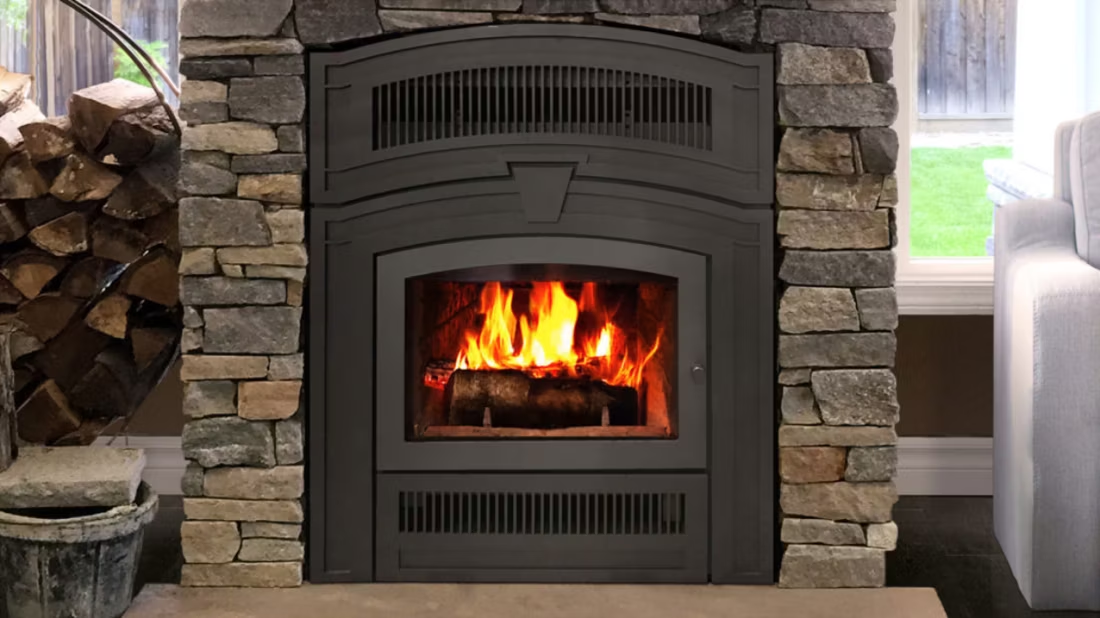
Four fuels. One honest answer for Panola County.
Three steps. No salesperson until you're ready.
Tell us about your project
Your zip code, your situation, and the fuel you're leaning toward—or let the answers point you to one.
See what's actually available
The brands dealers within 100 miles genuinely carry—real options, never a catalog mirage.
Get your dealer & Project Guide
A trusted local dealer, plus the free Project Guide & Parts List that names every component of the job.
Frequently Asked Questions
Which fuel works best in Panola County?
With winter lows averaging 36°F and only a light winter heating load, Panola County doesn't demand the round-the-clock burn capacity of a colder climate—but the right fuel still matters for how you actually use your fireplace. Wood is popular here in part because local oak, pecan, and mesquite are plentiful and burn well; many homeowners split their own or buy from a nearby supplier. Gas is the low-maintenance choice for weekend cabins and homes that want instant on/off heat without stacking wood. Pellet works for homeowners who want wood-like ambiance with less mess, and regional brands like Forest Energy and Lignetics keep fuel accessible. Electric fits well in bedrooms, rentals, or as supplemental ambiance where venting isn't practical. Most Panola County homes lean on one primary fireplace for occasional real heat and treat the rest as ambiance.
Do I need a permit to install a fireplace in Panola County?
For most new wood, gas, or pellet installations—especially anything involving new venting, a chimney, or gas line work—yes, a building permit is typically required, and gas work also needs a licensed gas-fitter for the line connection. Electric fireplaces usually skip the permit process unless you're hardwiring a built-in unit into a new circuit. Carthage and the unincorporated parts of the county have different permitting paths, so check with your local building office before work starts. Most hearth retailers serving the area handle this paperwork as part of a full installation, so you're not left figuring it out solo.
Do I need to worry about air quality restrictions on wood burning in Panola County?
No—Panola County has no active air quality concerns or wood-burning curtailment programs, unlike basin or non-attainment areas out west that see winter inversion advisories. That means no yellow or red burn-day restrictions to track here. The main practical consideration is simply making sure any new wood stove or insert is a reasonably efficient, modern unit, which your local retailer can confirm when you install.
Can one local hearth retailer handle all four fuel types?
In a county with a population under 8,000, most retailers focus their inventory on the two or three fuels their customers actually ask for most—often wood and gas, sometimes pellet. If a dealer near Carthage doesn't stock electric units in-store, they can usually still point you to a supplier or handle a special order. If you're not sure which fuel fits your home, ask the retailer directly which fuels they install regularly versus which they'd need to source—that's a faster answer than guessing from a website.
How does fireplace service work in the smaller towns around Panola County?
Technicians based in or near Carthage typically travel out to Beckville, De Berry, Gary, and the rural areas around Lake Murvaul for annual service and repairs. Given the mild winters here, off-season scheduling (spring through early fall) is usually easier than trying to book a technician during a rare cold snap when everyone's chimney or gas unit gets checked at once. If you burn wood regularly, an annual sweep before the first cold front of the season is the simplest way to stay ahead of buildup.
What's the typical cost range for fireplace installation across all fuel types in Panola County?
Costs run lower here than in many colder-climate markets, partly because installs are often simpler—less need for oversized venting or heavy-duty catalytic units built for extreme cold. Wood stove or insert: roughly $3,500–$7,500 for a typical install. Gas fireplace, insert, or stove: roughly $3,500–$8,500 depending on gas line work and venting. Pellet stove or insert: roughly $3,500–$6,000. Electric fireplace: $200–$2,500 for the unit, plus $300–$900 in labor unless it's plug-and-play. See the county + fuel pages above for cost detail tied to specific local retailers.
Wood, gas, pellet, or electric—how do I choose?
Match the fuel to your life, not the other way around. Wood: lowest fuel cost and total power-outage independence, but you're hauling and stacking. Gas: press a button, set a thermostat, no maintenance to speak of. Pellet: wood economics with automatic feeding, in exchange for weekly cleaning and a need for electricity. Electric: plugs in anywhere with honest supplemental heat. Nobody regrets the fuel that fits how they actually live.
What is an in-home preview and do I need one?
It's a visit where a hearth professional measures your space, confirms the model you picked actually works in your home, and walks the specs—framing, gas line, venting, finish work—before anything is ordered. Some details you just can't know until you see the house. Never make a down payment without one; it's the single most-skipped step that burns buyers.
What are the biggest mistakes people make buying a fireplace?
Five come up constantly: budgeting for the unit but not the full job (vent, gas line, electrical, finish work); drowning in options instead of starting from style and fuel; buying without an in-home preview; handing installation to a handyman instead of a pro; and giving up out of sheer indecision. Every one is avoidable with a clear plan—step one, step two, step three.
How much should I budget for a fireplace?
For an average home—covering the fireplace, the vent pipe, and basic installation—a budget between $3,900 and $5,500 gives you a lot of options across wood, gas, and pellet. By the time you add finish work, gas line, and electrical, the average complete installation lands between $5,000 and $12,000 all-in. In a remodel or new build, a good rule is to put about 2.5% of the total project cost toward the fireplace.
Stove and Fireplace Dealers in Panola County
Listings include WhyFire partner dealers, dealers we have verified as authorized for the brands we recommend, and established local businesses that carry hearth products. Every listing shows which one it is. The ones marked Preferred run on WhyFire's software, so they can show you real pricing and book your appointment right here. No manufacturer pays for placement. How we verify dealers →
Custom-Bilt Cabinet & Supply
Fireplace Specialties
Get matched with a Panola County hearth dealer.
Tell us your fuel and your home, and we'll match you with a trusted local retailer and send a free Project Guide & Parts List—the exact parts, vent kit included, and the dealer we recommend for your Panola County installation.
Find Your Fireplace →