
Heat that holds up on the High Plains of Oldham County.
Fireplace resources for Vega, Adrian, Wildorado, and the ranches spread across Oldham County's open plains. Get matched with a trusted local dealer who knows what actually holds up out here.
Every Project Starts From One of These Five Situations
Flat, wind-swept ranch country calls for wind-proof, low-maintenance heat.
Oldham County sits in the Texas Panhandle along the Canadian River breaks, home to just over 1,500 people spread across roughly 1,500 square miles of high plains and canyon country near 3,700 feet elevation. Winters bring real cold fronts and near-constant wind off the caprock, but this is IECC climate zone 4B—mixed-dry, closer in heating demand to Amarillo than to a true continental winter like Bismarck, ND. Oak, pecan, and mesquite grow along the Canadian River draws, but tree cover across the county is thin and scattered—nowhere near enough to support firewood as a primary heat source the way it does in a timbered county. Wood stoves and pellet stoves are essentially absent here; ranches and the county's small towns run on propane tanks and grid electricity instead.
What you'll find on this hub: gas and electric fireplace resources for every community in the county—Vega (the county seat), Adrian (near the geographic midpoint of old Route 66), Wildorado, and the Boys Ranch area along the Canadian. Pick your fuel below to see local dealers, typical installation costs, and unit recommendations suited to a windy, rural Panhandle property.
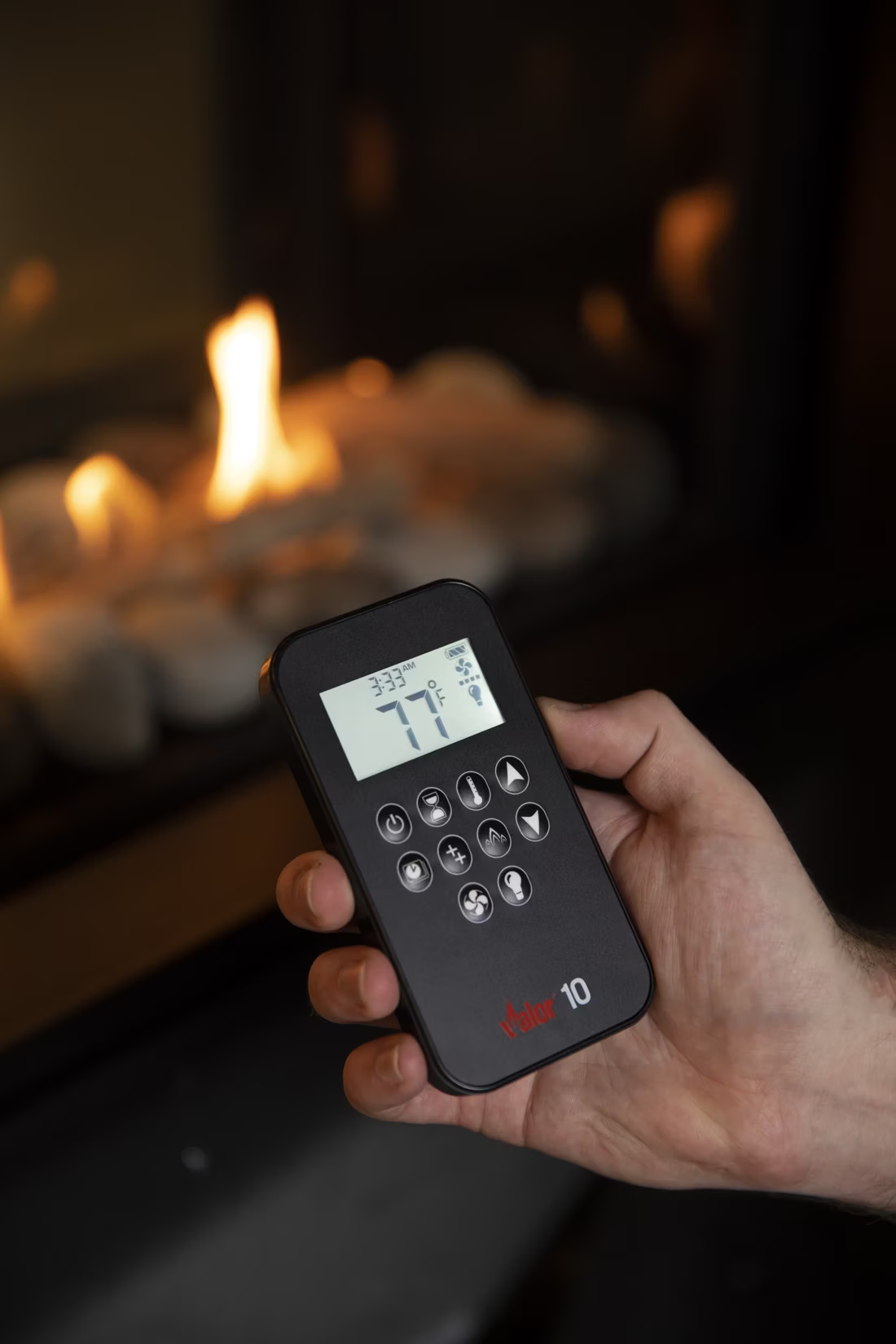
Four fuels. One honest answer for Oldham County.
Three steps. No salesperson until you're ready.
Tell us about your project
Your zip code, your situation, and the fuel you're leaning toward—or let the answers point you to one.
See what's actually available
The brands dealers within 100 miles genuinely carry—real options, never a catalog mirage.
Get your dealer & Project Guide
A trusted local dealer, plus the free Project Guide & Parts List that names every component of the job.
Frequently Asked Questions
Which fuel works best in Oldham County?
For most homes here, it's propane or electric. This is genuinely thin country for wood heat—oak, pecan, and mesquite grow along the Canadian River breaks, but there's no county-wide woodlot or firewood supply chain the way there is in a heavily timbered region, and the open, wind-scoured plains make an open wood hearth impractical for daily heat. A small number of ranch houses and hunting cabins still keep a wood-burning fireplace for atmosphere, but it's the exception, not the plan. Propane-fired gas fireplaces and inserts are the practical default for primary supplemental heat—sealed combustion holds up against Panhandle wind far better than an open flue. Electric fireplaces work well in bedrooms, additions, and anywhere running a new gas line isn't worth the cost. Pellet stoves are essentially unused here; without a local supply chain, most customers who want that heat style still end up choosing propane instead.
Do I need a permit to install a fireplace in Oldham County?
It depends on where the property sits. Within Vega city limits, gas and electric fireplace installations typically need a permit through the city, mainly to confirm the gas line and any new electrical circuit are done correctly. Out in unincorporated Oldham County—which is most of the county's land—Texas doesn't impose a county-wide residential building code, so many ranch-property installations proceed without a formal permit, though the propane supplier will still require their tank and line work to meet NFPA 58 propane standards. If you're unsure which applies to your address, your local propane retailer or the installing dealer can usually tell you in one phone call.
Are there air quality restrictions on burning here?
No—Oldham County has no air quality non-attainment designation and no wood-burning curtailment program, unlike some of the inversion-prone valley counties out west. That's largely academic here anyway, since wood heat is rare to begin with. If you do run an occasional wood-burning unit at a cabin or hunting lease, there's no local ordinance restricting it; the limiting factor is simply finding enough oak or mesquite firewood, since the county doesn't have the tree cover to support it as a regular fuel source.
Can one local dealer handle both gas and electric?
Yes, and that's typically what you want here. Because the county's population is small, the dealers who serve Oldham County—mostly based out of the Amarillo area—carry both propane-fired hearth products and electric fireplace lines rather than specializing in one. That's useful if you're deciding between running a new propane line to a fireplace or installing a plug-in electric unit instead: a multi-fuel dealer can walk you through the real cost and maintenance difference for your specific ranch or town-lot property rather than pushing whichever fuel they happen to stock.
How does installation and service work across such a sparsely populated county?
Expect some travel time built into any quote. With around 1,500 residents spread over 1,500 square miles, technicians serving Oldham County are almost always driving out from Amarillo or another nearby town, and a rural service call—especially for a ranch property well off Highway 385 or I-40—may carry a modest trip fee. Scheduling ahead of the first real cold front in October or November tends to go smoother than trying to book an emergency propane fireplace repair mid-winter. For remote ranch houses, it's also worth keeping a backup electric space heater on hand in case a propane delivery or service visit gets delayed by weather.
What's the typical cost range for fireplace installation across fuel types in Oldham County?
Propane fireplace, insert, or stove: roughly $4,000–$9,500 installed, with cost driven mainly by whether a new gas line and tank setup are needed versus tapping into existing propane service. Electric fireplace: $200–$3,000 for the unit itself, plus $400–$1,200 in labor for anything beyond a simple plug-in wall unit—most electric installs here fall on the lower end since new wiring is rarely required. Decorative wood-burning installations, where someone still wants one for a cabin or lease house, tend to run higher relative to the local norm simply because there's no local supplier network to lean on for parts or masonry work. Your local dealer can give you an exact number once they've seen the site.
Does a fireplace add value to my home?
On average, a fireplace adds back to the home about the same amount you spent installing it. Add the monthly savings from heating the rooms you actually use instead of the whole house—often hundreds of dollars a year—and the value case is strong before you even count what a fire does for how your family uses the room.
Wood, gas, pellet, or electric—how do I choose?
Match the fuel to your life, not the other way around. Wood: lowest fuel cost and total power-outage independence, but you're hauling and stacking. Gas: press a button, set a thermostat, no maintenance to speak of. Pellet: wood economics with automatic feeding, in exchange for weekly cleaning and a need for electricity. Electric: plugs in anywhere with honest supplemental heat. Nobody regrets the fuel that fits how they actually live.
Can I install a fireplace myself?
If you're putting a fire in your house on purpose, it's best to work with an expert. Unless you're genuinely experienced in framing, gas line, vent pipe, and the national code on clearances to combustibles, have a professional do it—and ideally the same company that sells you the fireplace, so warranty, service, and liability all live under one roof.
Can a fireplace actually lower my heating bill?
Yes—by creating a comfort zone. A furnace heats every square foot of the house just to warm the one room you're in; a gas fireplace on low burns roughly a sixth of the gas a typical furnace does. Set the furnace around 55–60 degrees as a baseline, then heat the rooms your family actually uses. Families who heat this way commonly save $20–$60 a month.
Stove and Fireplace Dealers in Oldham County
Listings include WhyFire partner dealers, dealers we have verified as authorized for the brands we recommend, and established local businesses that carry hearth products. Every listing shows which one it is. The ones marked Preferred run on WhyFire's software, so they can show you real pricing and book your appointment right here. No manufacturer pays for placement. How we verify dealers →
Panhandle Outdoor Living & Fireplaces
Boyd's Equipment
Reid's Appliance Services
West Texas Brick
Find your fireplace fit for Oldham County.
Answer a few questions about your home and we'll match you with a trusted local dealer and send over a free Project Guide & Parts List—the exact parts, including the vent kit, sized for wind-exposed Panhandle ranch country.
Find Your Fireplace →