
Find the right fireplace for your Mitchell County home.
Wood, gas, pellet, and electric fireplace resources for Colorado City, Loraine, Westbrook, and the ranch country between them. Get matched with a trusted local hearth dealer who knows what actually works in West Texas.
Every Project Starts From One of These Five Situations
Mild winters, wide skies: heating in Mitchell County, Texas.
Mitchell County sits on the rolling plains of West Texas, anchored by Colorado City on I-20. Winters here are mild by national standards—the average low hovers around 28°F and the county has a light overall winter heating load, a fraction of what a place like Fargo, ND sees in a single winter. That said, cold snaps and the occasional ice event still roll through, and most homes here are built for cooling load first, heat second—which changes the math on what fireplace makes sense. Oak, pecan, and mesquite are the local firewood standards; mesquite in particular burns hot and slow and is often cleared straight off ranch land rather than purchased.
What you'll find on this hub: hearth retailers, service technicians, and fuel suppliers covering Mitchell County—Colorado City, Loraine, and Westbrook, plus the ranches and rural addresses scattered across the county. Pick your fuel below to see local dealers, typical installation costs, and the units that fit a mild-winter, wide-open West Texas home.
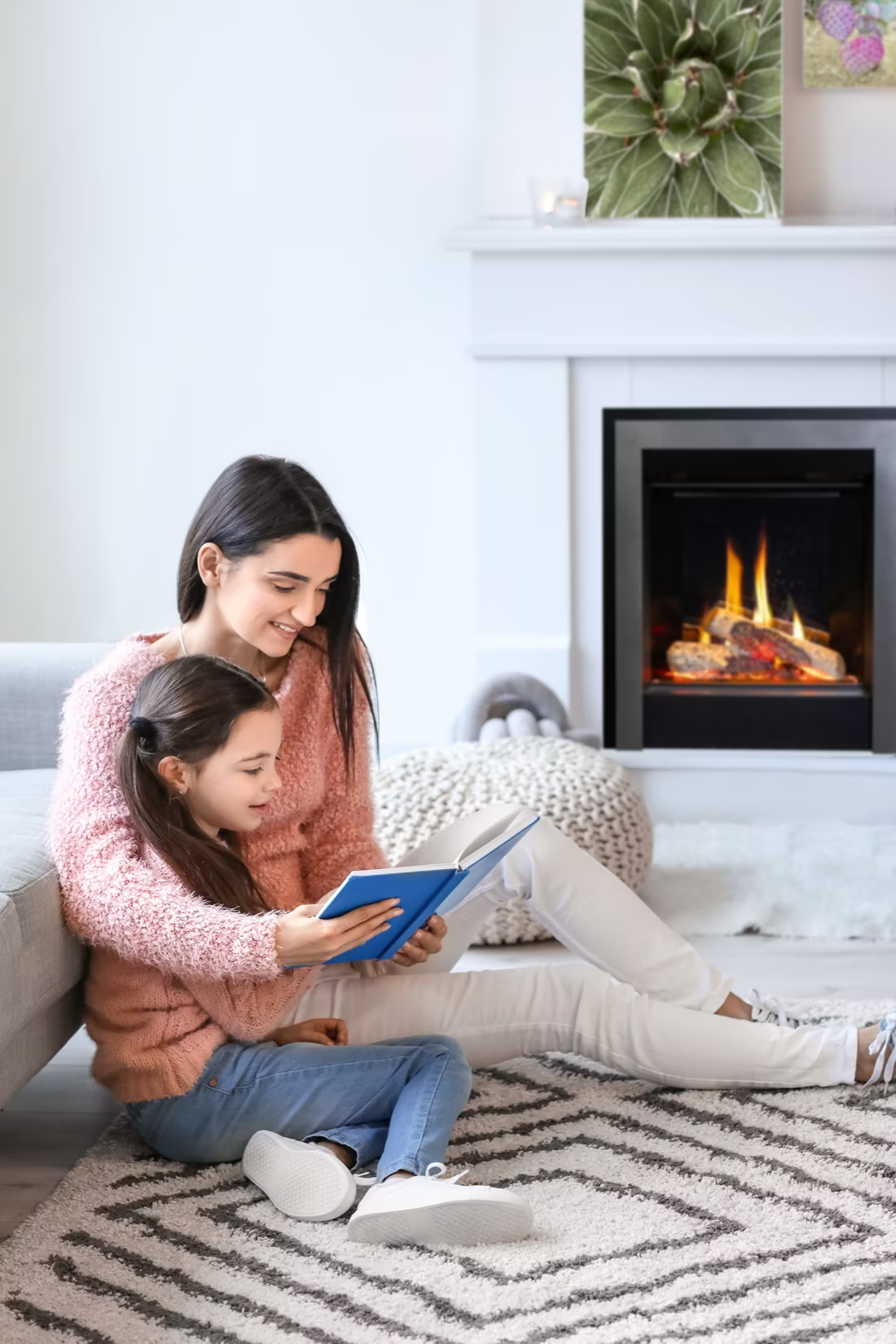
Four fuels. One honest answer for Mitchell County.
Three steps. No salesperson until you're ready.
Tell us about your project
Your zip code, your situation, and the fuel you're leaning toward—or let the answers point you to one.
See what's actually available
The brands dealers within 100 miles genuinely carry—real options, never a catalog mirage.
Get your dealer & Project Guide
A trusted local dealer, plus the free Project Guide & Parts List that names every component of the job.
Frequently Asked Questions
Which fireplace fuel makes the most sense in Mitchell County?
With an average winter low around 28°F and a light overall winter heating load, Mitchell County doesn't demand the heavy-duty cold-climate setups you'd see farther north—but each fuel still has a real place here. Wood is popular on ranch properties where mesquite clearing is routine maintenance anyway, and oak and pecan burn clean and long in a standard stove or insert. Gas is the convenience pick for homes on Atmos Energy service in Colorado City, or propane for rural addresses outside city limits—quick heat with no wood handling. Pellet stoves work fine climate-wise, though pellets (Forest Energy, Lignetics) usually have to be ordered ahead through a farm or feed supplier rather than picked up off a shelf locally. Electric fireplaces are a genuinely reasonable primary or supplemental heat source here given how mild the winters run, which isn't true in colder parts of the country.
Do I need a permit to install a fireplace in Mitchell County?
It depends on where in the county you are. Within Colorado City limits, new gas lines, wood stove installations, and any electrical work for a built-in electric fireplace typically require a permit through the city. Out in unincorporated Mitchell County—which covers most of the county's land area—building code enforcement is far lighter, and many rural installations proceed without a formal permit process, though gas work should still go through a licensed installer for safety and insurance reasons. If you're inside Colorado City, Loraine, or Westbrook's limits, check with the local office before work starts; most hearth retailers who install regularly in the area already know which jurisdiction applies to your address.
Are there any burning restrictions in Mitchell County?
Mitchell County has no air quality nonattainment designation and no routine wood-smoke restrictions like you'd find in a basin or valley community prone to winter inversions. Day-to-day wood-burning in an indoor stove or fireplace is unrestricted. The one thing to watch for is drought-driven outdoor burn bans—West Texas county judges periodically issue countywide burn bans during dry stretches that restrict outdoor debris and brush burning. Those bans target outdoor fires, not EPA-certified indoor wood stoves or inserts, but it's worth checking current county burn-ban status if you're also planning to clear mesquite or burn brush piles.
Can one local dealer handle wood, gas, pellet, and electric?
Given Mitchell County's population of under 6,000, there isn't a large multi-fuel showroom sitting in Colorado City itself. Most homeowners here end up matched with a dealer based in Abilene or Big Spring who carries multiple fuel types and travels out for installation and service—which is normal for a rural county this size. What matters is that the dealer actually services your specific address and fuel type; a shop that's excellent for gas fireplace conversions in Abilene isn't automatically the right call for a mesquite-fed wood stove out past Westbrook. That's the matching problem Find My Fireplace solves.
Where do people in Mitchell County actually source their fuel?
It varies by fuel. Firewood is often self-sourced—mesquite is routinely cleared off pasture and ranch land as part of normal land management, and oak and pecan are available from local sellers or occasionally traded among neighbors. Propane for rural homes outside Colorado City's gas service comes from regional delivery companies that serve most of West Texas. Pellets are the one fuel that takes planning: Forest Energy and Lignetics are the regional brands available, but they're typically stocked at farm and ranch supply stores or ordered ahead rather than kept on a shelf year-round, so pellet stove owners tend to buy a season's supply at once rather than restocking bag by bag.
What does fireplace installation typically cost in Mitchell County?
Costs run lower here than in colder, higher-elevation markets, partly because venting and chimney work tend to be simpler in a mild-winter climate. Wood stove or insert installation: roughly $3,500-$7,000 for a typical job. Gas fireplace, insert, or stove: $4,000-$9,000 depending on whether new gas line work is needed or you're converting an existing hookup. Pellet stove or insert: $3,500-$6,500. Electric fireplace: $200-$2,500 for the unit, plus $300-$1,000 in labor for anything beyond a plug-and-play wall unit. Exact pricing depends on your specific home and the dealer doing the work—see the county + fuel pages for more detail.
How much should I budget for a fireplace?
For an average home—covering the fireplace, the vent pipe, and basic installation—a budget between $3,900 and $5,500 gives you a lot of options across wood, gas, and pellet. By the time you add finish work, gas line, and electrical, the average complete installation lands between $5,000 and $12,000 all-in. In a remodel or new build, a good rule is to put about 2.5% of the total project cost toward the fireplace.
What is an in-home preview and do I need one?
It's a visit where a hearth professional measures your space, confirms the model you picked actually works in your home, and walks the specs—framing, gas line, venting, finish work—before anything is ordered. Some details you just can't know until you see the house. Never make a down payment without one; it's the single most-skipped step that burns buyers.
Can I install a fireplace myself?
If you're putting a fire in your house on purpose, it's best to work with an expert. Unless you're genuinely experienced in framing, gas line, vent pipe, and the national code on clearances to combustibles, have a professional do it—and ideally the same company that sells you the fireplace, so warranty, service, and liability all live under one roof.
Wood, gas, pellet, or electric—how do I choose?
Match the fuel to your life, not the other way around. Wood: lowest fuel cost and total power-outage independence, but you're hauling and stacking. Gas: press a button, set a thermostat, no maintenance to speak of. Pellet: wood economics with automatic feeding, in exchange for weekly cleaning and a need for electricity. Electric: plugs in anywhere with honest supplemental heat. Nobody regrets the fuel that fits how they actually live.
Stove and Fireplace Dealers in Mitchell County
Listings include WhyFire partner dealers, dealers we have verified as authorized for the brands we recommend, and established local businesses that carry hearth products. Every listing shows which one it is. The ones marked Preferred run on WhyFire's software, so they can show you real pricing and book your appointment right here. No manufacturer pays for placement. How we verify dealers →
Area – San Angelo, Tx
Unlimited Air
Coastal Insulation
A & A Chimeny Sweep w/Texas Fp
Find your fireplace in Mitchell County.
Tell us about your home and we'll match you with a trusted local dealer and send a free Project Guide & Parts List—the exact parts, including the vent kit, for your fireplace project in Mitchell County.
Find Your Fireplace →