
Find the right hearth for your Hill Country home.
Wood, gas, pellet, and electric fireplace resources for Menard, Hext, and the ranch country along the San Saba River. Find the right unit and connect with a trusted local hearth retailer.
Every Project Starts From One of These Five Situations
Mild winters, dependable oak, and a county built on ranching.
Menard County sits in the Edwards Plateau region of west-central Texas, with roughly 2,581 heating degree days a year and average winter lows near 29°F—a fraction of what a place like Fargo, ND sees each season. That's a mild, short heating window by national standards, but it's real: cold fronts drop temperatures fast along the San Saba River, and ranch houses with high ceilings and older construction still lean on a fireplace or stove for the coldest stretches of December and January. Oak, pecan, and mesquite are the wood species most Menard County households know best, whether cut from their own land or bought from a neighbor.
With just over 1,300 residents spread across a rural, ranch-dominated county, there isn't a hearth retailer on every corner—most homeowners here work with dealers based in nearby Hill Country towns who travel out for installs and service calls. This hub covers hearth retailers, service technicians, and fuel suppliers serving Menard and Hext, plus the unincorporated ranch communities that make up most of the county. Pick your fuel below for local dealers, installation costs, and recommended units suited to a mild-winter, wood-rich part of Texas.
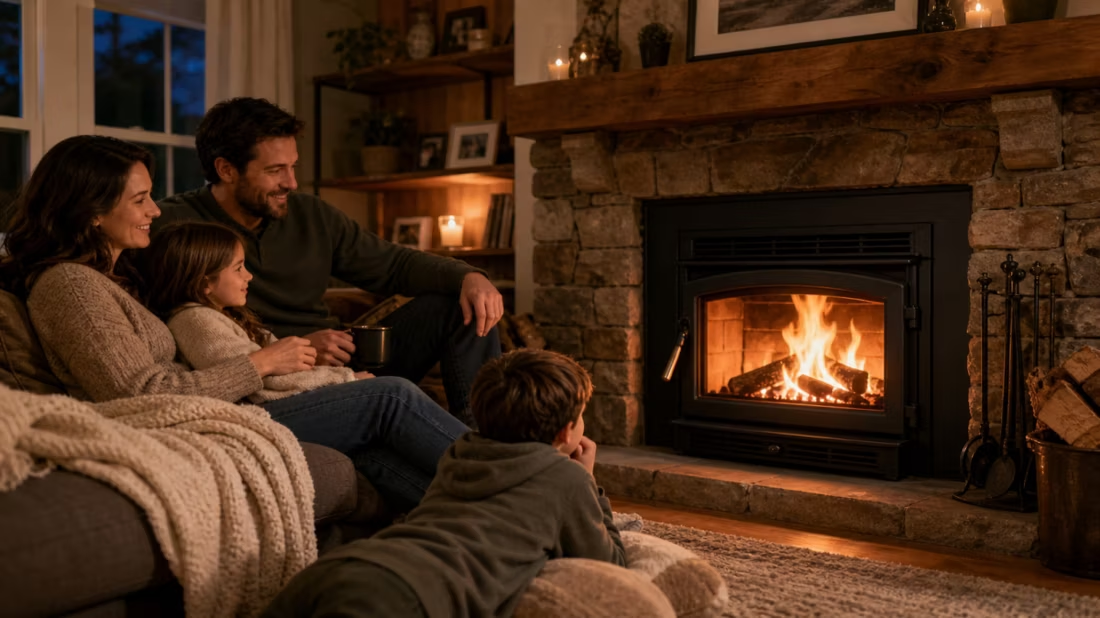
Four fuels. One honest answer for Menard County.
Three steps. No salesperson until you're ready.
Tell us about your project
Your zip code, your situation, and the fuel you're leaning toward—or let the answers point you to one.
See what's actually available
The brands dealers within 100 miles genuinely carry—real options, never a catalog mirage.
Get your dealer & Project Guide
A trusted local dealer, plus the free Project Guide & Parts List that names every component of the job.
Frequently Asked Questions
Which fuel works best in Menard County?
With a mild winter climate—average lows around 29°F and just 2,581 heating degree days—Menard County doesn't need the round-the-clock heat output that a colder region requires, which opens up more options. Wood is the traditional choice on ranch properties, where oak and mesquite are often already on hand from clearing land; a masonry fireplace or basic wood stove covers most cold snaps. Gas, almost always propane here since piped natural gas isn't available countywide, is the low-maintenance option for homeowners who want instant heat without stacking firewood. Pellet stoves work well too and are a reasonable middle ground, though buyers should confirm which regional brands (Forest Energy, Lignetics) their local dealer stocks or can order. Electric fireplaces are popular for ambiance and light supplemental heat in secondary rooms, given how short the true heating season runs. Many Menard County homes simply keep a wood or propane fireplace as the main hearth and treat everything else as backup or accent.
Do I need a permit to install a fireplace in Menard County?
Yes, in most cases, though rural exemptions can apply depending on where the property sits. Within the town limits of Menard, new wood stoves, gas appliances, and pellet inserts generally require a building permit, and any propane line work should be done by a licensed installer. Outside city limits, unincorporated Menard County has lighter permitting requirements than urban Texas counties, but insurance carriers will still often ask for proof of a code-compliant installation, especially for wood-burning units. Electric fireplaces installed as plug-in units typically don't need a permit; built-ins with new wiring usually do. Because permitting varies by jurisdiction here, it's worth asking your installer directly—most hearth retailers serving the county handle the paperwork as part of the job.
Are there air quality restrictions on wood burning in Menard County?
No—Menard County has no air quality non-attainment designations and no local burn bans tied to smoke or inversion concerns, unlike basin or valley regions elsewhere in the country. The county does occasionally issue outdoor burn bans during dry, high-wildfire-risk conditions common to the Edwards Plateau, but those apply to brush and debris burning, not indoor wood stoves or fireplaces. There's no local ordinance requiring EPA-certified stoves for existing installations, though newer stoves sold by area dealers will generally meet current EPA standards regardless. If you're burning oak, pecan, or mesquite that's well-seasoned, smoke output is low and shouldn't draw any local scrutiny.
Can one local hearth retailer handle all four fuel types?
It depends on the dealer, and in a county this size, most homeowners are working with retailers based outside Menard County who cover a wide territory. Some Hill Country dealers carry wood, gas (propane), pellet, and electric under one roof, which is convenient if you're still deciding between fuels. Others specialize—a stove shop that's strong on wood and pellet but light on electric, for example, or a propane-focused dealer that doesn't carry wood units at all. Given the driving distances involved in west-central Texas, it's worth confirming a dealer's full fuel lineup and service radius before scheduling a consultation, rather than assuming they cover everything.
How does installation and service work for such a rural, low-population county?
Because Menard County has just over 1,300 residents, there's no dense network of local hearth shops—most retailers and service techs are based in nearby larger towns and route out to Menard and Hext on a schedule or by appointment. Expect a modest trip charge for service calls, and plan ahead: booking installation or annual chimney service in late summer or early fall, before the first cold front, gets you ahead of the seasonal rush that hits regional dealers. Ranch properties with long driveways or gated access should flag that upfront when scheduling, since it affects arrival time and truck access for larger jobs like masonry or full chimney installs.
What's the typical cost range for fireplace installation across all fuel types in Menard County?
Costs in Menard County track regional Hill Country pricing rather than big-city rates, though travel fees from outside dealers can factor in. Wood stove or insert installation: roughly $4,000–$8,500 for a typical install, higher for new masonry work. Propane fireplace, insert, or stove: $4,000–$9,500 depending on whether a new propane line and tank setup is needed versus tying into existing service. Pellet stove or insert: $4,000–$7,000 for a standard install, assuming units and parts are available through regional suppliers like Forest Energy or Lignetics. Electric fireplace: $200–$2,800 for the unit itself, plus $300–$1,000 in labor unless it's a simple plug-and-play model. See the county + fuel pages above for cost breakdowns tied to specific dealers.
What is an in-home preview and do I need one?
It's a visit where a hearth professional measures your space, confirms the model you picked actually works in your home, and walks the specs—framing, gas line, venting, finish work—before anything is ordered. Some details you just can't know until you see the house. Never make a down payment without one; it's the single most-skipped step that burns buyers.
Can a fireplace actually lower my heating bill?
Yes—by creating a comfort zone. A furnace heats every square foot of the house just to warm the one room you're in; a gas fireplace on low burns roughly a sixth of the gas a typical furnace does. Set the furnace around 55–60 degrees as a baseline, then heat the rooms your family actually uses. Families who heat this way commonly save $20–$60 a month.
Can I install a fireplace myself?
If you're putting a fire in your house on purpose, it's best to work with an expert. Unless you're genuinely experienced in framing, gas line, vent pipe, and the national code on clearances to combustibles, have a professional do it—and ideally the same company that sells you the fireplace, so warranty, service, and liability all live under one roof.
What are the biggest mistakes people make buying a fireplace?
Five come up constantly: budgeting for the unit but not the full job (vent, gas line, electrical, finish work); drowning in options instead of starting from style and fuel; buying without an in-home preview; handing installation to a handyman instead of a pro; and giving up out of sheer indecision. Every one is avoidable with a clear plan—step one, step two, step three.
Stove and Fireplace Dealers in Menard County
Listings include WhyFire partner dealers, dealers we have verified as authorized for the brands we recommend, and established local businesses that carry hearth products. Every listing shows which one it is. The ones marked Preferred run on WhyFire's software, so they can show you real pricing and book your appointment right here. No manufacturer pays for placement. How we verify dealers →
Unlimited Air
Area – San Angelo, Tx
Find your fireplace in Menard County.
Pick your fuel below to get matched with a trusted local dealer and receive a free Project Guide & Parts List—the exact parts, including the vent kit, and the dealer recommended for your project.
Find Your Fireplace →