
Ambiance-first fireplaces for Maverick County's mild winters.
With winter lows averaging 40°F and a heating season so short it barely counts as winter, Maverick County doesn't need a furnace substitute—it needs a fireplace that looks good and works when you want it. Gas and electric units lead here, with wood-burning fireplaces still chosen for atmosphere by homeowners who like the look of local oak or mesquite burning behind glass.
Every Project Starts From One of These Five Situations
Border-region warmth in Eagle Pass and beyond.
Maverick County sits on the Rio Grande along the Texas-Mexico border, with Eagle Pass as the county seat and largest population center. This is climate zone 2B—hot and dry, with short, mild winters. With a winter heating season so light it barely registers, the county's total annual heating demand is a small fraction of what a cold-climate market like Fargo ND or Duluth MN racks up in a single January. Winter low averages of 40°F mean most homes here are built to handle heat, not to survive it, and that shapes which fireplace fuels actually make sense on the ground.
That's why this hub leads with gas and electric—the two fuels that fit Eagle Pass, Quemado, and El Indio homes without asking anyone to manage a woodpile or a pellet hopper for a heating season that barely exists. Wood-burning fireplaces still show up, mostly for the ambiance of local oak, pecan, or mesquite burning behind glass rather than for warmth. Pellet stoves are rare to the point of being a non-factor—the sustained-burn heat output they're built for just isn't something Maverick County winters call for. Pick your fuel below to see local dealers, install costs, and the resources that match what's realistic for your home.
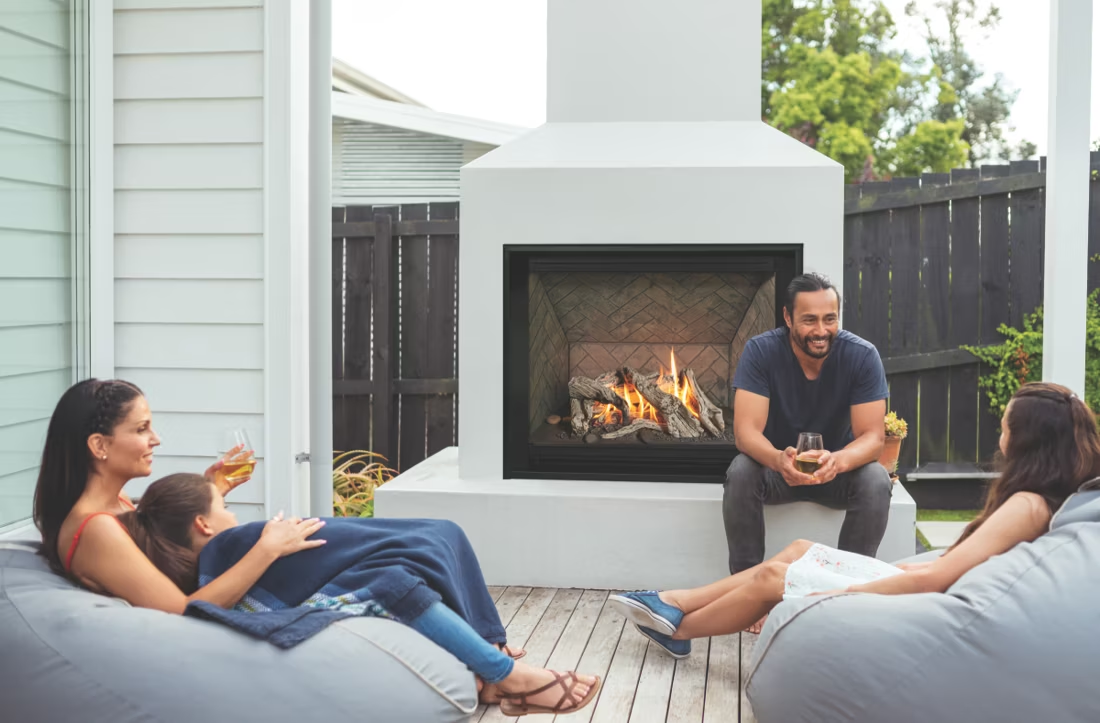
Four fuels. One honest answer for Maverick County.
Three steps. No salesperson until you're ready.
Tell us about your project
Your zip code, your situation, and the fuel you're leaning toward—or let the answers point you to one.
See what's actually available
The brands dealers within 100 miles genuinely carry—real options, never a catalog mirage.
Get your dealer & Project Guide
A trusted local dealer, plus the free Project Guide & Parts List that names every component of the job.
Frequently Asked Questions
Which fireplace fuel works best in Maverick County?
Given the climate, most homeowners here choose gas or electric. With winter lows averaging 40°F and a heating season so short it barely counts as winter, there's rarely a real heating load to carry—gas fireplaces give you instant ambiance and a bit of supplemental warmth on the occasional cold front, and electric units offer the same look with zero venting and no gas line needed. Wood-burning fireplaces do still get installed, mostly by homeowners who want the visual and smell of local oak, pecan, or mesquite burning behind glass rather than a heat source. Pellet stoves are essentially a non-factor in Maverick County—the sustained multi-hour burn they're designed for doesn't match a climate this mild, even though brands like Forest Energy and Lignetics are available regionally through general distribution.
Do I need a permit to install a gas or electric fireplace in Maverick County?
In most cases, yes for gas—new gas fireplace, insert, or stove installations typically require a building permit plus a licensed gas-fitter for the gas line connection, whether you're inside Eagle Pass city limits or in unincorporated Maverick County. Electric fireplaces usually skip the permit process unless you're doing a built-in installation that requires a new dedicated circuit. Most local hearth retailers handle the permitting as part of the install, so you're not typically filing paperwork yourself—worth confirming with your dealer up front.
Are wood-burning fireplaces still worth installing given how mild the winters are?
Some homeowners still choose them, just not for the heat. Maverick County has no air quality restrictions on wood burning—no non-attainment status, no curtailment periods—so there's nothing stopping you if you want the look and smell of a wood fire with local oak, pecan, or mesquite. But with a winter heating season this short and mild, a wood-burning fireplace here functions more like an ambiance feature you use on the handful of genuinely cold nights than a heating appliance you rely on. If warmth is the actual goal, gas gets you there with none of the fuel-handling and far less installation complexity.
Can one local dealer handle both gas and electric fireplaces?
Yes—most hearth retailers serving Maverick County carry both gas and electric lines, since those two fuels cover the vast majority of what actually gets installed here. A smaller number also stock wood-burning units for customers who specifically want that option. If you're not sure which fuel fits your home, a dealer who carries both can walk you through the trade-offs—gas gives you a flame with modest heat output, electric gives you the visual with zero venting and lower upfront cost.
Do electric fireplaces make sense in a hot climate like Maverick County's?
They make a lot of sense, honestly. In a county averaging 40°F winter lows and running a cooling season far longer than a heating one, an electric fireplace gives you the visual warmth of a fire without adding heat load to a home that's mostly fighting Texas summer heat the rest of the year. No venting, no combustion byproducts, no gas line—just plug it in or wire it to a dedicated circuit for a built-in. It's a reasonable primary choice for a bedroom, den, or secondary living space where ambiance is the point rather than survival-grade warmth.
What's the typical cost range for fireplace installation across fuel types in Maverick County?
Gas fireplace, insert, or stove: roughly $4,000–$9,000 depending on whether a new gas line has to be run to the location. Electric fireplace: $200–$3,000 for the unit itself, with $400–$1,200 in labor for anything beyond a plug-and-play install—which covers most wall-mount and insert setups. Wood-burning fireplace or stove, when installed: $4,500–$9,000, similar to cold-climate markets, since the appliance and chimney costs don't change with local weather. Pellet installs are rare enough in Maverick County that most local dealers won't have a standing price sheet for them—ask directly if that's what you're after.
Does a fireplace add value to my home?
On average, a fireplace adds back to the home about the same amount you spent installing it. Add the monthly savings from heating the rooms you actually use instead of the whole house—often hundreds of dollars a year—and the value case is strong before you even count what a fire does for how your family uses the room.
Can a fireplace actually lower my heating bill?
Yes—by creating a comfort zone. A furnace heats every square foot of the house just to warm the one room you're in; a gas fireplace on low burns roughly a sixth of the gas a typical furnace does. Set the furnace around 55–60 degrees as a baseline, then heat the rooms your family actually uses. Families who heat this way commonly save $20–$60 a month.
Can I install a fireplace myself?
If you're putting a fire in your house on purpose, it's best to work with an expert. Unless you're genuinely experienced in framing, gas line, vent pipe, and the national code on clearances to combustibles, have a professional do it—and ideally the same company that sells you the fireplace, so warranty, service, and liability all live under one roof.
How much should I budget for a fireplace?
For an average home—covering the fireplace, the vent pipe, and basic installation—a budget between $3,900 and $5,500 gives you a lot of options across wood, gas, and pellet. By the time you add finish work, gas line, and electrical, the average complete installation lands between $5,000 and $12,000 all-in. In a remodel or new build, a good rule is to put about 2.5% of the total project cost toward the fireplace.
Find your fireplace in Maverick County.
Pick gas or electric below—or ask about a wood-burning install—to get matched with a trusted local Eagle Pass-area dealer and a free Project Guide & Parts List built for your home.
Find Your Fireplace →