
Every fuel type, every corner of Madison County.
Wood, gas, pellet, and electric fireplace resources for the whole county—from Madisonville out to North Zulch and Midway. Pick a fuel and get matched with a local dealer who actually installs it in this mild, short-winter part of Texas.
Every Project Starts From One of These Five Situations
Mild winters, 1,888 heating degree days, and a county still built around oak and pecan.
Madison County sits in the Post Oak Savannah of East-Central Texas, climate zone 2A, with an average winter low near 37°F and just 1,888 heating degree days—less than a third of what a place like Duluth, Minnesota logs in an average winter. Winters here are short and mild, punctuated by the occasional hard freeze or ice event rather than months of sustained cold. That's as much about geography as latitude: rolling post-oak savannah and bottomland along the Trinity and Navasota rivers, home to roughly 4,770 residents spread across Madisonville, the county seat, and smaller communities like North Zulch and Midway. Oak, pecan, and mesquite are the wood species most local households burn, much of it harvested off private ranchland rather than public forest, since there's no national forest or BLM tract within the county to permit through.
With no air-quality non-attainment designation and no burn-curtailment program, permitting a fireplace or stove in Madison County is comparatively simple—the bigger local variable is which fuel actually suits a mild-winter, occasional-hard-freeze climate. Propane fills the role piped natural gas plays in bigger Texas cities for most rural Madison County homes, and Mid-South Synergy, the electric cooperative serving the county, keeps electric fireplaces a viable supplemental option even on the coldest nights. Pellet stoves show up here too, stocked regionally through Forest Energy and Lignetics. This hub rolls up hearth retailers, service techs, and fuel suppliers covering Madisonville, North Zulch, Midway, and the unincorporated stretches of county road in between. Pick your fuel below for local dealers, install costs, and recommendations sized to a Madison County winter.
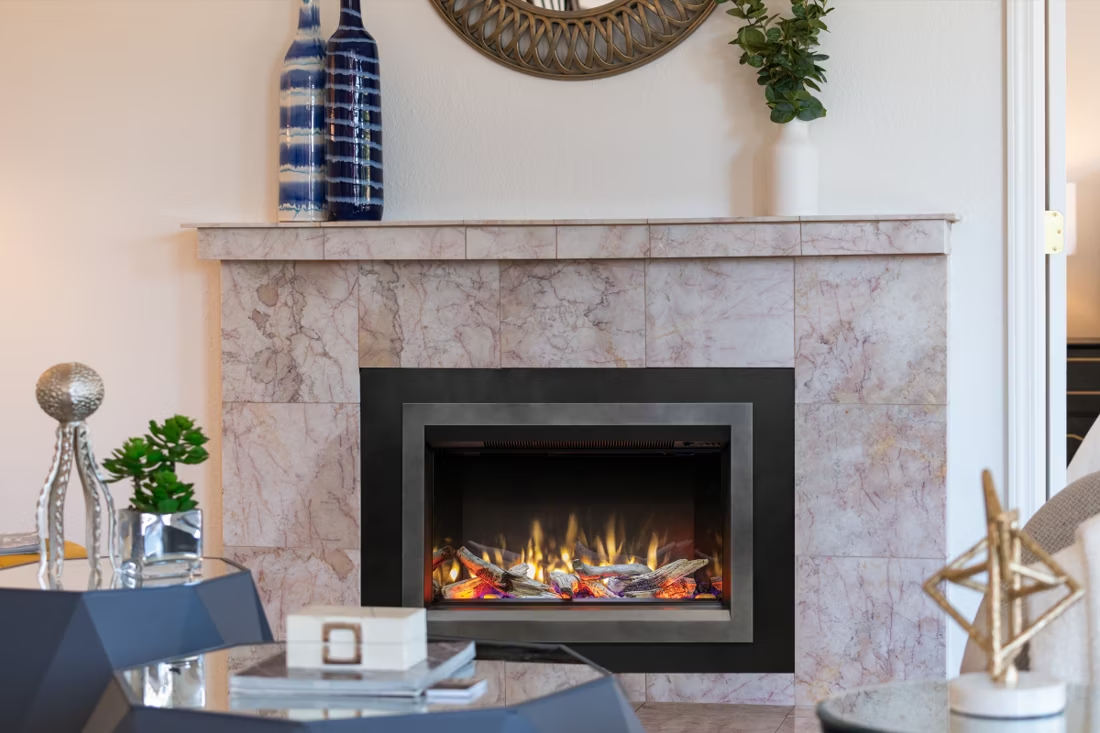
Four fuels. One honest answer for Madison County.
Three steps. No salesperson until you're ready.
Tell us about your project
Your zip code, your situation, and the fuel you're leaning toward—or let the answers point you to one.
See what's actually available
The brands dealers within 100 miles genuinely carry—real options, never a catalog mirage.
Get your dealer & Project Guide
A trusted local dealer, plus the free Project Guide & Parts List that names every component of the job.
Frequently Asked Questions
Which fireplace fuel makes the most sense in Madison County?
With only 1,888 heating degree days and winter lows averaging 37°F, no single fuel is doing heavy lifting all season the way it would further north—most Madison County households are choosing based on convenience and ambiance more than survival heat. Wood remains popular because oak, pecan, and mesquite are all available locally off private ranchland, and a mid-size stove or insert handles the occasional hard-freeze week just fine. Propane-fired gas units are the go-to for effortless push-button heat since piped natural gas doesn't reach most of the county. Pellet stoves have a smaller but real following, supplied regionally by Forest Energy and Lignetics. Electric fireplaces work well here as supplemental heat in bedrooms or additions, and since Mid-South Synergy keeps the grid reliable outside of major storm events, that's rarely a concern.
Do I need a permit to install a wood stove or fireplace in Madison County?
Generally yes for wood, gas, and pellet installs—you'd pull a building permit through the county's permitting office in Madisonville, or through the applicable city office if you're inside city limits. Any new wood stove still has to meet the federal EPA 2020 NSPS emissions standard even though Madison County has no air-quality non-attainment designation of its own; that's a national requirement, not a local air-quality rule. Propane installs need a licensed gas fitter and a separate gas-line permit. Electric fireplaces usually skip the permit process unless you're hardwiring a built-in unit that requires a new circuit. Most retailers we match homeowners with handle this paperwork as part of the install.
Where does local firewood come from, since there's no national forest here?
Unlike counties with national forest or BLM land nearby, Madison County has no public-land permit office issuing firewood-cutting permits—almost all local wood comes from private ranchland, land-clearing operations, or dedicated firewood dealers. Oak and pecan are the most common seasoned splits sold locally, with mesquite showing up too, prized for its heat output and smoke flavor if you're also cooking with it. Because there's no permit system to navigate, sourcing firewood here is mostly a matter of finding a reliable local seller or a landowner willing to sell truckloads off a recent clearing.
How should I plan for backup heat during a Texas cold snap or ice storm?
Madison County's mild average winter doesn't rule out the occasional severe event—Winter Storm Uri in February 2021 put hard freezes and multi-day power outages on a lot of Texas homes that had never planned for either. A wood stove burning local oak or pecan, or a propane unit that doesn't depend on grid power to produce heat, gives a household a real backup option independent of Mid-South Synergy's lines staying up. If your primary system is electric, it's worth asking your installer about a battery backup or at minimum having a propane heater on hand for the rare multi-day outage.
Can I find a retailer that services rural parts of the county, not just Madisonville?
Yes—because Madison County's population is small, most hearth retailers who cover it are actually based in Huntsville or the Bryan-College Station area and treat Madisonville, North Zulch, and Midway as part of a broader regional service territory. Expect a modest trip fee for installs and service calls out to the more rural county roads, and expect scheduling to get tighter briefly around any forecast hard freeze, when everyone in the region calls for a chimney check or gas inspection at once. Booking routine service in late summer, well ahead of the first cold front, avoids that crunch entirely.
What does a fireplace or stove installation typically cost in Madison County?
Costs run a bit lower here than in colder-climate counties because venting and heat-output requirements are less demanding. Wood stove or insert installs typically run $3,500–$7,000. Propane-fired gas fireplaces, inserts, and stoves run roughly $4,000–$8,500 depending on how much gas-line work is involved. Pellet stove or insert installs generally land around $3,500–$6,000. Electric fireplaces are the outlier—$200–$2,500 for the unit, plus modest labor unless you're hardwiring a built-in. The county + fuel pages above break these numbers down further with local retailer pricing.
Does a fireplace add value to my home?
On average, a fireplace adds back to the home about the same amount you spent installing it. Add the monthly savings from heating the rooms you actually use instead of the whole house—often hundreds of dollars a year—and the value case is strong before you even count what a fire does for how your family uses the room.
Wood, gas, pellet, or electric—how do I choose?
Match the fuel to your life, not the other way around. Wood: lowest fuel cost and total power-outage independence, but you're hauling and stacking. Gas: press a button, set a thermostat, no maintenance to speak of. Pellet: wood economics with automatic feeding, in exchange for weekly cleaning and a need for electricity. Electric: plugs in anywhere with honest supplemental heat. Nobody regrets the fuel that fits how they actually live.
Can a fireplace actually lower my heating bill?
Yes—by creating a comfort zone. A furnace heats every square foot of the house just to warm the one room you're in; a gas fireplace on low burns roughly a sixth of the gas a typical furnace does. Set the furnace around 55–60 degrees as a baseline, then heat the rooms your family actually uses. Families who heat this way commonly save $20–$60 a month.
Can I install a fireplace myself?
If you're putting a fire in your house on purpose, it's best to work with an expert. Unless you're genuinely experienced in framing, gas line, vent pipe, and the national code on clearances to combustibles, have a professional do it—and ideally the same company that sells you the fireplace, so warranty, service, and liability all live under one roof.
Stove and Fireplace Dealers in Madison County
Listings include WhyFire partner dealers, dealers we have verified as authorized for the brands we recommend, and established local businesses that carry hearth products. Every listing shows which one it is. The ones marked Preferred run on WhyFire's software, so they can show you real pricing and book your appointment right here. No manufacturer pays for placement. How we verify dealers →
Aaa Overhead Door Company
Lyne Home Products
Get matched with a local Madison County dealer.
Pick your fuel below and we'll put together a free Project Guide & Parts List—the right unit, the vent kit it needs, and the local dealer we recommend for your project.
Find Your Fireplace →