
Find your fireplace in Lubbock County.
From the flat South Plains around Lubbock to Slaton, Wolfforth, and Shallowater, get matched with a local dealer who knows which fuel actually makes sense for a high-plains climate this mild—and which ones mostly don't.
Every Project Starts From One of These Five Situations
Mild South Plains winters and just 3,088 heating degree days shape how this county heats.
Lubbock County sits on the flat, open High Plains at roughly 3,200 feet, in climate zone 3B—a zone built around cooling load, not heating load. Average winter lows hover near 30°F and the county logs only about 3,088 heating degree days a year, a fraction of what a genuinely cold-winter region racks up. Local firewood culture here runs through oak, pecan, and mesquite, but that wood is more closely tied to Texas barbecue and smoking than to home heating—the heating season is simply too short and too mild to make wood a practical primary fuel for most households. There are no air quality non-attainment concerns or curtailment programs in the county, which also means there's no regulatory pressure pushing homeowners toward or away from any particular fuel; the climate itself does that work.
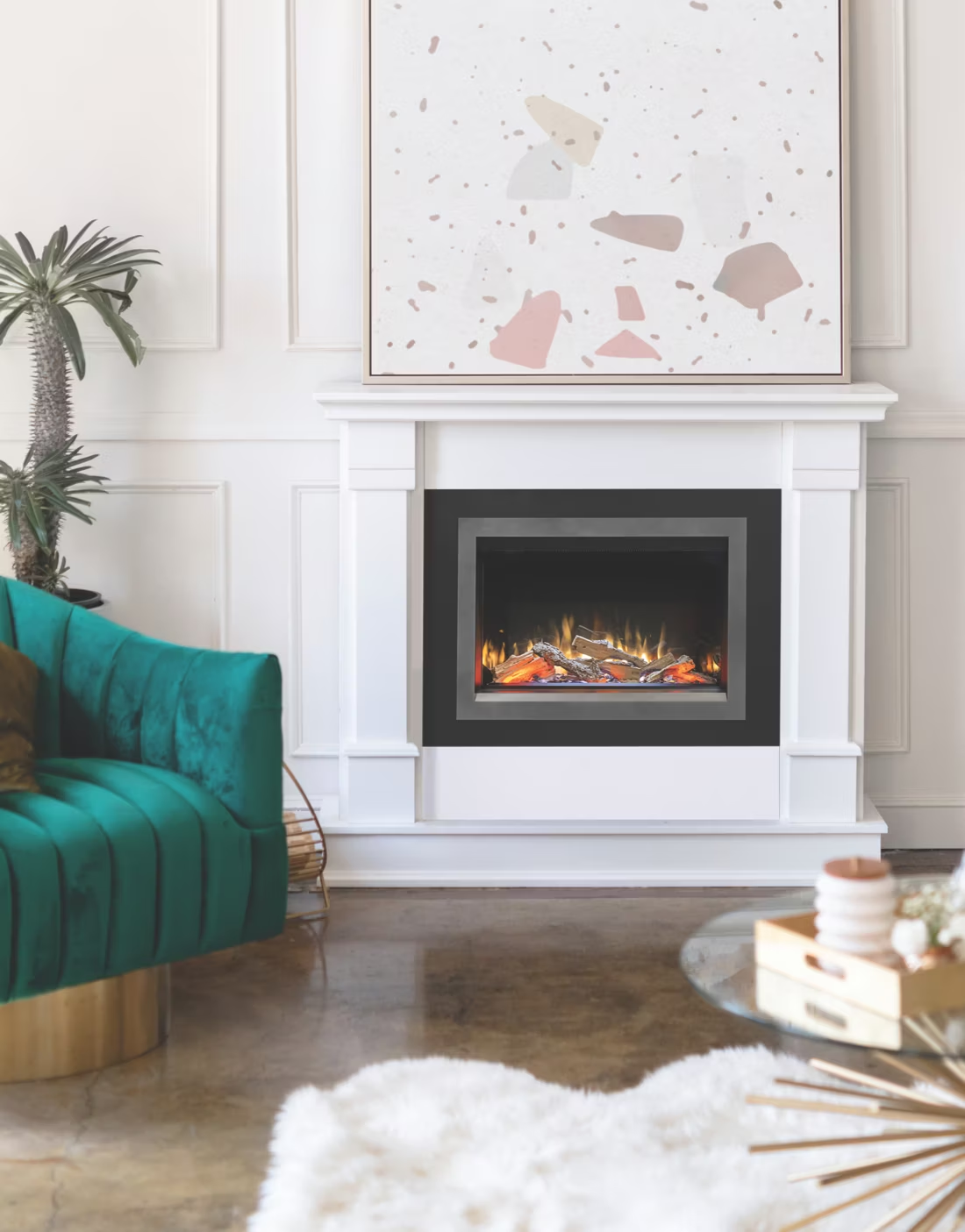
That's why gas and electric are the two fuels that actually carry this county. Natural gas service through Atmos Energy reaches most of the city of Lubbock and the surrounding towns, and a direct-vent gas fireplace or insert is the default choice for homeowners who want real flame and quick heat without tending a fire. Electric fireplaces, backed by Lubbock Power & Light, are a strong fit for supplemental warmth and ambiance in a climate where a full heating appliance is rarely necessary. Wood-burning masonry fireplaces still exist in a meaningful share of older Lubbock homes, and some owners burn local mesquite or pecan a handful of nights a winter for atmosphere rather than necessity—but new wood stove installs are uncommon, and pellet stoves have essentially no local install base; the Forest Energy and Lignetics pellets sold regionally are bought far more often for grills and smokers than for home heat. This hub rolls up hearth retailers, service techs, and fuel suppliers across Lubbock, Slaton, Wolfforth, Shallowater, Idalou, New Deal, and Ransom Canyon. Pick your fuel below for local dealers and honest fit guidance.
Four fuels. One honest answer for Lubbock County.
Three steps. No salesperson until you're ready.
Tell us about your project
Your zip code, your situation, and the fuel you're leaning toward—or let the answers point you to one.
See what's actually available
The brands dealers within 100 miles genuinely carry—real options, never a catalog mirage.
Get your dealer & Project Guide
A trusted local dealer, plus the free Project Guide & Parts List that names every component of the job.
Frequently Asked Questions
Which fireplace fuel makes the most sense in Lubbock County?
Gas and electric are the two fuels that genuinely fit this climate. With only about 3,088 heating degree days and average winter lows around 30°F, Lubbock County doesn't need a fireplace to carry the heating load the way a colder region does, so a direct-vent gas fireplace or insert running off Atmos Energy service is the most common choice for homeowners who want real flame with push-button convenience. Electric fireplaces, on Lubbock Power & Light's grid, are a close second—strong for zone heat in a bedroom or den and popular in newer builds where running a gas line isn't practical. Wood and pellet exist here but are the exception rather than the rule; I'd steer most Lubbock County homeowners toward gas or electric first and only consider wood if you already have a masonry fireplace you want to keep using occasionally.
Do people still install wood-burning fireplaces in Lubbock County?
Some homes do, but it's worth being honest about the role wood plays here. Wood-burning fireplaces are far more common as a legacy feature in older Lubbock homes than as a new install—plenty of houses built in past decades still have a working masonry fireplace, and owners burn local oak, pecan, or mesquite a few nights a year for ambiance during the county's short, mild cold snaps rather than as a heat source. New wood stove installs are uncommon in this county, and most hearth retailers we work with don't stock them heavily, simply because the climate doesn't create the demand. If you have an existing wood fireplace, a local sweep can inspect and service it; if you're building new, gas or electric will almost always be the better fit for how this county actually heats.
I see bags of pellets for sale locally—are pellet stoves common in Lubbock?
Not really, and it's a fair question given that Forest Energy and Lignetics pellets are both sold in the region. Almost all of that pellet supply goes toward grills and smokers rather than home heating appliances—pellet stoves need real seasonal heating demand to justify the investment, and Lubbock County's 3,088 heating degree days just don't generate it the way a colder climate would. There are very few pellet stove dealers or installers serving the county as a result. If you're drawn to the look and convenience of a pellet appliance, it's worth talking to a local retailer about whether a gas insert would give you a similar experience with far better local parts and service support.
Do I need a permit to install a gas or electric fireplace in Lubbock County?
Gas fireplace installations typically require a permit and a licensed gas fitter to run or tap the gas line, whether you're inside Lubbock city limits or in one of the surrounding towns like Slaton or Wolfforth—your local building department handles the inspection once the line and venting are in. Electric fireplace installs usually don't require a permit for a plug-in unit, but a hardwired built-in that needs a new dedicated circuit does. Most retailers we match Lubbock County homeowners with handle the permitting as part of the installation quote, so it's rarely something you're chasing down yourself.
What does a fireplace installation typically cost in Lubbock County?
Gas fireplaces, inserts, and log sets generally run $4,000–$10,000 installed, with the wide range driven mostly by how much gas-line work is involved and whether you're converting an existing masonry opening or building a new direct-vent chase. Electric fireplaces are the more affordable end of the spectrum—$200–$3,000 for the unit itself, plus $400–$1,200 in labor if you're adding a built-in surround or a new circuit. Servicing an existing wood-burning masonry fireplace, such as a chimney inspection, cleaning, or damper repair, typically runs a few hundred dollars, since new wood installs are rare here. The county + fuel pages above break these numbers down further by local retailer.
How does installation and service work for homes outside the city of Lubbock?
Most gas and electric fireplace retailers are based in Lubbock but run installation and service crews out to Slaton, Wolfforth, Shallowater, Idalou, New Deal, and Ransom Canyon on a regular basis. Because the county's flat, open geography means short drive times between towns, scheduling tends to be more flexible here than in a rural mountain county—you're not typically dealing with weather-related delays or long travel surcharges. It's still worth booking your gas fireplace's annual inspection before the first cold front rolls through in November, since that's when local techs see their heaviest call volume.
Wood, gas, pellet, or electric—how do I choose?
Match the fuel to your life, not the other way around. Wood: lowest fuel cost and total power-outage independence, but you're hauling and stacking. Gas: press a button, set a thermostat, no maintenance to speak of. Pellet: wood economics with automatic feeding, in exchange for weekly cleaning and a need for electricity. Electric: plugs in anywhere with honest supplemental heat. Nobody regrets the fuel that fits how they actually live.
What is an in-home preview and do I need one?
It's a visit where a hearth professional measures your space, confirms the model you picked actually works in your home, and walks the specs—framing, gas line, venting, finish work—before anything is ordered. Some details you just can't know until you see the house. Never make a down payment without one; it's the single most-skipped step that burns buyers.
How much should I budget for a fireplace?
For an average home—covering the fireplace, the vent pipe, and basic installation—a budget between $3,900 and $5,500 gives you a lot of options across wood, gas, and pellet. By the time you add finish work, gas line, and electrical, the average complete installation lands between $5,000 and $12,000 all-in. In a remodel or new build, a good rule is to put about 2.5% of the total project cost toward the fireplace.
Can a fireplace actually lower my heating bill?
Yes—by creating a comfort zone. A furnace heats every square foot of the house just to warm the one room you're in; a gas fireplace on low burns roughly a sixth of the gas a typical furnace does. Set the furnace around 55–60 degrees as a baseline, then heat the rooms your family actually uses. Families who heat this way commonly save $20–$60 a month.
Stove and Fireplace Dealers in Lubbock County
Listings include WhyFire partner dealers, dealers we have verified as authorized for the brands we recommend, and established local businesses that carry hearth products. Every listing shows which one it is. The ones marked Preferred run on WhyFire's software, so they can show you real pricing and book your appointment right here. No manufacturer pays for placement. How we verify dealers →
Caprock Brick
Ford Insulation And Fireplaces
A & A Chimeny Sweep w/Texas Fp
Coastal Insulation
Get matched with a local Lubbock County dealer.
Pick your fuel below and we'll put together a free Project Guide & Parts List—the right unit for the South Plains climate, the vent kit it needs, and the local Lubbock County dealer we recommend for your project.
Find Your Fireplace →