
The right hearth for Lee County's mild Texas winters.
Wood, gas, pellet, and electric fireplace resources for Giddings, Lexington, Dime Box, Lincoln, and every ranch and rural home across Lee County. Find the right unit for your winter and connect with a trusted local hearth retailer.
Every Project Starts From One of These Five Situations
Mild winters, real wood heritage in Lee County, Texas.
Lee County sits in the post oak savannah of central Texas, in climate zone 2A with an average winter low around 39°F and a light overall winter heating load—just a fraction of what a place like Fargo, ND racks up in a single season. There's no multi-month deep freeze here; instead, homeowners deal with occasional cold snaps, ice events, and the kind of winter that calls for a fire in the evening more than a furnace running all day. Post oak, pecan, and mesquite grow throughout the county's ranchland, and with most acreage in Lee County held privately rather than as national forest, a lot of local firewood comes straight off the landowner's own property rather than a public cutting permit.
What you'll find on this hub: hearth retailers, service technicians, and fuel suppliers serving every community in the county—from the county seat of Giddings out to Lexington, Dime Box, Lincoln, and Northrup. Pick your fuel below to drill into specifics—local dealers, installation costs, recommended units, and resources built around Lee County's climate. Whether you're heating a ranch house outside Giddings or adding backup heat for the next ice storm, this is the starting point.
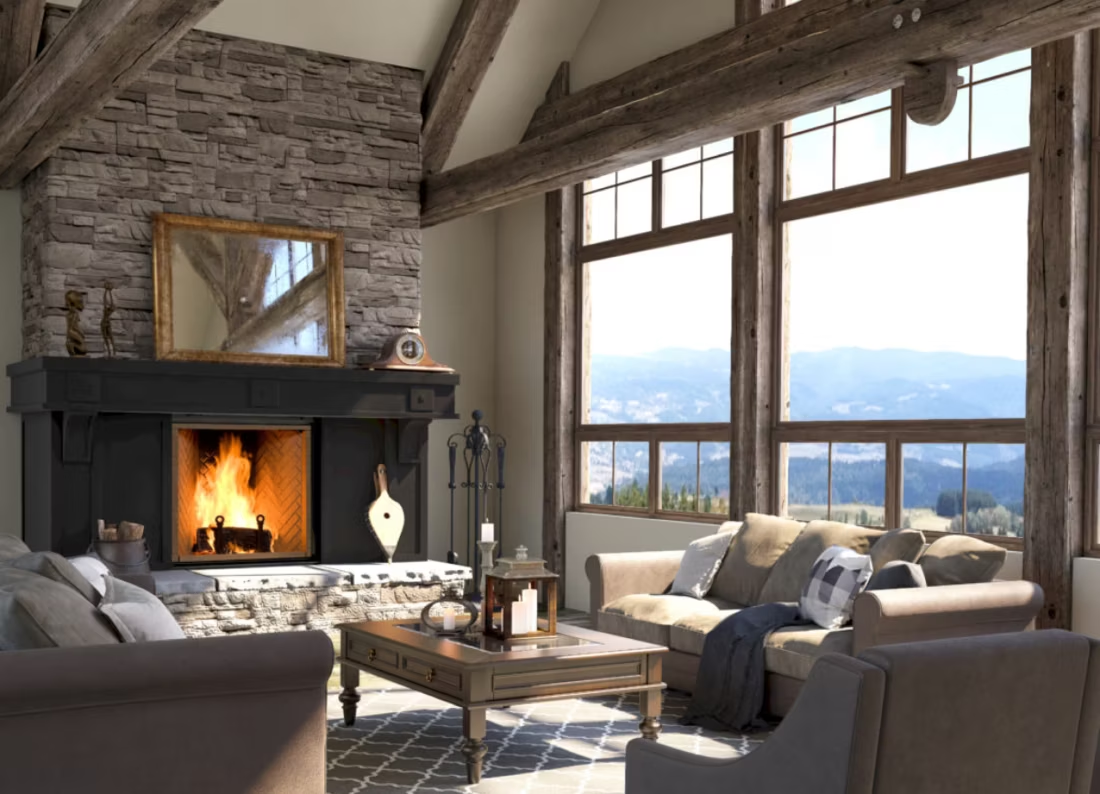
Four fuels. One honest answer for Lee County.
Three steps. No salesperson until you're ready.
Tell us about your project
Your zip code, your situation, and the fuel you're leaning toward—or let the answers point you to one.
See what's actually available
The brands dealers within 100 miles genuinely carry—real options, never a catalog mirage.
Get your dealer & Project Guide
A trusted local dealer, plus the free Project Guide & Parts List that names every component of the job.
Frequently Asked Questions
Which fuel works best in Lee County?
With such a light overall winter heating load and winter lows averaging 39°F, Lee County doesn't need the same brute-force heat that a place like Bozeman, MT or Duluth, MN requires—but that doesn't make fireplaces a novelty here. Wood is popular for its ambiance and its usefulness during ice storms and grid outages, and local oak, pecan, and mesquite are plentiful and affordable, often cut right off the property. Gas is the low-maintenance choice for homes with propane service (common outside Giddings city limits, where natural gas lines are limited)—instant heat with none of the wood-hauling. Pellet stoves are a solid middle ground, with Forest Energy and Lignetics pellets both available regionally, and they store more compactly than a woodpile on a smaller lot. Electric is mostly supplemental here—a bedroom or sunroom unit rather than a whole-house heater, since Lee County winters simply don't demand it. Many homes end up with a wood or gas fireplace as the centerpiece and a small electric unit somewhere secondary.
Do I need a permit to install a fireplace in Lee County?
In most cases, yes, if the work is new construction, a new chimney, or new gas piping. Wood stoves, wood inserts, gas fireplaces, gas inserts, and gas stoves typically require a building permit through the county building department if you're in unincorporated Lee County, or through the city if you're inside Giddings or Lexington city limits. Gas installations also need the gas line itself run or inspected by a licensed installer. Plug-in electric fireplaces generally don't need a permit; built-in electric units with new wiring might. Most local hearth retailers in the area handle the permitting on your behalf as part of the installation quote, so you're rarely filing paperwork yourself.
Is wood burning restricted in Lee County?
Not in the way it is in places with winter inversions or non-attainment status—Lee County has no listed air quality concerns, and there's no equivalent to the curtailment days you'd see in a basin like Klamath Falls. The one thing to watch for is drought-driven burn bans, which the county judge can issue during dry stretches; these are aimed at outdoor and agricultural burning rather than indoor fireplace use, but it's worth a quick check with the county if you're planning any outdoor burning alongside your fireplace install. For indoor wood stoves and fireplaces, day-to-day operation in Lee County is unrestricted.
Can one local hearth retailer handle all four fuel types?
Given Lee County's small population, most retailers serving the area—whether based in Giddings or coming from nearby Bastrop or Brenham—carry two or three fuel types rather than a full lineup of all four. Wood and gas are the most commonly stocked pairing locally, since they cover both the ambiance-driven buyer and the low-maintenance buyer. Pellet stoves using Forest Energy or Lignetics fuel are usually available through the same dealers as a secondary line rather than a dedicated pellet specialist. Electric fireplaces are often the easiest add-on for any retailer, since they don't require venting expertise. If you want to compare fuels side by side, ask a retailer directly which lines they carry and install—coverage varies more dealer to dealer in a smaller market like this than it would in a bigger county.
How does service work for rural homes across Lee County?
With Lee County's population spread thin across ranchland and small towns, most technicians are based in or near Giddings and drive out to Lexington, Dime Box, Lincoln, and the county roads in between. Expect to schedule a bit further ahead than you would in a city, and a modest trip fee for properties well outside town. Fall—before the first cold front and before an ice event knocks out power—is the best window to book an annual chimney sweep or gas inspection, since demand spikes right after any hard freeze. If you're relying on wood or gas as backup heat for outages (a real consideration in this part of Texas since the 2021 winter storm), get that service done early rather than waiting for the first cold snap.
What's the typical cost range for fireplace installation across all fuel types in Lee County?
Costs run lower here than in colder markets, since most Lee County installs don't involve the heavy-duty venting or catalytic combustion systems needed in multi-month-cold climates. Wood stove or insert installation: roughly $3,500–$7,500 for a typical retrofit, more if you're adding a chimney where none exists. Gas fireplace, insert, or stove: about $3,500–$9,000, with propane conversions often landing on the lower end if a tank and line are already in place. Pellet stove or insert: typically $4,000–$6,500. Electric fireplace: $200–$2,500 for the unit itself, plus $300–$1,000 in labor for anything beyond a simple plug-in. For numbers tied to your specific fuel and town, see the county + fuel pages above.
What is an in-home preview and do I need one?
It's a visit where a hearth professional measures your space, confirms the model you picked actually works in your home, and walks the specs—framing, gas line, venting, finish work—before anything is ordered. Some details you just can't know until you see the house. Never make a down payment without one; it's the single most-skipped step that burns buyers.
Can I install a fireplace myself?
If you're putting a fire in your house on purpose, it's best to work with an expert. Unless you're genuinely experienced in framing, gas line, vent pipe, and the national code on clearances to combustibles, have a professional do it—and ideally the same company that sells you the fireplace, so warranty, service, and liability all live under one roof.
Wood, gas, pellet, or electric—how do I choose?
Match the fuel to your life, not the other way around. Wood: lowest fuel cost and total power-outage independence, but you're hauling and stacking. Gas: press a button, set a thermostat, no maintenance to speak of. Pellet: wood economics with automatic feeding, in exchange for weekly cleaning and a need for electricity. Electric: plugs in anywhere with honest supplemental heat. Nobody regrets the fuel that fits how they actually live.
Does a fireplace add value to my home?
On average, a fireplace adds back to the home about the same amount you spent installing it. Add the monthly savings from heating the rooms you actually use instead of the whole house—often hundreds of dollars a year—and the value case is strong before you even count what a fire does for how your family uses the room.
Stove and Fireplace Dealers in Lee County
Listings include WhyFire partner dealers, dealers we have verified as authorized for the brands we recommend, and established local businesses that carry hearth products. Every listing shows which one it is. The ones marked Preferred run on WhyFire's software, so they can show you real pricing and book your appointment right here. No manufacturer pays for placement. How we verify dealers →
Top Hat Chimney Sweeps
Lyne Home Products
Denio's Furniture Flooring
Tri-Supply - Austin
Webco Distributing Company, Inc.
EarthCore Industries
Aaa Overhead Door Company
Parrish & Company Inc - Round Rock
Crafted Flames
Area – Georgetown, Tx
Georgetown Energy
Tri-Co Propane
Gas Logs Express & Bbq
Get matched with a Lee County hearth dealer.
Pick your fuel below and we'll match you with a trusted local dealer and send over a free Project Guide & Parts List—the exact parts, including the vent kit, and the dealer we recommend for your Lee County home.
Find Your Fireplace →