
Find the right fireplace for your Jackson County home.
Fireplace resources for every city and rural community in Jackson County—from Edna to Vanderbilt to La Ward. Find the right unit and connect with a trusted local hearth retailer.
Every Project Starts From One of These Five Situations
Mild Gulf Coast winters, occasional hard freezes.
Jackson County sits in the Gulf Coastal Plain of southeast Texas, climate zone 2A, with an average winter low around 45°F and just over 1,000 heating degree days a year—a fraction of what a place like Fargo, North Dakota logs in a single January. Most winters bring only a handful of nights near freezing, punctuated by the occasional hard freeze event like February 2021's Winter Storm Uri, when pipes burst and heating systems statewide were pushed past their limits. That's the climate reality that shapes hearth choices here: wood stoves and pellet stoves, built for sustained overnight burns in cold country, don't have a real job to do in a county where the heating season lasts a few weeks at most. Oak, pecan, and mesquite are abundant locally, but they're prized for smoking brisket and backyard cookouts far more than for heating a living room.
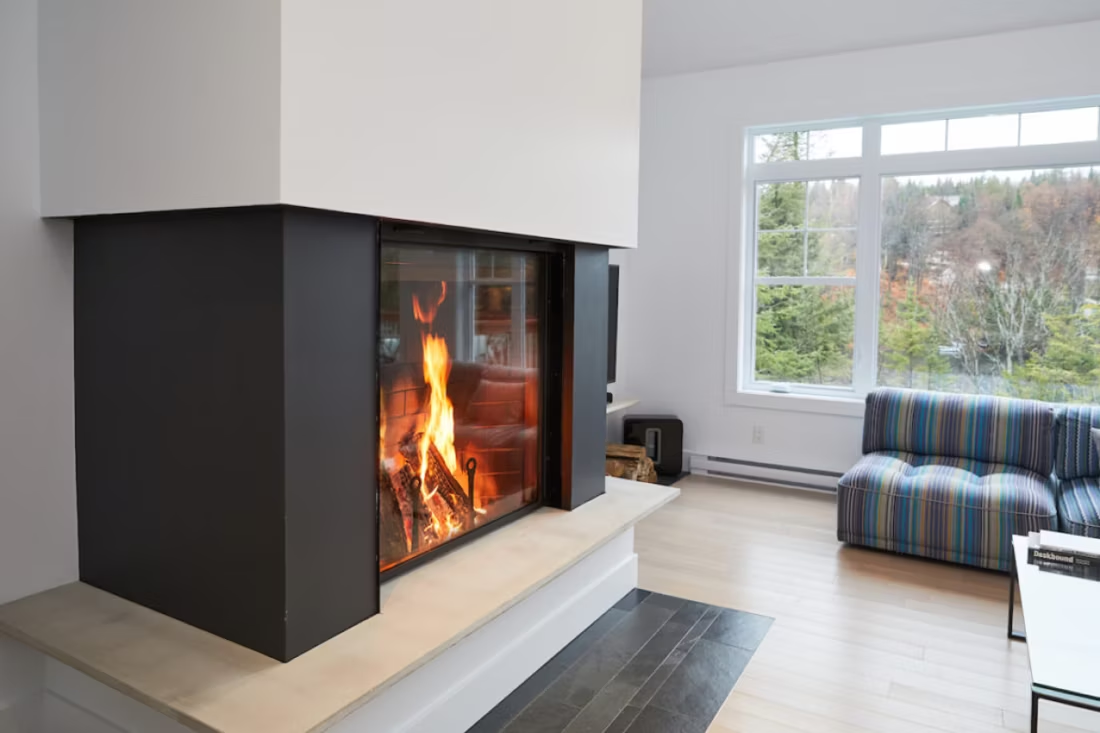
Gas and electric fireplaces are the practical fit for Jackson County—gas for ambiance with real backup heat during rare cold snaps, electric for zero-clearance installs and supplemental warmth without venting. This hub covers hearth retailers, service technicians, and fuel suppliers across the county, from Edna down to La Ward and out to Ganado and Vanderbilt. Pick your fuel below for local dealers, installation costs, and recommended units for your specific project.
Four fuels. One honest answer for Jackson County.
Three steps. No salesperson until you're ready.
Tell us about your project
Your zip code, your situation, and the fuel you're leaning toward—or let the answers point you to one.
See what's actually available
The brands dealers within 100 miles genuinely carry—real options, never a catalog mirage.
Get your dealer & Project Guide
A trusted local dealer, plus the free Project Guide & Parts List that names every component of the job.
Frequently Asked Questions
Which fuel works best for a fireplace in Jackson County?
Gas and electric are the two fuels that actually fit the local climate. With winter lows averaging around 45°F and just over 1,000 heating degree days a year, Jackson County doesn't have the sustained cold that makes wood or pellet stoves worth the investment—those fuels are built for overnight burns in places like Fargo, North Dakota, not a Gulf Coast county where most winters barely dip below freezing. Gas fireplaces (propane in most rural areas, natural gas where available in town) give you real backup heat for the occasional hard freeze plus year-round ambiance. Electric fireplaces are a strong fit for supplemental warmth in bedrooms or additions, with no venting and no fuel storage. Most Jackson County homeowners land on one or the other, sometimes both.
Do I need a permit to install a gas or electric fireplace in Jackson County?
Usually, yes, for gas. New gas fireplace, insert, or stove installations typically require a building permit plus a separate gas line permit, and the gas connection itself should be handled by a licensed gas-fitter—this is true whether you're running propane or natural gas. Electric fireplace installs generally don't need a permit for plug-in units, but built-in electric fireplaces that require a dedicated circuit or hardwiring may need an electrical permit. Check with your local building department for county-specific requirements before scheduling installation—most Jackson County hearth retailers handle the permitting process as part of the job.
Are wood-burning fireplaces still used in Jackson County?
Rarely, and mostly for looks rather than heat. A short heating season and mild winter lows mean wood stoves and wood inserts don't carry the cost-benefit case they do in colder climates—there's no real need to heat a home overnight with a cord of oak or pecan when a hard freeze happens a few nights a year at most. That said, some Jackson County homeowners keep a traditional masonry fireplace for entertaining or ambiance, and locally abundant oak, pecan, and mesquite are still burned occasionally for that purpose—the same hardwoods locals reach for when smoking brisket outdoors. If you want that occasional-fire experience without committing to a wood-heating system, a vented gas log set gives you the look with none of the wood-stacking.
What about pellet stoves in Jackson County?
Pellet stoves are essentially a non-factor here. Regional pellet brands like Forest Energy and Lignetics are sold in the broader Texas market, but they're stocked far more for backyard pellet grills and smokers than for home heating—Jackson County's mild winters simply don't generate the demand. If you're looking for wood-style ambiance without wood handling, a gas fireplace with a log-set insert is the more practical local equivalent; if you're set on pellet heat specifically, expect a longer search radius to find a dealer who stocks residential pellet stoves.
Can one local retailer handle both gas and electric fireplace installs?
Most hearth retailers serving Jackson County carry both. Since wood and pellet units see so little local demand, dealers here tend to specialize in gas fireplaces, inserts, and log sets alongside electric units—wall-mount, insert, and built-in styles—rather than stocking all four fuel types. That focus is a good thing for Jackson County buyers: it means the retailer's showroom and installation experience are built around the two fuels that actually make sense in this climate, rather than spreading thin across product lines that rarely sell here.
What's the typical cost range for a gas or electric fireplace installation in Jackson County?
Gas fireplace, insert, or stove installation typically runs $3,500–$8,000, with propane conversions often on the higher end if a new gas line or tank setup is required and natural gas hookups (where available) trending lower. Electric fireplaces run $200–$3,000 for the unit itself, plus $400–$1,200 in labor for anything beyond a simple plug-in—that covers most wall-mount, insert, and built-in installations. For specifics tied to your project, see the county + fuel pages above, where cost detail is tied to local retailer pricing.
Wood, gas, pellet, or electric—how do I choose?
Match the fuel to your life, not the other way around. Wood: lowest fuel cost and total power-outage independence, but you're hauling and stacking. Gas: press a button, set a thermostat, no maintenance to speak of. Pellet: wood economics with automatic feeding, in exchange for weekly cleaning and a need for electricity. Electric: plugs in anywhere with honest supplemental heat. Nobody regrets the fuel that fits how they actually live.
Can a fireplace actually lower my heating bill?
Yes—by creating a comfort zone. A furnace heats every square foot of the house just to warm the one room you're in; a gas fireplace on low burns roughly a sixth of the gas a typical furnace does. Set the furnace around 55–60 degrees as a baseline, then heat the rooms your family actually uses. Families who heat this way commonly save $20–$60 a month.
How much should I budget for a fireplace?
For an average home—covering the fireplace, the vent pipe, and basic installation—a budget between $3,900 and $5,500 gives you a lot of options across wood, gas, and pellet. By the time you add finish work, gas line, and electrical, the average complete installation lands between $5,000 and $12,000 all-in. In a remodel or new build, a good rule is to put about 2.5% of the total project cost toward the fireplace.
Can I install a fireplace myself?
If you're putting a fire in your house on purpose, it's best to work with an expert. Unless you're genuinely experienced in framing, gas line, vent pipe, and the national code on clearances to combustibles, have a professional do it—and ideally the same company that sells you the fireplace, so warranty, service, and liability all live under one roof.
Stove and Fireplace Dealers in Jackson County
Listings include WhyFire partner dealers, dealers we have verified as authorized for the brands we recommend, and established local businesses that carry hearth products. Every listing shows which one it is. The ones marked Preferred run on WhyFire's software, so they can show you real pricing and book your appointment right here. No manufacturer pays for placement. How we verify dealers →
Victoria Builder Supply Co Inc.
The Design Haus Of Victoria
Kitchen & Bath Showplace
Get matched with a Jackson County hearth dealer.
Tell us about your gas or electric fireplace project and we'll match you with a trusted local dealer and send a free Project Guide & Parts List—the exact parts, including the vent kit, and the dealer we recommend for your Jackson County home.
Find Your Fireplace →