
Find the right hearth for Hardeman County winters.
Wood, gas, pellet, and electric fireplace resources for Quanah, Chillicothe, and the ranch country in between. Find the right unit for your home and connect with a trusted local hearth retailer.
Every Project Starts From One of These Five Situations
Mild winters, real cold snaps, in Hardeman County, Texas.
Hardeman County sits in the rolling plains of North Texas, along the Red River corridor near the Oklahoma border. Winters here are shorter and milder than up in places like Bismarck or Fargo—average lows hover around 27°F, and the moderate winter heating load means most homes need supplemental heat for a solid stretch of the year, not a constant battle against deep cold. Norther fronts can still drop temperatures fast, though, and when they do, a working fireplace or stove matters. Oak, pecan, and mesquite are the wood species most local burners split and season, with mesquite prized for its long, hot coals as much as for grilling.
What you'll find on this hub: hearth retailers, service technicians, and fuel suppliers covering the whole county—Quanah, Chillicothe, Medicine Mound, and the ranches and farms spread across roughly 700 square miles of Hardeman County. Pick your fuel below to see local dealers, typical installation costs, and unit recommendations suited to a mild-winter, occasional-hard-freeze climate. Whether you're heating a farmhouse outside Quanah or adding ambiance to a Chillicothe home, this is the starting point.
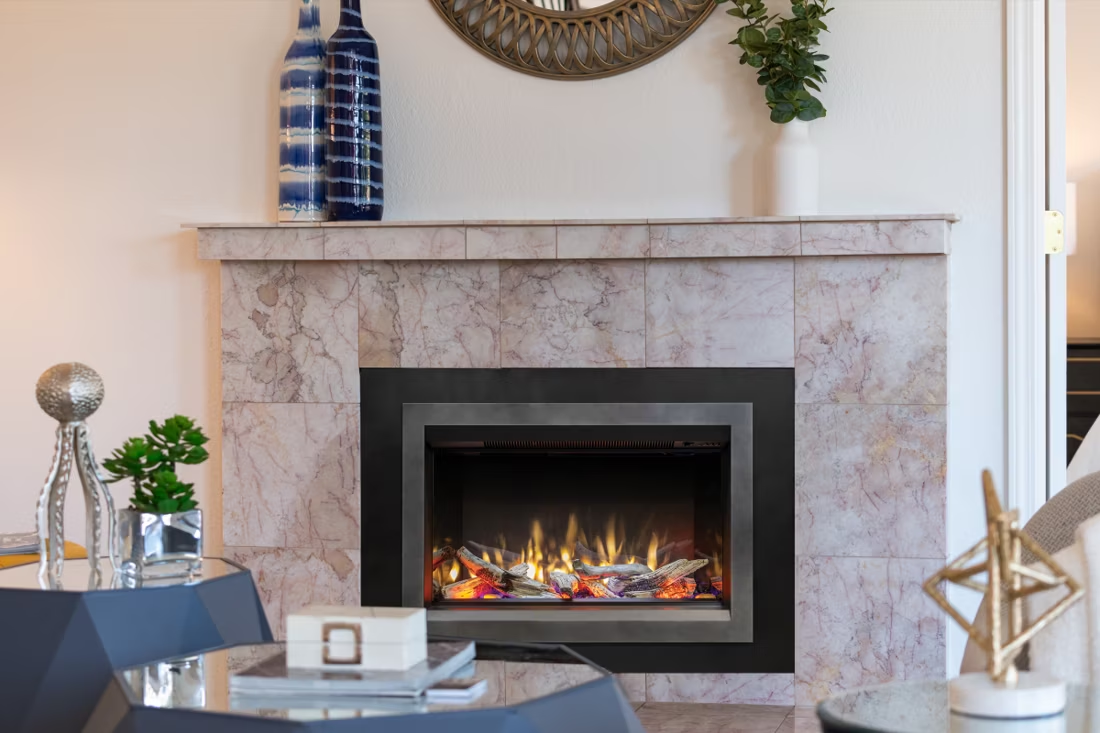
Four fuels. One honest answer for Hardeman County.
Three steps. No salesperson until you're ready.
Tell us about your project
Your zip code, your situation, and the fuel you're leaning toward—or let the answers point you to one.
See what's actually available
The brands dealers within 100 miles genuinely carry—real options, never a catalog mirage.
Get your dealer & Project Guide
A trusted local dealer, plus the free Project Guide & Parts List that names every component of the job.
Frequently Asked Questions
Which fuel works best in Hardeman County?
With average winter lows around 27°F and a moderate winter heating load, Hardeman County doesn't demand the round-the-clock heat output that a place like Duluth or International Falls does—but norther fronts can still bring hard freezes, and homeowners here want something that works when the power lines go down in an ice event. Wood stoves and inserts are a strong fit given the local supply of oak, pecan, and mesquite—mesquite in particular burns hot and long, which suits the intermittent-but-intense cold snaps. Gas fireplaces and inserts (mostly propane in this rural county) are popular for convenience and instant heat with no wood-splitting labor. Pellet stoves work well for homeowners who want wood-like ambiance without the chainsaw—Forest Energy and Lignetics bags are both available regionally. Electric fireplaces are common as supplemental or accent heat in bedrooms and living rooms, but given the mild climate here, they're a genuinely viable primary option in some smaller, well-insulated spaces too. Most Hardeman County homes end up with one primary fuel and a backup for outage protection.
Do I need a permit to install a fireplace in Hardeman County?
Requirements depend on where you're located. Within Quanah or Chillicothe city limits, new wood stoves, gas fireplaces, gas inserts, and pellet stoves generally require a building permit, and any gas line work requires a licensed gas-fitter. Outside city limits, in unincorporated Hardeman County, permitting is often less formalized than in larger Texas counties—but any gas line tie-in still needs a licensed installer, and manufactured-home installations may have separate requirements. Electric fireplaces typically don't need a permit unless they involve new wiring or a hardwired built-in unit. Most local hearth retailers who serve Hardeman County handle the permitting and inspection coordination as part of the installation, so it's worth asking your dealer directly rather than guessing.
Are there air quality restrictions on wood burning in Hardeman County?
No—Hardeman County has no designated air quality non-attainment status and no winter burn-ban program tied to wood smoke. This is different from parts of the West and Pacific Northwest where basin inversions trigger curtailment days. That said, EPA 2020 NSPS emissions standards still apply to new wood stove models sold and installed, so any new unit you buy will be a cleaner-burning design than older pre-EPA stoves. If you're replacing an older stove, ask your local dealer about current EPA-certified options—they burn less wood for the same heat output, which matters when you're the one splitting the mesquite.
Can one local hearth retailer handle all four fuel types?
In a county with under 3,000 residents, most hearth retailers serving Hardeman County are based in Vernon or Wichita Falls and travel in for installs—and many of these regional dealers do carry a mix of wood, gas, pellet, and electric so they can serve whatever a rural customer needs on a given service trip. Smaller local fuel suppliers, if any operate directly in Quanah or Chillicothe, tend to focus on firewood or propane delivery rather than full retail and installation. If you're comparing fuels, ask a regional dealer to bring literature or photos for multiple fuel types on the same visit—it saves you a second trip given the distances involved.
How does service work in a small, spread-out county like Hardeman?
Service technicians covering Hardeman County typically operate out of Wichita Falls or Vernon and route through Quanah, Chillicothe, and the outlying ranch roads on scheduled service days rather than same-day calls. Expect a modest trip charge for the drive, and expect to book pre-season chimney sweeps and gas inspections (September–October) well ahead of the first hard freeze, since technicians batch rural stops together. If you're heating with wood and living well outside town, keep a spare stovepipe brush and basic tools on hand for minor issues between scheduled visits—it's common practice in low-density counties like this one.
What's the typical cost range for fireplace installation across all fuel types in Hardeman County?
Costs in Hardeman County run in line with rural North Texas pricing, sometimes with a small premium for travel distance from Vernon or Wichita Falls. Wood stove or insert: roughly $4,000–$8,500 for a typical install, higher for new chimney construction. Gas fireplace, insert, or stove: roughly $4,000–$10,000, largely dependent on propane line work and venting, since natural gas service is limited in the rural parts of the county. Pellet stove or insert: roughly $4,000–$7,000 for a standard install. Electric fireplace: $200–$3,000 for the unit itself, with $400–$1,200 in labor for anything beyond simple plug-and-play placement. See the county + fuel pages above for more detail tied to specific local retailer pricing.
Can I install a fireplace myself?
If you're putting a fire in your house on purpose, it's best to work with an expert. Unless you're genuinely experienced in framing, gas line, vent pipe, and the national code on clearances to combustibles, have a professional do it—and ideally the same company that sells you the fireplace, so warranty, service, and liability all live under one roof.
How much should I budget for a fireplace?
For an average home—covering the fireplace, the vent pipe, and basic installation—a budget between $3,900 and $5,500 gives you a lot of options across wood, gas, and pellet. By the time you add finish work, gas line, and electrical, the average complete installation lands between $5,000 and $12,000 all-in. In a remodel or new build, a good rule is to put about 2.5% of the total project cost toward the fireplace.
What are the biggest mistakes people make buying a fireplace?
Five come up constantly: budgeting for the unit but not the full job (vent, gas line, electrical, finish work); drowning in options instead of starting from style and fuel; buying without an in-home preview; handing installation to a handyman instead of a pro; and giving up out of sheer indecision. Every one is avoidable with a clear plan—step one, step two, step three.
Does a fireplace add value to my home?
On average, a fireplace adds back to the home about the same amount you spent installing it. Add the monthly savings from heating the rooms you actually use instead of the whole house—often hundreds of dollars a year—and the value case is strong before you even count what a fire does for how your family uses the room.
Stove and Fireplace Dealers in Hardeman County
Listings include WhyFire partner dealers, dealers we have verified as authorized for the brands we recommend, and established local businesses that carry hearth products. Every listing shows which one it is. The ones marked Preferred run on WhyFire's software, so they can show you real pricing and book your appointment right here. No manufacturer pays for placement. How we verify dealers →
The Ember Shop, Inc.
Home Escapes & More
Get matched with a Hardeman County hearth dealer.
Tell us about your project and we'll match you with a trusted local dealer and send a free Project Guide & Parts List—the exact parts, including the vent kit, for your fireplace project in Hardeman County.
Find Your Fireplace →