
Keep Your Family Warm and Safe—No Matter What
El Paso's desert winters rarely demand a wood-burning appliance, but a small number of homes in the Upper Valley, Kern Place, and the Franklin Mountains foothills still want one for ambiance or occasional supplemental heat. We'll connect you with a local dealer who can tell you honestly what fits.
Every Project Starts From One of These Five Situations
A Desert Climate That Rarely Calls For Wood Heat.
El Paso sits at 3,889 feet in a 3B climate zone, with an average winter low around 34°F and just 2,206 heating degree days a year. Compare that to a genuinely cold-climate city like Duluth, MN, which racks up nearly four times as many heating degree days, and it's easy to see why wood heat never became a local necessity here the way it did farther north. Most El Paso homes get through winter fine on a furnace or a couple of cold snaps, not a woodpile.
El Paso is also a designated non-attainment area for ozone, which means the region already manages air quality closely and any solid-fuel appliance draws extra scrutiny. Oak, pecan, and mesquite are the wood species most associated with this region—but locally they're prized far more for grilling and smoking than for home heating. Where wood stoves do show up in El Paso, it's usually in an older adobe or brick home in Sunset Heights or the Upper Valley with an original masonry fireplace, or in a mountain-view property where the owner wants the look and feel of a real fire more than a primary heat source. If that's your situation, a local dealer can tell you honestly whether it's a good fit for your house.
Three steps. No salesperson until you're ready.
Tell us about your project
Your zip code, your situation, and the fuel you're leaning toward—or let the answers point you to one.
See what's actually available
The brands dealers within 100 miles genuinely carry—real options, never a catalog mirage.
Get your dealer & Project Guide
A trusted local dealer, plus the free Project Guide & Parts List that names every component of the job.
Frequently Asked Questions
Does anyone actually install wood fireplaces in El Paso?
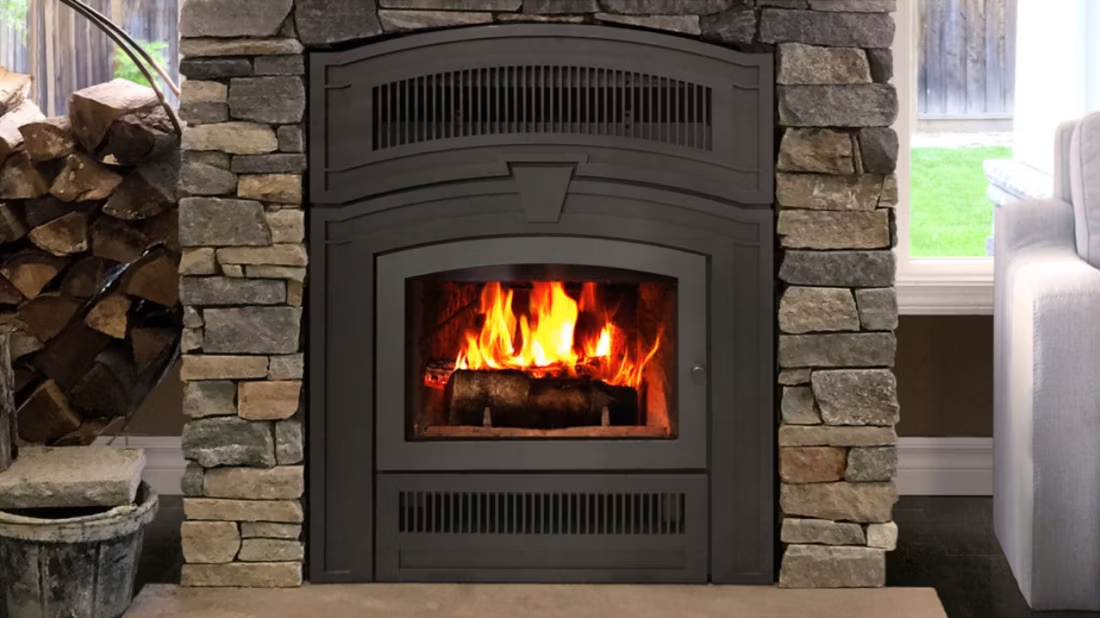
Yes, but it's a small share of the market compared to gas. The most common wood installs in El Paso fall into three buckets: traditional kiva or Southwestern-style masonry fireplaces in adobe-style homes (often more architectural than functional), small EPA-certified wood stoves in casitas, guest houses, or ranch properties outside the city core, and occasional wood inserts retrofitted into older masonry fireplaces that were originally built as open hearths. If you're heating a standard tract home in east or west El Paso through a normal winter, a gas fireplace will serve you better. If you want the real thing for ambiance, weekend ranch use, or a Southwestern aesthetic, wood still has a place.
What does a wood stove or fireplace installation cost in El Paso?
Because wood is a niche product here, pricing has more spread than it does in wood-heavy markets. A small freestanding EPA-certified wood stove with a straight-up Class A chimney typically runs $5,000 to $9,000 installed. A traditional masonry kiva fireplace built from scratch—adobe or stucco veneer, custom shaping, real masonry chimney—can easily reach $12,000 to $25,000 because it's as much custom mason work as it is hearth work. A wood insert dropped into an existing masonry fireplace usually lands in the $4,500 to $8,500 range. Get a firm quote from a hearth retailer who actually does wood work in the El Paso / Las Cruces corridor—many local shops focus almost entirely on gas.
What kind of wood do people burn in El Paso?
Three local species dominate: mesquite, pecan, and oak. Mesquite is the iconic Chihuahuan Desert hardwood—dense, slow-burning, and prized as much for cooking and smoking as for fireplaces. Pecan is widely available thanks to the Mesilla Valley pecan orchards just up the Rio Grande around Las Cruces, and it burns clean with a mild, pleasant smell. Oak shows up too, often trucked in from central Texas. All three are dense hardwoods that produce real heat and long burns—well-suited to the few genuinely cold nights of an El Paso winter. Avoid burning unseasoned mesquite; let it dry at least 12 months because the resin content is high.
Is it legal to burn wood in El Paso? I've heard about air quality issues.
It's legal, but with awareness required. El Paso is an EPA-designated non-attainment area for particulate matter—partly because of the geography of the Rio Grande basin and partly because of cross-border air contributions from Ciudad Juárez. There's no formal no-burn day program like you'd see in California or Oregon, but the Texas Commission on Environmental Quality (TCEQ) and the El Paso city air quality program track PM2.5 levels and issue health advisories on bad days. Any new wood-burning appliance installed in El Paso should be EPA 2020 NSPS certified—both for emissions and because most retailers won't sell or install uncertified units anyway. Burn dry, seasoned hardwood and skip the fire on advisory days.
Do I need a permit to install a wood-burning fireplace or stove in El Paso?
Yes. The City of El Paso One Stop Shop (the city's building permit office) requires a mechanical permit for any solid-fuel appliance install, and most projects also trigger a building permit if structural work, chimney penetrations, or new hearth pads are involved. For homes in unincorporated El Paso County, permitting goes through El Paso County Public Works. A reputable hearth installer will pull permits as part of the job—if a contractor offers to install a wood stove without a permit, walk away. Improper venting in our dry, often-windy climate is a wildfire risk as well as a code violation.
Should I just get a gas fireplace instead?
For most El Paso homeowners, honestly, yes. With only about 2,200 heating degree days, mild winters, and abundant natural gas service from Texas Gas Service across the city, a direct-vent gas fireplace will deliver instant heat for the handful of cold evenings each year, look great, and never require you to haul wood or clean ash. Wood makes sense in El Paso when it's tied to a specific reason—Southwestern architecture, a ranch property, a vacation cabin in the Sacramento or Lincoln National Forest area, or a homeowner who genuinely loves tending fires. There's no shame in choosing gas; it's the right answer for the climate.
Can I put a wood stove in my casita or guest house?
This is actually one of the more common wood-stove installs in El Paso. Small detached casitas, pool houses, and guest quarters often don't have a gas line run to them, and a small EPA-certified wood stove (think 1.5 cubic foot firebox or smaller, from brands like Jøtul, Morsø, or Pacific Energy) can heat a 400–800 square foot space beautifully on the cold nights of the year. You'll still need a Class A insulated chimney through the roof, proper clearances to combustibles, and a permitted install—but for a casita that gets occasional winter use, it's a sensible choice. Budget $5,500–$9,000 installed.
Where do I buy firewood in El Paso?
Several local suppliers deliver across El Paso and into the Upper Valley, with mesquite, pecan, and oak being the standard offerings. Expect to pay $300–$500 per cord for seasoned hardwood—higher than national averages because hardwood has to be hauled in from the orchards and central Texas. Mesquite often sells by the half cord or even by the smaller bundle since it's prized for both fireplace and barbecue use. For self-cutting, the Lincoln National Forest and Gila National Forest (both a few hours away in New Mexico) offer personal-use firewood permits in season, but for most El Paso homeowners, buying delivered wood is the practical choice.
How often does a wood chimney need cleaning if I only burn a few times a year?
Even light use needs annual attention. The Chimney Safety Institute of America (CSIA) recommends a yearly inspection regardless of how many fires you burn—and in El Paso, dust, wind-driven debris, and the occasional bird or rodent nest are actually bigger chimney issues than creosote buildup for light-use households. A Level 1 inspection runs $150–$250 from local CSIA-certified sweeps and is well worth it before each burning season. If you're a heavier user—say, 20+ fires a winter in a casita stove—plan on a full sweep at the same time.
Why is my open fireplace making my house colder?
Open fireplaces suck—literally. As the fire burns, it consumes air your furnace already paid to heat and pulls it out through the chimney, so the house is actually colder after the fire goes out than before you lit it. An insert fixes this: it seals the chimney, puts fixed glass across the front, and turns that hole in your house into a real heat source.
Why is a fireplace insert so efficient?
An insert does two things: it seals the chimney completely, so you stop losing air you already paid to heat, and it radiates warmth into the room through the firebox and glass. Most add a heat-exchange fan that pulls cool room air underneath, wraps it around the hot firebox, and pushes it back out warm. Your home is more efficient before you've even lit the first fire.
Can I install a fireplace myself?
If you're putting a fire in your house on purpose, it's best to work with an expert. Unless you're genuinely experienced in framing, gas line, vent pipe, and the national code on clearances to combustibles, have a professional do it—and ideally the same company that sells you the fireplace, so warranty, service, and liability all live under one roof.
What is an in-home preview and do I need one?
It's a visit where a hearth professional measures your space, confirms the model you picked actually works in your home, and walks the specs—framing, gas line, venting, finish work—before anything is ordered. Some details you just can't know until you see the house. Never make a down payment without one; it's the single most-skipped step that burns buyers.
Nearby Dealers
Hearth shops serving El Paso and the surrounding area. Every listing shows whether it is a WhyFire partner, a dealer we have verified as authorized for the brands we recommend, or a local business carrying hearth products. No manufacturer pays for placement. How we verify dealers →
Hi Tech Home Services
K.d. Scholten Co.
Southwest Chimney Sweeps Inc
Jack White Building Specialties
Find your wood fireplace in El Paso.
Tell us about your home—whether it's a Southwestern-style main house, a casita, or a ranch property—and we'll match you with the right wood stove, insert, or masonry fireplace and connect you with a trusted local dealer.
Find Your Fireplace →