
Find the right hearth for your Cottle County home.
Wood, gas, pellet, and electric fireplace resources for Paducah and every ranch and rural stretch of Cottle County. Find the right unit for your place and get matched with a dealer who actually covers this part of the Rolling Plains.
Every Project Starts From One of These Five Situations
Heating a small ranching county on Texas's Rolling Plains.
Cottle County sits in the Rolling Plains of northwest Texas, with Paducah as the county seat and, at roughly 1,200 residents countywide, one of the smallest populations in the state. Winters here are mild by the standards of places like Fargo ND or Duluth MN—most days stay above freezing—but the county is squarely in the path of arctic cold fronts locals call blue northers, which can drop temperatures into the teens for a day or two at a time. Ranch land across the county supplies plenty of oak, pecan, and mesquite for wood heat, and mesquite in particular is often cleared as brush and burned as a byproduct of ranching rather than purchased.
What you'll find on this hub: hearth retailers, service technicians, and fuel suppliers that reach every corner of Cottle County—Paducah itself, plus the unincorporated communities and ranch roads that make up most of the county's land area. Because the population is so small, very few businesses are physically based inside the county; most coverage comes from dealers and techs in Childress, Vernon, or Quanah who travel out for consultations and installs. Pick your fuel below for specifics on units, costs, and who actually services this area.
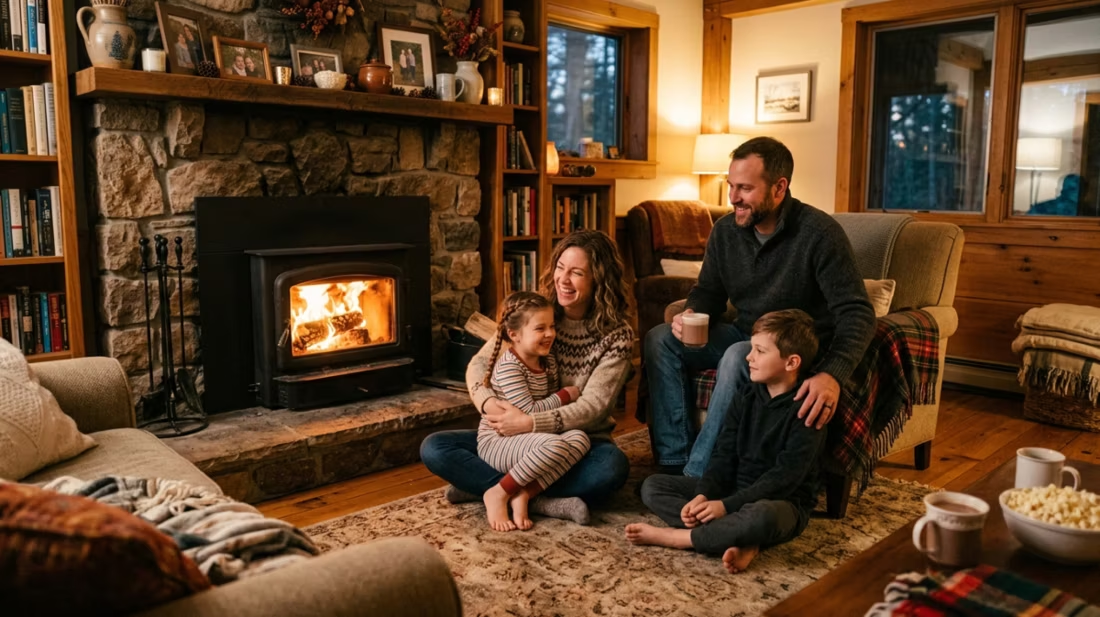
Four fuels. One honest answer for Cottle County.
Three steps. No salesperson until you're ready.
Tell us about your project
Your zip code, your situation, and the fuel you're leaning toward—or let the answers point you to one.
See what's actually available
The brands dealers within 100 miles genuinely carry—real options, never a catalog mirage.
Get your dealer & Project Guide
A trusted local dealer, plus the free Project Guide & Parts List that names every component of the job.
Frequently Asked Questions
Which fuel works best for a home in Cottle County?
It depends on the property. Wood is a practical, low-cost option on ranch land—oak, pecan, and mesquite are common locally, and mesquite in particular is often cleared as brush and burned rather than bought by the cord. Gas here almost always means propane, since piped natural gas doesn't reach most of the unincorporated county; propane fireplaces or inserts give instant heat without the woodpile work. Pellet stoves are a middle option—Forest Energy and Lignetics bags are available through regional farm-supply channels, and pellet heat handles the occasional blue norther without daily tending. Electric fireplaces are mostly supplemental here, since homes are built for heavy summer air conditioning first and Cottle County's mild winters don't demand a primary electric heat source. Many households end up with wood or propane as the main heater and electric for ambiance in a den or bedroom.
Do I need a permit to install a fireplace in Cottle County?
Requirements are lighter here than in a larger county, but a few things still apply. Inside the city limits of Paducah, building permit questions run through the city; in unincorporated Cottle County, there's no large in-house building department, so permitting for wood and pellet appliances is generally handled by following manufacturer installation specs and local fire code rather than a formal review process. Propane work is the exception—Texas Railroad Commission rules require a licensed LP-gas installer for any new gas line or appliance connection, and that licensing requirement doesn't go away just because the county is rural. Electric fireplace installs that involve new wiring should still meet National Electrical Code standards. Most retailers who travel into the county for installs already know which of these steps apply to your specific project.
Are there air quality or burning restrictions in Cottle County?
Cottle County doesn't have the kind of winter inversion or non-attainment issues that trigger wood-smoke advisories in other parts of the country. What does come up locally is drought-driven burn bans—the Rolling Plains region is prone to grassfires, and the county judge can issue an outdoor burn ban during dry stretches. Those bans typically target open burning of brush and debris rather than an EPA-certified wood stove or insert operating inside a home, but it's worth checking current county burn-ban status before doing any outdoor wood processing or brush burning tied to gathering firewood.
Can one dealer really cover all four fuel types for a county this rural?
Yes, more often than you'd expect. Because dealers serving Cottle County are based in larger nearby towns like Childress or Vernon and drive significant distances for every job, most of them carry multiple fuel lines—wood, gas (propane), pellet, and electric—so a single trip out to a ranch near Paducah can cover whatever the homeowner needs. That's different from a metro area where dealers often specialize narrowly in one fuel. If you're not sure which fuel fits your place, a multi-fuel dealer covering this county can usually walk through the trade-offs on the same visit rather than sending you to a second business.
How does fireplace service work in a county with only about 1,200 people?
Plan ahead. Technicians covering Cottle County are typically based 30 to 40 miles away in Childress, Vernon, or Quanah, so a service call usually includes a travel charge and needs to be scheduled rather than expected same-day. Late summer and early fall—before the first blue norther comes through—is the easiest window to book chimney sweeps, propane system checks, or pellet stove cleaning. For winter reliability, it's worth keeping a backup heat source in mind: a wood stove or fireplace as backup for a propane system (or vice versa) matters more out here than in a city where a technician might be five minutes away.
What's the typical cost range across fuel types for a Cottle County installation?
Costs run a bit lower here than in major Texas metro areas, though travel distance for the installer can offset some of that. Wood stove or insert installation typically runs $3,500 to $7,500 depending on chimney work. Propane fireplace, insert, or stove installation generally runs $4,000 to $9,000, with tank setup and gas line work as the biggest cost drivers for a new install. Pellet stove or insert installation typically falls between $4,000 and $6,500. Electric fireplaces run $200 to $2,500 for the unit itself, with $300 to $900 in labor for anything beyond a plug-and-play install. Because so few installers are based in-county, ask upfront whether a travel fee is included in any quote.
What is an in-home preview and do I need one?
It's a visit where a hearth professional measures your space, confirms the model you picked actually works in your home, and walks the specs—framing, gas line, venting, finish work—before anything is ordered. Some details you just can't know until you see the house. Never make a down payment without one; it's the single most-skipped step that burns buyers.
Does a fireplace add value to my home?
On average, a fireplace adds back to the home about the same amount you spent installing it. Add the monthly savings from heating the rooms you actually use instead of the whole house—often hundreds of dollars a year—and the value case is strong before you even count what a fire does for how your family uses the room.
Wood, gas, pellet, or electric—how do I choose?
Match the fuel to your life, not the other way around. Wood: lowest fuel cost and total power-outage independence, but you're hauling and stacking. Gas: press a button, set a thermostat, no maintenance to speak of. Pellet: wood economics with automatic feeding, in exchange for weekly cleaning and a need for electricity. Electric: plugs in anywhere with honest supplemental heat. Nobody regrets the fuel that fits how they actually live.
Can I install a fireplace myself?
If you're putting a fire in your house on purpose, it's best to work with an expert. Unless you're genuinely experienced in framing, gas line, vent pipe, and the national code on clearances to combustibles, have a professional do it—and ideally the same company that sells you the fireplace, so warranty, service, and liability all live under one roof.
Stove and Fireplace Dealers in Cottle County
Listings include WhyFire partner dealers, dealers we have verified as authorized for the brands we recommend, and established local businesses that carry hearth products. Every listing shows which one it is. The ones marked Preferred run on WhyFire's software, so they can show you real pricing and book your appointment right here. No manufacturer pays for placement. How we verify dealers →
A & A Chimeny Sweep w/Texas Fp
Get matched with a dealer serving Cottle County.
Tell us about your home near Paducah or out on the ranch, and we'll match you with a trusted local dealer and send over a free Project Guide & Parts List—the exact parts, including the vent kit, and the dealer we recommend for your specific fuel and project.
Find Your Fireplace →