
Find the right fireplace in Childress County.
With winter lows averaging 29°F and roughly 3,072 heating degree days a year, Childress County doesn't need a woodpile to stay warm—fireplaces do the job. Connect with a local dealer who knows what actually works out here.
Every Project Starts From One of These Five Situations
Mild Panhandle winters, practical heat in Childress County, Texas.
Childress County sits in the rolling plains of the Texas Panhandle, with the county seat of Childress anchoring a population of just under 6,000 spread across ranch and farm country along US-287. Winters here are short and mild compared to the northern plains—a place like Bismarck, ND racks up more than 9,000 heating degree days a year, while Childress County averages around 3,072. Oak, pecan, and mesquite grow along the Pease River bottoms and are prized locally for grilling and smoking, but they're rarely the primary heat source for a home here.
That's why this hub leans heavily toward gas and electric. Wood stoves and pellet stoves exist in the county but are uncommon—a handful of ranch homes keep a wood-burning fireplace for ambiance or as a backup during ice storms, but it's not the norm. What you'll find below: hearth retailers, service technicians, and fuel suppliers covering Childress and the smaller communities around it. Because the county is small and rural, expect some dealers and techs to travel in from Amarillo or Wichita Falls, both roughly 100 miles out. Pick your fuel to see local dealers, typical costs, and next steps.
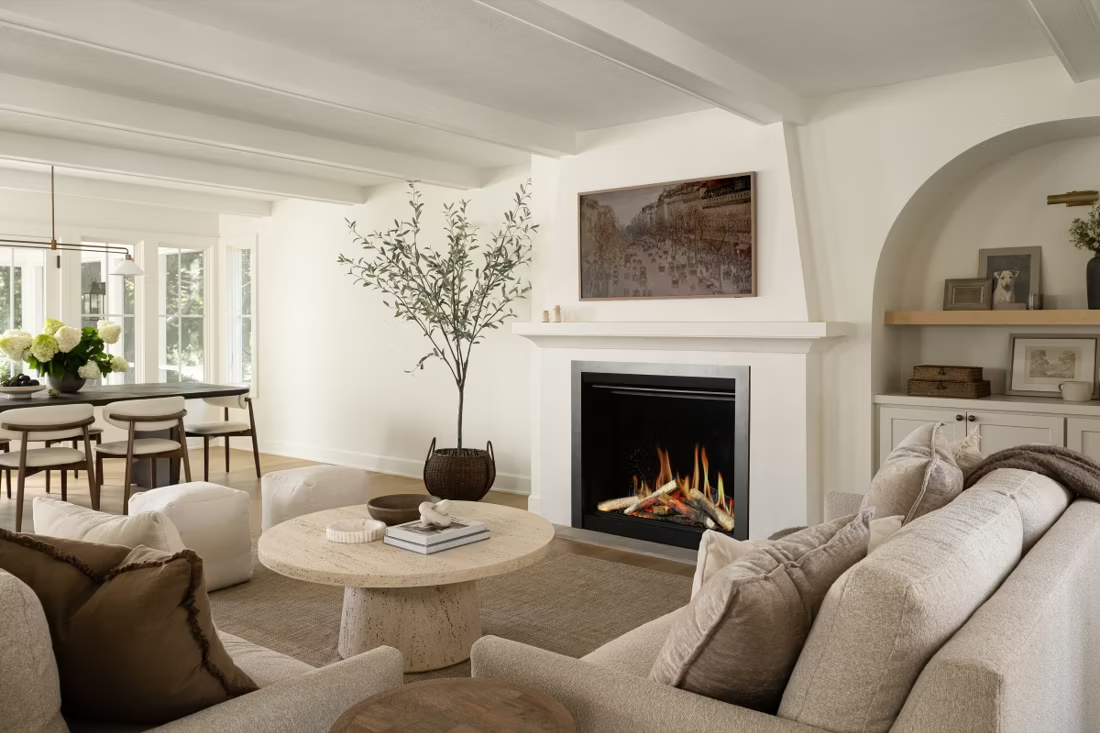
Four fuels. One honest answer for Childress County.
Three steps. No salesperson until you're ready.
Tell us about your project
Your zip code, your situation, and the fuel you're leaning toward—or let the answers point you to one.
See what's actually available
The brands dealers within 100 miles genuinely carry—real options, never a catalog mirage.
Get your dealer & Project Guide
A trusted local dealer, plus the free Project Guide & Parts List that names every component of the job.
Frequently Asked Questions
Which fuel works best in Childress County?
For most homes here, it comes down to gas or electric. With winter lows averaging around 29°F and only about 3,072 heating degree days a year, Childress County doesn't have the sustained cold that makes wood or pellet heat worth the labor and upkeep—those fuels are essentially not part of the local hearth market. Gas fireplaces (propane in most rural parts of the county, natural gas where service reaches into town) give instant, reliable heat with none of the wood-supply logistics. Electric fireplaces work well as supplemental heat in bedrooms, additions, or homes without gas service, and they're the simplest option for renters or older homes where running a gas line isn't practical. A wood-burning fireplace using local oak, pecan, or mesquite still shows up occasionally—usually for looks or an ice-storm backup—but it's the exception, not the rule.
Do I need a permit to install a fireplace in Childress County?
Generally yes, though requirements are straightforward for a county this size. Gas fireplace, insert, or stove installations typically require a building permit plus a gas line permit if new propane or gas piping is involved, and the gas connection itself should be done by a licensed installer. Within the city of Childress, permits run through the city; outside city limits, they go through the Childress County building office. Electric fireplaces usually don't require a permit for plug-in units, but a built-in electric fireplace that needs a new circuit or hardwiring does. Most local retailers and electricians handle the paperwork as part of the installation, so you're not left tracking down permits yourself.
Why don't more homes in Childress County burn wood for heat?
It's mostly a climate story. Childress County's winters are short and relatively mild—29°F average lows and about 3,072 heating degree days a year put it well below the threshold where a wood stove earns its keep. Compare that to a place like Fargo, ND, where residents burn wood through six-plus months of genuinely cold weather; here, a cold snap might last a few days before it breaks. Oak, pecan, and mesquite are abundant along the Pease River and are excellent firewood by any measure, but locally they're more often split for backyard smokers and grills than stacked for winter heat. A traditional masonry fireplace burning local hardwood still exists in some older homes, largely for atmosphere rather than as the primary heat source.
Can one local dealer handle both gas and electric fireplaces?
Yes—in a county this size, the hearth retailers and appliance dealers that serve Childress typically carry both gas and electric lines rather than specializing in just one, since the local customer base isn't large enough to support single-fuel showrooms. Some jobs, especially anything involving new gas piping, may bring in a separate licensed gas installer working alongside the retailer. If a dealer only stocks electric units, they can usually still point you to a gas specialist in the area or in Amarillo or Wichita Falls for larger propane conversions.
How does fireplace service and installation work in a rural county like this?
With a county-wide population under 6,000, Childress doesn't support a large roster of dedicated hearth technicians, so expect some service calls—particularly gas line work, larger electrical installs, or warranty service on higher-end units—to come from Amarillo or Wichita Falls, both about 100 miles away. Local propane suppliers and electricians handle the bulk of routine work. It's worth scheduling non-emergency service ahead of the first real cold front of the season rather than waiting, since travel time from a nearby city adds a few extra days to scheduling compared to a town with a hearth shop on every corner.
What's the typical cost range for a gas or electric fireplace installation in Childress County?
Gas fireplace, insert, or stove: figure roughly $4,000–$9,500 depending on whether it's a straightforward propane conversion or a new install requiring fresh gas line and venting. Electric fireplace: the unit itself typically runs $200–$3,000, with installation adding $150–$1,000 for anything beyond a plug-and-play wall unit—built-ins with new circuits run toward the higher end. Because so few installers are based in the county itself, ask upfront whether a quote includes travel time from Amarillo or Wichita Falls; it can affect the total more than it would in a larger market.
Can I install a fireplace myself?
If you're putting a fire in your house on purpose, it's best to work with an expert. Unless you're genuinely experienced in framing, gas line, vent pipe, and the national code on clearances to combustibles, have a professional do it—and ideally the same company that sells you the fireplace, so warranty, service, and liability all live under one roof.
Can a fireplace actually lower my heating bill?
Yes—by creating a comfort zone. A furnace heats every square foot of the house just to warm the one room you're in; a gas fireplace on low burns roughly a sixth of the gas a typical furnace does. Set the furnace around 55–60 degrees as a baseline, then heat the rooms your family actually uses. Families who heat this way commonly save $20–$60 a month.
What is an in-home preview and do I need one?
It's a visit where a hearth professional measures your space, confirms the model you picked actually works in your home, and walks the specs—framing, gas line, venting, finish work—before anything is ordered. Some details you just can't know until you see the house. Never make a down payment without one; it's the single most-skipped step that burns buyers.
Does a fireplace add value to my home?
On average, a fireplace adds back to the home about the same amount you spent installing it. Add the monthly savings from heating the rooms you actually use instead of the whole house—often hundreds of dollars a year—and the value case is strong before you even count what a fire does for how your family uses the room.
Find your fireplace in Childress County.
Tell us about your home and we'll match you with a trusted local dealer and send a free Project Guide & Parts List—the exact parts, including the vent kit, and a dealer recommendation for your gas or electric fireplace project in Childress County.
Find Your Fireplace →