
Fireplace resources for every corner of Calhoun County.
From Port Lavaca out to Seadrift and Point Comfort, get matched with a trusted local dealer who knows what actually makes sense on the Gulf Coast—and what doesn't.
Every Project Starts From One of These Five Situations
1,032 heating degree days on Matagorda Bay means ambiance drives most decisions here, not survival heat.
Calhoun County sits low on the Texas Gulf Coast around Port Lavaca, Point Comfort, and Seadrift, with a climate zone 2A profile and an average winter low near 46°F. That works out to roughly 1,032 heating degree days a year—a small fraction of what a place like Bismarck, North Dakota logs in a single winter. There's no real cold season here, and the county has no wind-inversion or wildfire-smoke air quality concerns to plan around, which is unusual compared to most of the hearth markets we cover. Oak, pecan, and mesquite grow locally and get burned in outdoor pits and the occasional backyard fireplace, but they're a cooking and ambiance tradition here, not a winter-heat necessity.
That climate reality shapes which fuels actually make sense in Calhoun County. Gas fireplaces and electric units are the standard choices—gas for the look and instant warmth on the rare cold front blowing in off the bay, electric for supplemental ambiance in a den or bedroom with zero venting hassle. Wood-burning stoves and pellet stoves are genuinely uncommon here; a handful of homeowners install a wood-burning fireplace for atmosphere or resale appeal, and pellet units show up occasionally through regional brands like Forest Energy or Lignetics, but neither is a heating necessity in a county that barely breaks 1,000 heating degree days. This hub rolls up hearth retailers, service techs, and fuel suppliers across the whole county so you can see what a local pro can actually install near you, whichever fuel you're considering.
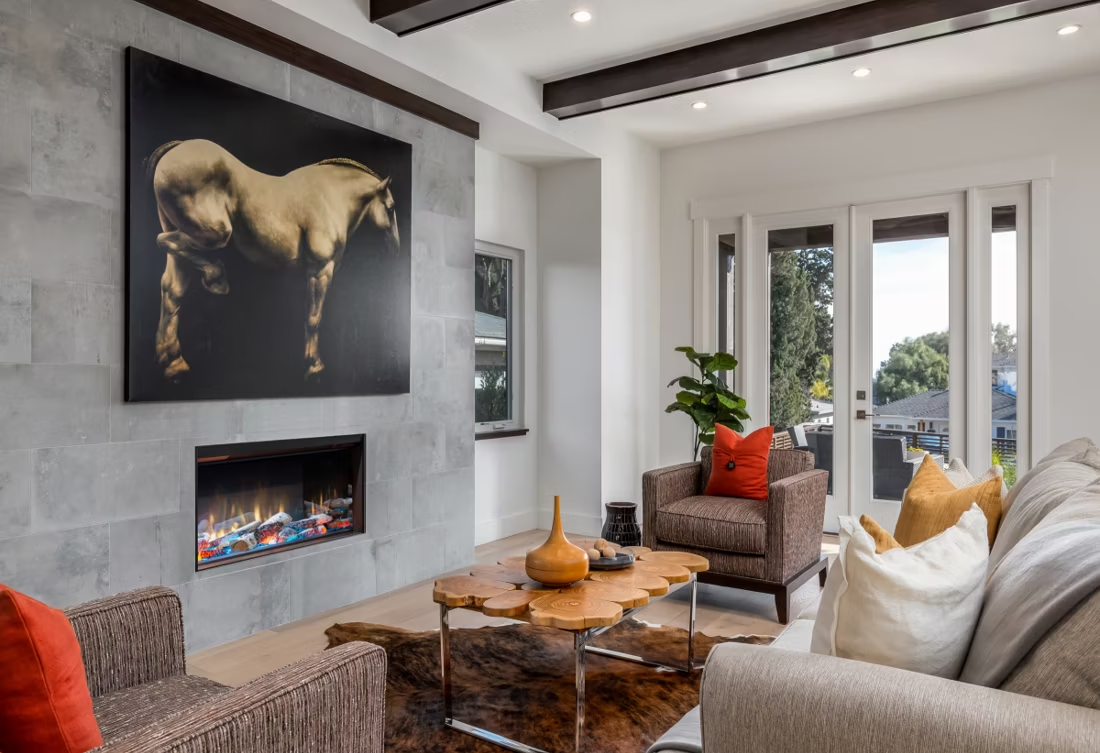
Four fuels. One honest answer for Calhoun County.
Three steps. No salesperson until you're ready.
Tell us about your project
Your zip code, your situation, and the fuel you're leaning toward—or let the answers point you to one.
See what's actually available
The brands dealers within 100 miles genuinely carry—real options, never a catalog mirage.
Get your dealer & Project Guide
A trusted local dealer, plus the free Project Guide & Parts List that names every component of the job.
Frequently Asked Questions
Does a wood-burning fireplace even make sense in Calhoun County?
Not for heat, no—with an average winter low around 46°F and only about 1,032 heating degree days a year, nobody in Port Lavaca or Seadrift is relying on a wood stove to get through the night the way a homeowner in Bismarck or Fargo would. That said, a masonry wood-burning fireplace still shows up in a handful of new builds and renovations purely for atmosphere and resale value, often burning local oak or pecan on the rare cold front. If you want that look, a local retailer can still source and install one—just go in knowing it's an occasional-use feature, not a primary heat source.
What's the most practical fireplace fuel for a Calhoun County home?
Gas is the practical default here. A gas fireplace, insert, or freestanding gas stove gives you instant warmth on the handful of genuinely cold nights each winter without any wood storage, ash cleanup, or chimney maintenance, and it works whether you're on piped natural gas in Port Lavaca or running bottled propane further out toward Seadrift. Electric fireplaces are the other strong option, especially for a bedroom, den, or a home that's all-electric already—no venting required, and installation is often as simple as mounting the unit and plugging it in.
Are pellet stoves available if I want one anyway?
They're available but uncommon. Regional brands like Forest Energy and Lignetics distribute pellet fuel into the Texas Gulf Coast market, so a dealer can special-order both the stove and the fuel supply if you're set on one—some homeowners like the visual of a real flame without full wood-stove maintenance. But given Calhoun County's mild winters, a pellet stove will spend most of the year unused, and most local retailers will tell you honestly that gas or electric will get more use for the same install cost.
Do I need a permit to install a gas fireplace in Calhoun County?
Generally yes. Gas fireplace and insert installs typically require a mechanical or gas permit through your local building jurisdiction—Port Lavaca and Point Comfort each administer their own permitting inside city limits, with the county handling unincorporated areas around Seadrift and along the bay. A licensed gas fitter needs to make the actual gas-line connection regardless of jurisdiction. Electric fireplace installs usually skip the permit process entirely unless you're adding a new dedicated circuit for a built-in unit. Most retailers we match homeowners with pull these permits as part of the install.
How does the Gulf Coast climate affect maintenance for gas and electric units?
Salt air and high humidity off Matagorda Bay accelerate corrosion on venting components and igniter assemblies faster than they'd wear in a drier inland climate, so an annual gas fireplace inspection matters here even though the unit barely runs three months a year. Electric fireplace maintenance is lighter—mostly dusting the heating element and checking the LED or flame-effect components—but any unit installed near an exterior wall on the bay side benefits from a service tech checking seals and wiring for moisture intrusion every couple of years.
What does a fireplace installation typically cost in Calhoun County?
Gas fireplaces, inserts, and stoves generally run $4,000–$9,500 installed, with the higher end reflecting new gas-line runs for homes further from existing service. Electric fireplaces are the most affordable option—$200–$2,800 for the unit, plus $300–$1,000 in labor if you're adding a dedicated circuit or a built-in surround. A masonry wood-burning fireplace installed purely for ambiance runs considerably higher, often $8,000–$15,000+ given the chimney and structural work involved, and pellet stove installs typically land around $4,500–$7,000 including venting.
Can a fireplace actually lower my heating bill?
Yes—by creating a comfort zone. A furnace heats every square foot of the house just to warm the one room you're in; a gas fireplace on low burns roughly a sixth of the gas a typical furnace does. Set the furnace around 55–60 degrees as a baseline, then heat the rooms your family actually uses. Families who heat this way commonly save $20–$60 a month.
Can I install a fireplace myself?
If you're putting a fire in your house on purpose, it's best to work with an expert. Unless you're genuinely experienced in framing, gas line, vent pipe, and the national code on clearances to combustibles, have a professional do it—and ideally the same company that sells you the fireplace, so warranty, service, and liability all live under one roof.
Does a fireplace add value to my home?
On average, a fireplace adds back to the home about the same amount you spent installing it. Add the monthly savings from heating the rooms you actually use instead of the whole house—often hundreds of dollars a year—and the value case is strong before you even count what a fire does for how your family uses the room.
What is an in-home preview and do I need one?
It's a visit where a hearth professional measures your space, confirms the model you picked actually works in your home, and walks the specs—framing, gas line, venting, finish work—before anything is ordered. Some details you just can't know until you see the house. Never make a down payment without one; it's the single most-skipped step that burns buyers.
Stove and Fireplace Dealers in Calhoun County
Listings include WhyFire partner dealers, dealers we have verified as authorized for the brands we recommend, and established local businesses that carry hearth products. Every listing shows which one it is. The ones marked Preferred run on WhyFire's software, so they can show you real pricing and book your appointment right here. No manufacturer pays for placement. How we verify dealers →
Kitchen & Bath Showplace
Victoria Builder Supply Co Inc.
The Design Haus Of Victoria
Get matched with a local Calhoun County dealer.
Tell us what you're picturing and we'll put together a free Project Guide & Parts List—the right unit for a Gulf Coast home, the vent kit it needs, and the local dealer we recommend for your project.
Find Your Fireplace →