
Real hearth options for a county of 232.
Wood, gas, pellet, and electric fireplace resources for ranches and homes around Gail and across the rest of Borden County—matched with dealers who actually make the drive out here.
Every Project Starts From One of These Five Situations
Ranch-country heating in the heart of West Texas.
Borden County sits on the caprock edge between the Rolling Plains and the southern High Plains, with a population of 232 spread across roughly 900 square miles of ranchland. Gail, the county seat, is the only real population center—there's no incorporated city, no stoplight, and no hearth showroom within the county line. Climate zone 3B means winters here are generally mild and short compared to the Panhandle to the north, but hard freezes and cold snaps still roll through most Decembers and Januarys, and ranch houses built decades ago often rely on wood or propane as much as central heat. Mesquite, oak, and pecan grow across the ranchland and remain the go-to firewood—mesquite especially, prized locally for both cooking and heat because it burns hot and long, though it needs more frequent chimney attention than oak due to resin buildup.
Because Borden County's population is so small, no hearth retailer, chimney sweep, or fuel supplier is headquartered inside the county—the businesses that serve local ranches are based in Big Spring, Snyder, and Lamesa, and treat Borden County stops as part of a wider West Texas service route. This hub rolls up who covers the county for each fuel type: wood, gas, pellet, and electric. Pick your fuel below to see local dealer coverage, typical installation costs, and what actually makes sense for a ranch house or a place near Gail.
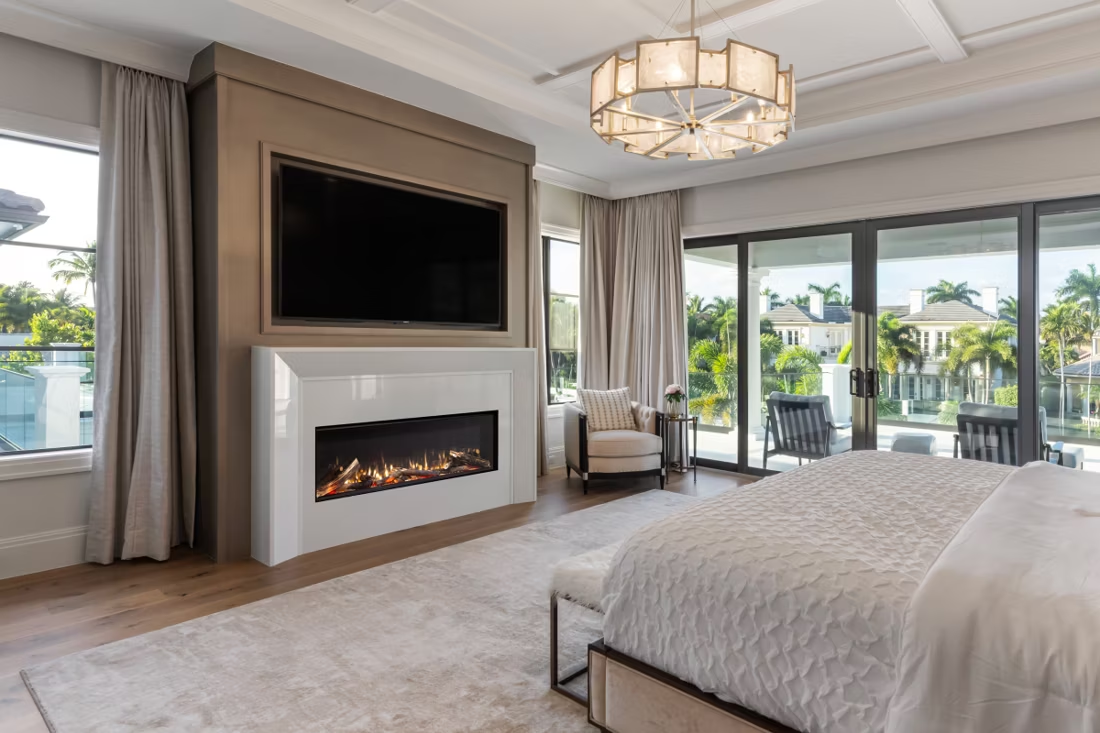
Four fuels. One honest answer for Borden County.
Three steps. No salesperson until you're ready.
Tell us about your project
Your zip code, your situation, and the fuel you're leaning toward—or let the answers point you to one.
See what's actually available
The brands dealers within 100 miles genuinely carry—real options, never a catalog mirage.
Get your dealer & Project Guide
A trusted local dealer, plus the free Project Guide & Parts List that names every component of the job.
Frequently Asked Questions
Which fireplace fuel works best in Borden County?
It depends on the property. Wood is the traditional choice on Borden County ranches—mesquite, oak, and pecan are all locally available, often self-cut, and mesquite in particular burns hot enough to carry a house through the county's occasional hard freezes. Propane is the practical gas option, since there's no municipal natural gas service out here; a propane fireplace or insert gives instant heat without hauling wood, which matters on larger ranch properties. Pellet stoves work fine mechanically, but pellet supply (brands like Forest Energy and Lignetics) generally comes by pallet delivery rather than a local retail shelf, so it takes more planning to keep stocked. Electric fireplaces are a reasonable supplemental option for a den or bedroom, but given the county's rural electric cooperative service and the distances involved, they're rarely anyone's primary heat source. Most homes here end up running wood or propane as the workhorse, with electric filling in for a single room.
Do I need a permit to install a fireplace in Borden County?
Outside Gail's immediate area, Borden County doesn't enforce a comprehensive residential building code the way larger Texas counties do—this is common for very low-population rural counties. That said, propane installations still fall under Texas Railroad Commission LP-gas licensing rules, meaning your gas line and tank work needs to go through a licensed LP-gas installer regardless of local permitting. If your homeowner's insurance carrier requires an inspection for a new wood stove or gas appliance, that's usually the real gatekeeper on ranch properties. When in doubt, a quick call to the Borden County Clerk's office in Gail will confirm whether anything applies to your specific parcel.
Are there air quality or burning restrictions in Borden County?
No—Borden County has no air quality nonattainment designation and no local burn-ban infrastructure tied to wood-burning appliances the way some Texas metro counties do. Ranchers here commonly burn mesquite and oak both for heat and for clearing brush, and that's not regulated the way it might be in, say, the Dallas–Fort Worth area. The one caveat: Texas counties do sometimes issue outdoor burn bans during drought conditions, which apply to open burning of brush piles, not to a properly installed wood stove or fireplace burning inside a home.
Can one dealer really cover all four fuel types out here?
Given how thin the local market is, yes—the multi-fuel retailers based in Big Spring and Snyder that serve Borden County typically carry wood, gas, pellet, and electric units side by side, because it wouldn't be economical for them to specialize in just one fuel for a service area this sparsely populated. That's actually an advantage for Borden County homeowners: you can compare fuel types with the same dealer rather than driving to three different towns. The tradeoff is scheduling—because these dealers are covering a wide rural radius, lead times for installation and follow-up service tend to run longer than in a denser market.
How does service work for a ranch property way out from town?
Expect a travel fee, and expect to plan ahead. Technicians covering Borden County are usually driving 30-60 miles or more from Big Spring, Snyder, or Lamesa, often on ranch roads rather than paved highway, so same-day emergency calls are harder to get than in town. It's worth scheduling annual chimney sweeping before the cold season starts, especially if mesquite is your primary wood—its resin content builds up faster than oak or pecan and can shorten the safe interval between cleanings. Bundling your service call with a neighbor's, if you know of one nearby, can also help bring the travel fee down.
What's the typical cost range for a fireplace install across fuel types in Borden County?
Costs run close to regional West Texas norms, with rural travel factored in. Wood stove or insert: roughly $4,000–$8,500, often lower if you're supplying your own mesquite or oak and just need the appliance and venting installed. Propane fireplace or insert: roughly $4,500–$10,000, with cost driven mainly by whether a tank and gas line already exist on the property. Pellet stove or insert: roughly $4,500–$7,000, plus factoring in delivery logistics for Forest Energy or Lignetics pellet pallets since there's no local retail stock. Electric fireplace: $200–$3,000 for the unit itself, with minimal labor if it's a plug-and-play model. Ranch properties further from Gail should budget for a modest travel surcharge on top of these ranges—see the county + fuel pages above for retailer-specific detail.
How much should I budget for a fireplace?
For an average home—covering the fireplace, the vent pipe, and basic installation—a budget between $3,900 and $5,500 gives you a lot of options across wood, gas, and pellet. By the time you add finish work, gas line, and electrical, the average complete installation lands between $5,000 and $12,000 all-in. In a remodel or new build, a good rule is to put about 2.5% of the total project cost toward the fireplace.
Wood, gas, pellet, or electric—how do I choose?
Match the fuel to your life, not the other way around. Wood: lowest fuel cost and total power-outage independence, but you're hauling and stacking. Gas: press a button, set a thermostat, no maintenance to speak of. Pellet: wood economics with automatic feeding, in exchange for weekly cleaning and a need for electricity. Electric: plugs in anywhere with honest supplemental heat. Nobody regrets the fuel that fits how they actually live.
Does a fireplace add value to my home?
On average, a fireplace adds back to the home about the same amount you spent installing it. Add the monthly savings from heating the rooms you actually use instead of the whole house—often hundreds of dollars a year—and the value case is strong before you even count what a fire does for how your family uses the room.
Can I install a fireplace myself?
If you're putting a fire in your house on purpose, it's best to work with an expert. Unless you're genuinely experienced in framing, gas line, vent pipe, and the national code on clearances to combustibles, have a professional do it—and ideally the same company that sells you the fireplace, so warranty, service, and liability all live under one roof.
Stove and Fireplace Dealers in Borden County
Listings include WhyFire partner dealers, dealers we have verified as authorized for the brands we recommend, and established local businesses that carry hearth products. Every listing shows which one it is. The ones marked Preferred run on WhyFire's software, so they can show you real pricing and book your appointment right here. No manufacturer pays for placement. How we verify dealers →
Coastal Insulation
A & A Chimeny Sweep w/Texas Fp
Caprock Brick
Ford Insulation And Fireplaces
Seal’s Energy Depot
Bill Placer's Chimney Sweep
Find your Borden County fireplace match.
Get matched with a hearth retailer who actually services this part of West Texas, and receive a free Project Guide & Parts List—the right unit, the right vent kit, and a plan built for your property near Gail.
Find Your Fireplace →