
Find your fireplace in Blanco County, Texas.
Wood, gas, pellet, and electric fireplace resources for every Hill Country town in Blanco County—from Blanco and Johnson City out to Hye and Round Mountain. Find the right unit and connect with a trusted local hearth retailer.
Every Project Starts From One of These Five Situations
Mild winters and real wood heat traditions in the Texas Hill Country.
Blanco County sits in the Hill Country between Austin and Fredericksburg, split by the Pedernales and Blanco Rivers, with the county seat of Blanco and Lyndon Johnson's hometown of Johnson City anchoring the county. Winters are mild by national standards—average lows around 35°F and only a light winter heating load each year, a fraction of what a place like Duluth, Minnesota racks up. Most years the heating season runs a short stretch from late November through February, but hard freezes and ice events (the February 2021 winter storm hit the Hill Country especially hard) can spike demand for backup heat fast. Locally, oak, pecan, and mesquite are the dominant firewood species—dense hardwoods often sourced from ranch-land clearing and mesquite-thinning work that's common land management here.
What you'll find on this hub: hearth retailers, service technicians, and fuel suppliers serving every community in the county—Blanco, Johnson City, Hye, Round Mountain, and Cypress Mill. Pick your fuel below to drill into specifics—local dealers, installation costs, recommended units, and the resources that match your project. Whether you're heating a ranch house outside Johnson City or a weekend place along the Blanco River, this is the starting point.
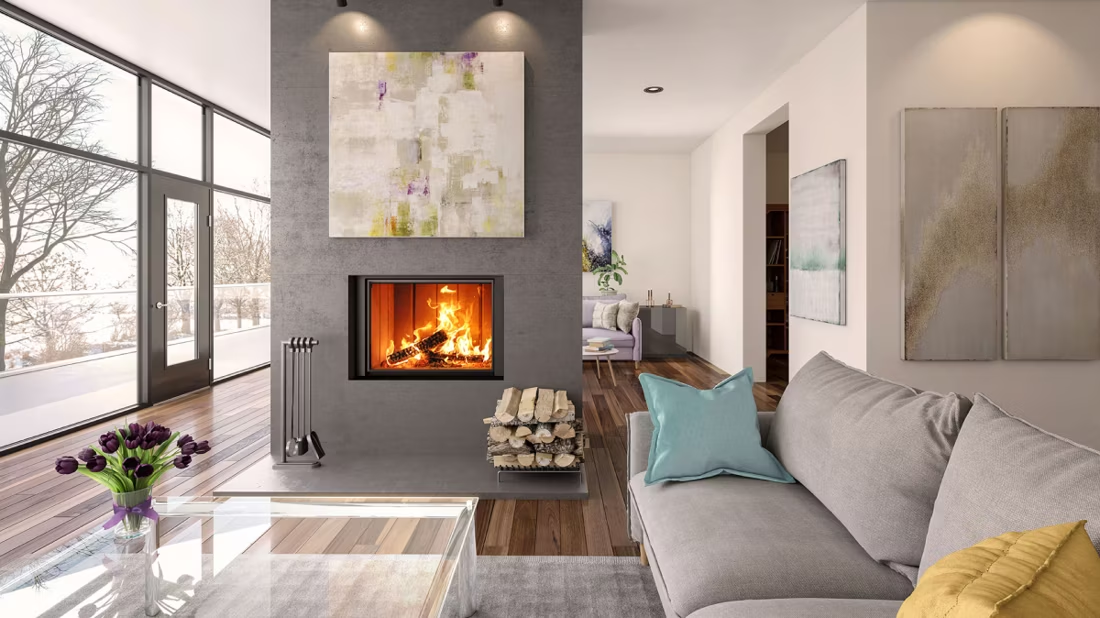
Four fuels. One honest answer for Blanco County.
Three steps. No salesperson until you're ready.
Tell us about your project
Your zip code, your situation, and the fuel you're leaning toward—or let the answers point you to one.
See what's actually available
The brands dealers within 100 miles genuinely carry—real options, never a catalog mirage.
Get your dealer & Project Guide
A trusted local dealer, plus the free Project Guide & Parts List that names every component of the job.
Frequently Asked Questions
Which fuel works best in Blanco County?
It depends on your home and how you use it. Wood is the traditional choice here—oak, pecan, and mesquite are all dense, hot-burning hardwoods that Hill Country ranchers have used for generations, often self-sourced from land clearing. Gas is the practical convenience choice, but most of rural Blanco County runs on propane rather than natural gas mains, so a propane fireplace or insert with a tank setup is the norm outside city limits. Pellet is a smaller but workable option—Forest Energy and Lignetics bags are the ones local dealers tend to carry, though pellet demand here is lighter than in colder climates. Electric is genuinely supplemental in a county with only a light winter heating load each year—it suits a bedroom, a sunroom, or a weekend cabin far more than it suits primary winter heat. Most Blanco County homes lean on wood or propane for the occasional hard freeze, with electric filling in for ambiance the rest of the year.
Do I need a permit to install a fireplace in Blanco County?
It depends on where you are in the county. Within the city limits of Blanco or Johnson City, building permits are typically required for new wood stoves, wood inserts, gas fireplaces and inserts, and pellet stoves, and any propane line work needs a licensed gas-fitter. In unincorporated Blanco County—which is most of the county's land area—building code enforcement is historically limited, so requirements can be lighter; it's still worth a call to the county before you start, especially for anything involving new gas lines or structural chimney work. Electric fireplace installs typically skip permitting entirely unless you're hardwiring a built-in unit into a new circuit. Most local hearth retailers who work this territory regularly can tell you exactly what applies to your address.
Are there air quality restrictions on wood burning in Blanco County?
No, not in the way you'd see in a metro nonattainment area. Blanco County has no wood-smoke advisories or curtailment periods tied to air quality. The one restriction worth knowing about is drought-driven: during periods of exceptional drought, the county judge can issue an outdoor burn ban covering brush piles, debris burning, and open fires—this generally does not apply to indoor wood stoves or fireplaces burning inside a properly vented chimney, but it's worth checking current county burn-ban status if you're also planning to clear mesquite or cedar on your property. New wood stove installs are still expected to meet current EPA emissions standards, which is standard nationwide regardless of local air quality conditions.
Can one local hearth retailer handle all four fuel types?
Some can, though with a county population under 4,500, dealer options are thinner here than in a metro market and many of the retailers serving Blanco County are actually based in Austin, San Marcos, or Fredericksburg and drive in. Multi-fuel dealers that carry wood, propane/gas, pellet, and electric are worth seeking out if you're still comparing fuels, since they can show working displays side by side. Some smaller local shops specialize—a stove shop that's strong on wood and mesquite-burning appliances but doesn't stock pellet, for instance. If a dealer is primarily a firewood or propane supplier rather than an installer, they'll usually say so upfront; that's a fuel source, not a hearth retailer.
How does service work in rural areas of Blanco County?
Most technicians covering Blanco County travel in from Austin, New Braunfels, or Fredericksburg, since the county itself is sparsely populated and spread across a lot of ranch land. Expect a modest travel fee for a service call out to Round Mountain, Hye, or Cypress Mill—often in the same range as a call within Blanco or Johnson City, just with more drive time built in. Scheduling annual chimney sweeps or propane system checks in early fall, before the first hard freeze, is easier than trying to book someone during an ice event when everyone in the Hill Country wants heat working at once.
What's the typical cost range for fireplace installation across all fuel types in Blanco County?
Ranges vary by fuel and by how much venting or gas-line work is involved. Wood stove or insert installation: roughly $3,500–$8,000 for a typical install, more if a full masonry chimney is being built or rebuilt. Propane fireplace, insert, or stove: roughly $4,000–$9,500, with tank setup and line work driving the higher end for homes without existing propane service. Pellet stove or insert: roughly $4,000–$7,000 for a typical install. Electric fireplace: $200–$3,000 for the unit itself, plus $400–$1,200 in labor for anything beyond a simple plug-and-play placement. For fuel-specific detail tied to local retailer pricing, see the county + fuel pages above.
What is an in-home preview and do I need one?
It's a visit where a hearth professional measures your space, confirms the model you picked actually works in your home, and walks the specs—framing, gas line, venting, finish work—before anything is ordered. Some details you just can't know until you see the house. Never make a down payment without one; it's the single most-skipped step that burns buyers.
Can I install a fireplace myself?
If you're putting a fire in your house on purpose, it's best to work with an expert. Unless you're genuinely experienced in framing, gas line, vent pipe, and the national code on clearances to combustibles, have a professional do it—and ideally the same company that sells you the fireplace, so warranty, service, and liability all live under one roof.
Should the dealer who sells my fireplace also install it?
Ideally, yes. A fireplace project involves vent pipe, gas line, electrical, and often tile or stone. Hire three or four separate trades and you own the liability and the game of telephone between them. One company selling and installing means one accountable party, start to finish—ask about factory training, on-time completion records, and what happens if an inspection fails.
Can a fireplace actually lower my heating bill?
Yes—by creating a comfort zone. A furnace heats every square foot of the house just to warm the one room you're in; a gas fireplace on low burns roughly a sixth of the gas a typical furnace does. Set the furnace around 55–60 degrees as a baseline, then heat the rooms your family actually uses. Families who heat this way commonly save $20–$60 a month.
Stove and Fireplace Dealers in Blanco County
Listings include WhyFire partner dealers, dealers we have verified as authorized for the brands we recommend, and established local businesses that carry hearth products. Every listing shows which one it is. The ones marked Preferred run on WhyFire's software, so they can show you real pricing and book your appointment right here. No manufacturer pays for placement. How we verify dealers →
Quality Fire
Pico Propane Operating
Jules Design Bar
Backyard & Patio Store - Austin
Fredericksburg Overhead Door
Hill Country Fireplaces
Parrish & Company Inc - San Antonio
Crafted Flames
EarthCore Industries
Find your fireplace in Blanco County.
Tell us about your home and we'll match you with a trusted local dealer and send a free Project Guide & Parts List—the exact parts, vent kit included, and the local pro who can install it right.
Find Your Fireplace →