
Find the Right Fireplace for Bee County's Mild Winters.
Fireplace resources for every community in Bee County—from Beeville out to Skidmore, Pettus, and Tuleta. With winter lows averaging 44°F, wood and pellet heat are rare here, but a real fireplace still adds comfort and resale value.
Every Project Starts From One of These Five Situations
Short, Mild Winters Shape How Bee County Heats Its Homes.
Bee County sits in climate zone 2A on the South Texas plain, with a winter low average of 44°F and just 1,158 heating degree days a year—a fraction of what cold-climate cities like Fargo, ND or Duluth, MN rack up in a single month. That changes the math on home heating. Oak, pecan, and mesquite are plentiful locally and prized for barbecue and smoking, but wood-burning fireplaces see little real-world use as a heat source here; when installed, it's almost always for ambiance rather than necessity. Pellet stoves follow the same pattern—Forest Energy and Lignetics bags show up more often in grills than in hoppers. Gas and electric fireplaces do the actual work of taking the edge off a Beeville cold front.
What you'll find on this hub: hearth retailers, service technicians, and fuel suppliers serving Beeville, Skidmore, Pettus, Tuleta, Pawnee, and Mineral. Given the climate, this page leans toward gas and electric—the fuels that make sense for Bee County's short, mild heating season—while still covering wood and pellet options for anyone who wants a decorative or occasional-use unit. Pick your fuel below to see local dealers, typical installation costs, and the resources that fit your project.
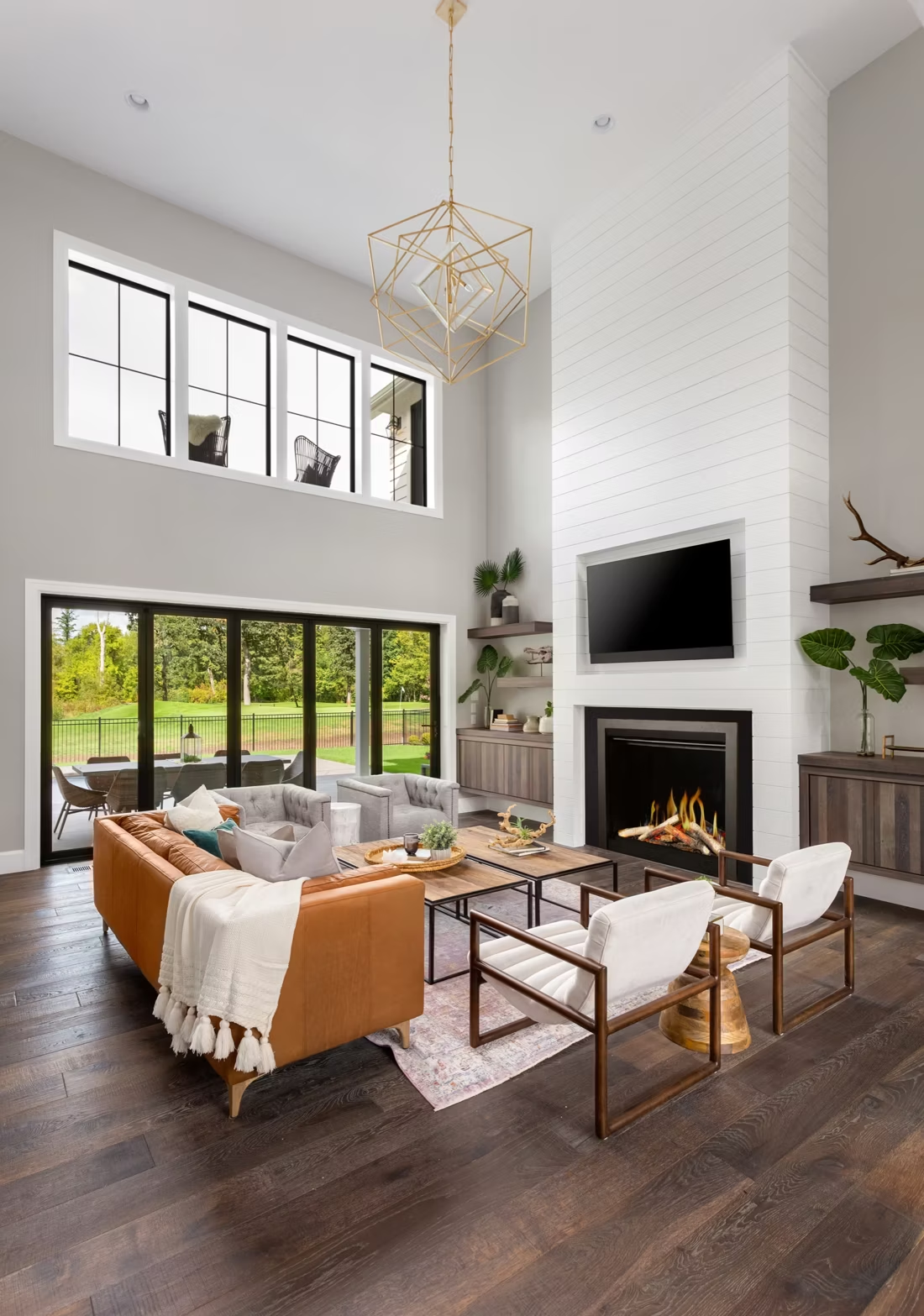
Four fuels. One honest answer for Bee County.
Three steps. No salesperson until you're ready.
Tell us about your project
Your zip code, your situation, and the fuel you're leaning toward—or let the answers point you to one.
See what's actually available
The brands dealers within 100 miles genuinely carry—real options, never a catalog mirage.
Get your dealer & Project Guide
A trusted local dealer, plus the free Project Guide & Parts List that names every component of the job.
Frequently Asked Questions
Which fuel works best in Bee County?
Gas is the practical choice for most Bee County homes. With winter lows averaging 44°F and only about 1,158 heating degree days a year, a gas fireplace or insert gives you instant heat on the handful of genuinely cold nights without the upkeep of a wood-burning setup. Electric fireplaces are a strong secondary option—good for bedrooms, additions, or homes where running a gas line isn't practical. Wood-burning fireplaces exist mostly for ambiance in Bee County; oak, pecan, and mesquite are abundant locally, but the mild climate means most owners burn only occasionally rather than relying on wood for real heat. Pellet stoves are rare here for the same reason—the local pellet supply (Forest Energy, Lignetics) is more likely to end up in a smoker than a hopper.
Do I need a permit to install a gas fireplace in Bee County?
In most cases, yes. New gas fireplace, insert, or stove installations typically require a building permit plus a separate gas line permit if new gas piping is being run, and the gas connection itself should be handled by a licensed gas-fitter. Electric fireplace installs generally don't need a permit unless the project involves hardwiring or a new dedicated circuit, in which case an electrical permit applies. If you're in Beeville, permits are pulled through the city; outside city limits, they go through the county. Most local hearth retailers handle this paperwork as part of the installation, so you typically aren't filing it yourself.
Are wood-burning fireplaces practical in Bee County?
Not really as a primary heat source, and it's worth being honest about that. With a winter low average around 44°F, Bee County doesn't see the sustained cold that makes wood heat worthwhile the way it does in places like International Falls, MN or Caribou, ME. A small number of homeowners still install wood-burning fireplaces or inserts for the look and feel of a real fire, and there's no shortage of good local fuel—oak, pecan, and mesquite are all common and burn well. Just plan for it to be used a few dozen times a season rather than daily, and factor that into whether the extra installation and chimney maintenance cost makes sense for your household.
What about pellet stoves—are any brands available locally?
Pellet stoves are uncommon in Bee County for the same reason wood heat is: the climate doesn't demand it. Forest Energy and Lignetics pellets are sold in the region, but they're far more likely headed into a pellet smoker for weekend barbecue than into a hopper-fed stove. If you specifically want pellet heat—say, for a vacation property somewhere colder, or because you like the low-maintenance burn—a local dealer can special-order a unit, but don't expect a wide in-stock selection or a large local service network for pellet appliances.
What's the typical cost range for a fireplace installation in Bee County?
Gas fireplace, insert, or stove: roughly $4,000–$9,500 depending on whether new gas line work is needed and how much venting the install requires. Electric fireplace: $200–$3,000 for the unit itself, plus $300–$1,000 in labor for anything beyond a plug-and-play wall unit—most electric installs in Bee County fall on the lower end of that range. Wood-burning fireplace or insert: $4,000–$8,500 for a typical install, on the higher end if a full chimney system needs to be built from scratch. Pellet stove: similar to wood, though expect to budget extra time for sourcing the unit since it's a special-order item for most area dealers.
How does service work for homes in Skidmore, Pettus, or Tuleta?
Most service technicians covering Bee County are based in or around Beeville and travel out to Skidmore, Pettus, Tuleta, Pawnee, and Mineral for annual inspections and repairs. Expect a modest travel fee for calls outside Beeville proper, and plan ahead—scheduling gas fireplace inspections or a chimney sweep for an occasional-use wood fireplace before the first cold front of the season (typically November) is easier than trying to book during a sudden cold snap.
Can I install a fireplace myself?
If you're putting a fire in your house on purpose, it's best to work with an expert. Unless you're genuinely experienced in framing, gas line, vent pipe, and the national code on clearances to combustibles, have a professional do it—and ideally the same company that sells you the fireplace, so warranty, service, and liability all live under one roof.
How much should I budget for a fireplace?
For an average home—covering the fireplace, the vent pipe, and basic installation—a budget between $3,900 and $5,500 gives you a lot of options across wood, gas, and pellet. By the time you add finish work, gas line, and electrical, the average complete installation lands between $5,000 and $12,000 all-in. In a remodel or new build, a good rule is to put about 2.5% of the total project cost toward the fireplace.
Wood, gas, pellet, or electric—how do I choose?
Match the fuel to your life, not the other way around. Wood: lowest fuel cost and total power-outage independence, but you're hauling and stacking. Gas: press a button, set a thermostat, no maintenance to speak of. Pellet: wood economics with automatic feeding, in exchange for weekly cleaning and a need for electricity. Electric: plugs in anywhere with honest supplemental heat. Nobody regrets the fuel that fits how they actually live.
What are the biggest mistakes people make buying a fireplace?
Five come up constantly: budgeting for the unit but not the full job (vent, gas line, electrical, finish work); drowning in options instead of starting from style and fuel; buying without an in-home preview; handing installation to a handyman instead of a pro; and giving up out of sheer indecision. Every one is avoidable with a clear plan—step one, step two, step three.
Stove and Fireplace Dealers in Bee County
Listings include WhyFire partner dealers, dealers we have verified as authorized for the brands we recommend, and established local businesses that carry hearth products. Every listing shows which one it is. The ones marked Preferred run on WhyFire's software, so they can show you real pricing and book your appointment right here. No manufacturer pays for placement. How we verify dealers →
Martini Brick
Kitchen & Bath Showplace
C.c. Chimney
The Design Haus Of Victoria
Victoria Builder Supply Co Inc.
Find your fireplace in Bee County.
Tell us about your Beeville-area project and we'll match you with a trusted local dealer and send a free Project Guide & Parts List—the exact parts, including the vent kit, for your specific home and fuel choice.
Find Your Fireplace →