
Find your fireplace across Bastrop County, Texas.
Wood, gas, pellet, and electric fireplace resources for every city and rural community in Bastrop County—from Bastrop and Elgin to Smithville and McDade. Find the right unit and connect with a trusted local hearth retailer.
Every Project Starts From One of These Five Situations
Mild Texas winters, real hearth options across Bastrop County.
Bastrop County sits in climate zone 2A, with an average winter low around 39°F and just a light winter heating load a year—roughly a tenth of what a cold-climate market like Duluth, Minnesota logs in a single season. The heating window here is short, usually a handful of weeks between late November and February, and most of the county's woodpiles are stocked with oak, pecan, and mesquite rather than the softwood pine that gave the Lost Pines their name. Fireplaces and stoves in Bastrop County do real work on the occasional hard freeze, but for most of the year they're chosen as much for ambiance and backup heat as for daily warmth.
This hub covers hearth retailers, service technicians, and fuel suppliers across every community in the county—Bastrop and Elgin along the Colorado River, Smithville and McDade to the east, and the unincorporated growth corridors of Cedar Creek and Rosanky closest to Austin. Pick your fuel below to see local dealers, typical installation costs, and the units that make sense in a mild-winter, moderate-humidity climate. Whether you're outfitting a lake house near Bastrop State Park or a new build off Highway 290, this is the starting point.
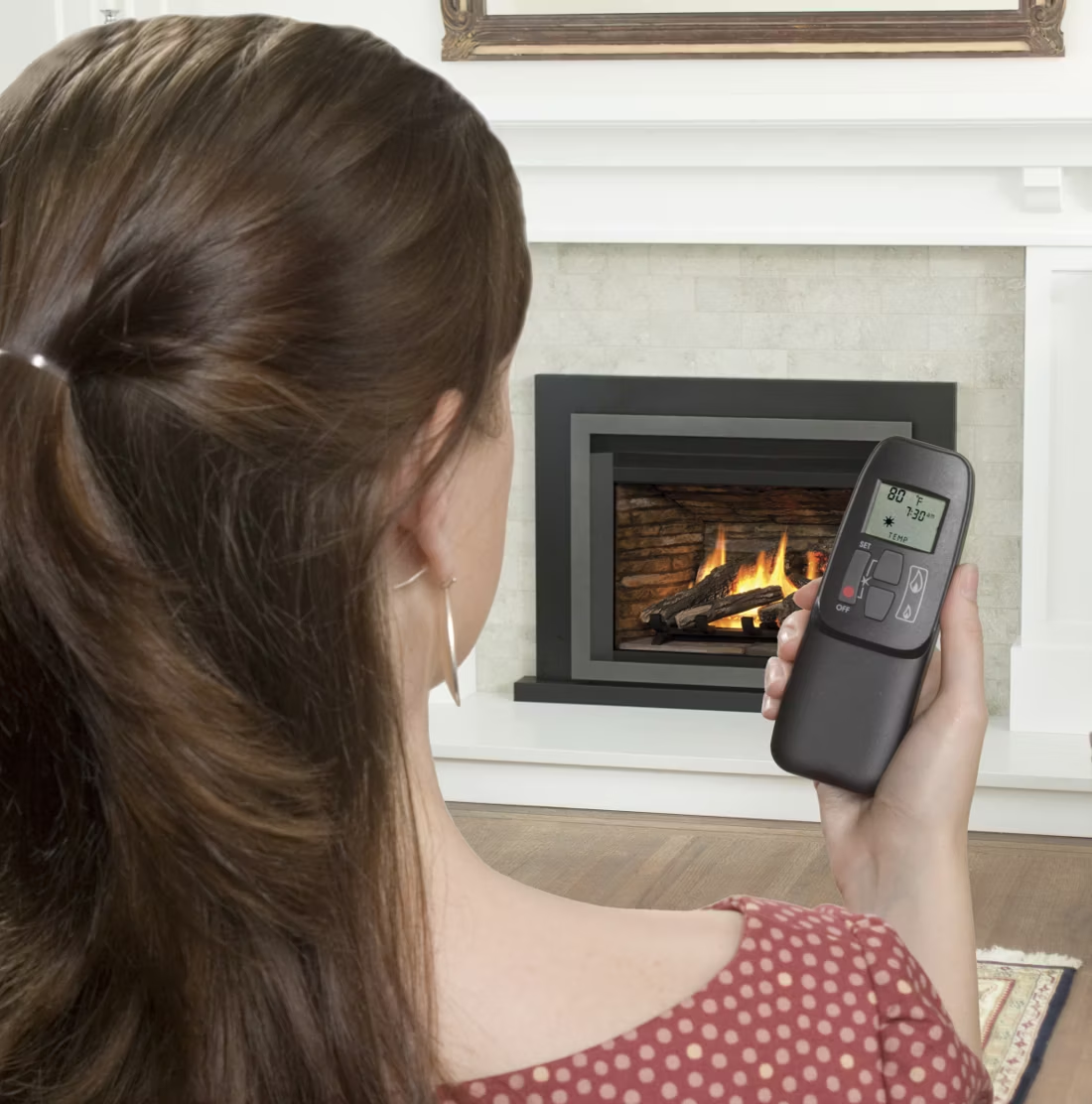
Four fuels. One honest answer for Bastrop County.
Three steps. No salesperson until you're ready.
Tell us about your project
Your zip code, your situation, and the fuel you're leaning toward—or let the answers point you to one.
See what's actually available
The brands dealers within 100 miles genuinely carry—real options, never a catalog mirage.
Get your dealer & Project Guide
A trusted local dealer, plus the free Project Guide & Parts List that names every component of the job.
Frequently Asked Questions
Which fuel works best in Bastrop County?
It depends on how you plan to use it. With an average winter low near 39°F and only a light winter heating load a year, Bastrop County doesn't have the sustained cold of a market like Fargo, ND—so fireplaces here often do more ambiance and occasional-cold-snap work than round-the-clock heating. Wood stoves and fireplaces burning local oak, pecan, or mesquite remain popular for that classic wood-fire feel and for backup heat during winter storms or grid outages. Gas fireplaces (natural gas where available, propane in unincorporated areas) are the low-maintenance choice for instant heat on a cold January morning. Pellet stoves are a real option too—Forest Energy and Lignetics both stock this region—though they're more common as a secondary heat source than a primary one given the short heating season. Electric fireplaces do well in bedrooms, apartments in Elgin and Cedar Creek, and anywhere ambiance matters more than BTUs. Most Bastrop County homeowners end up choosing based on lifestyle and aesthetic as much as raw heating need.
Do I need a permit to install a fireplace in Bastrop County?
Usually, yes, though which office you go through depends on where you live. Inside the city limits of Bastrop, Elgin, or Smithville, permits are issued by that city's building department; in unincorporated parts of the county, they go through the Bastrop County building permit office. New wood stoves and inserts typically require a mechanical permit covering clearances and chimney height. Gas fireplace and insert installs need a gas permit and licensed gas-fitter for the line work, whether you're on natural gas or converting a propane tank. Electric fireplaces usually skip the permit process unless you're doing a built-in installation that requires a new circuit. Most local hearth retailers pull the permit as part of the installation quote, so you're rarely doing the paperwork yourself.
Are there wood-burning restrictions in Bastrop County?
There's no EPA nonattainment designation or DEQ curtailment program covering Bastrop County, and there's no equivalent of the 'yellow day' burn advisories you'd see in a basin market with winter inversions. That said, Bastrop County's history with wildfire is real—the 2011 Bastrop County Complex Fire burned through a large stretch of the Lost Pines forest, and the county judge still issues countywide burn bans during dry stretches. Those bans target outdoor burning (brush piles, debris) rather than an indoor wood stove or fireplace with a properly sized chimney, but if you're stacking firewood or clearing brush near a wood-burning appliance, it's worth checking the current county burn ban status first.
Can one local hearth retailer handle all four fuel types?
Some can, though it's less universal than in a market where one fuel dominates. Larger retailers along the Elgin/Cedar Creek corridor, closer to the Austin metro, tend to carry the full range—wood, gas, pellet, and electric—because they're drawing customers from a bigger population base. Smaller, Bastrop-based dealers more often specialize in two or three fuels, commonly gas and electric given how mild the winters are, with wood and pellet as a secondary line. If you're cross-shopping fuels, it's worth asking a dealer directly what they stock and install rather than assuming—coverage varies more here than in colder markets where wood or gas is the default answer for everyone.
How does installation and service work in rural parts of Bastrop County?
Most hearth technicians serving Bastrop County are based in or near the city of Bastrop, with some coverage from the Austin metro roughly 30 to 40 minutes west. They travel out to Elgin, Smithville, McDade, Rosanky, and the growing subdivisions around Cedar Creek as a matter of course, but rural or acreage properties can see a modest trip fee, typically $50 to $75. Fall is the easiest time to schedule—before the first real cold front comes through—since winter service calls in Bastrop County tend to be reactive (a pilot light out, a chimney that hasn't been swept) rather than planned. If you're on propane or off the natural gas grid, keeping a spare tank or backup wood supply on hand isn't a bad idea for the occasional multi-day cold spell.
What's the typical cost range for fireplace installation across all fuel types in Bastrop County?
Costs run a bit lower here than in cold-climate markets, mostly because venting and chimney work is simpler when you're not building for months of sustained sub-zero burns. Wood stove or insert installation typically runs $3,500–$7,500, more if a new masonry chimney is needed. Gas fireplace, insert, or stove installation runs $3,500–$8,500, with gas line work and whether you're on natural gas versus propane driving most of the variation. Pellet stove or insert installation typically runs $3,500–$6,000. Electric fireplaces run $200–$2,500 for the unit itself, plus $300–$900 in labor for anything beyond a plug-and-play install. For dealer-specific pricing, check the county + fuel pages above.
Can a fireplace actually lower my heating bill?
Yes—by creating a comfort zone. A furnace heats every square foot of the house just to warm the one room you're in; a gas fireplace on low burns roughly a sixth of the gas a typical furnace does. Set the furnace around 55–60 degrees as a baseline, then heat the rooms your family actually uses. Families who heat this way commonly save $20–$60 a month.
Should the dealer who sells my fireplace also install it?
Ideally, yes. A fireplace project involves vent pipe, gas line, electrical, and often tile or stone. Hire three or four separate trades and you own the liability and the game of telephone between them. One company selling and installing means one accountable party, start to finish—ask about factory training, on-time completion records, and what happens if an inspection fails.
How much should I budget for a fireplace?
For an average home—covering the fireplace, the vent pipe, and basic installation—a budget between $3,900 and $5,500 gives you a lot of options across wood, gas, and pellet. By the time you add finish work, gas line, and electrical, the average complete installation lands between $5,000 and $12,000 all-in. In a remodel or new build, a good rule is to put about 2.5% of the total project cost toward the fireplace.
Wood, gas, pellet, or electric—how do I choose?
Match the fuel to your life, not the other way around. Wood: lowest fuel cost and total power-outage independence, but you're hauling and stacking. Gas: press a button, set a thermostat, no maintenance to speak of. Pellet: wood economics with automatic feeding, in exchange for weekly cleaning and a need for electricity. Electric: plugs in anywhere with honest supplemental heat. Nobody regrets the fuel that fits how they actually live.
Stove and Fireplace Dealers in Bastrop County
Listings include WhyFire partner dealers, dealers we have verified as authorized for the brands we recommend, and established local businesses that carry hearth products. Every listing shows which one it is. The ones marked Preferred run on WhyFire's software, so they can show you real pricing and book your appointment right here. No manufacturer pays for placement. How we verify dealers →
Tri-Supply - Austin
EarthCore Industries
Webco Distributing Company, Inc.
Crafted Flames
Top Hat Chimney Sweeps
Parrish & Company Inc - Round Rock
Backyard & Patio Store - Austin
Georgetown Energy
Jules Design Bar
Area – Georgetown, Tx
Find your fireplace in Bastrop County.
Tell us about your project and we'll match you with a trusted local dealer and send a free Project Guide & Parts List—the exact parts, including the vent kit, and the dealer we recommend for your fuel and home in Bastrop County.
Find Your Fireplace →