
Find your fireplace in Tipton County, Tennessee.
Hearth resources for the whole county, from Covington and Atoka down through the Hatchie River bottoms to Munford, Brighton, and Drummonds. Pick a fuel and get matched with a local dealer who actually installs it here.
Every Project Starts From One of These Five Situations
Mild Delta winters, a short heating season, and a county where gas and electric lead the hearth market.
Tipton County sits in the bottomlands of the Mississippi and Hatchie Rivers in West Tennessee, just north of Shelby County and the Memphis metro, with Covington as its county seat. Climate zone 3A puts this county in humid-subtropical territory: average winter lows near 28°F and a mild winter heating season add up to less than half the annual heating load of a place like Duluth, Minnesota, or Fargo, North Dakota. The heating season here runs short, typically late November into early March, and most homes lean on electric heat pumps or gas furnaces to cover it rather than a dedicated wood-heat setup.
The bottomland hardwood forests along the Hatchie and Mississippi produce plenty of oak, hickory, maple, and pine, but that timber mostly stays out of the hearth-heating picture in Tipton County today—masonry wood fireplaces tend to be decorative holdovers in older Covington and Atoka farmhouses rather than a household's primary heat source. Pellet stoves tell a similar story: regional producers like Lignetics, Hamer Pellet Fuel, and Greenway Renewable Energy all ship product through this part of Tennessee, but the appliance itself hasn't found much of a market here, since a short, mild winter doesn't create the kind of sustained heating demand that makes a pellet hopper worth tending. What Tipton County homeowners actually install, overwhelmingly, are gas fireplaces and electric units—gas for the look and radiant feel of a real flame, electric for supplemental warmth and ambiance in a house already carried by a heat pump. This hub rolls up hearth retailers, service techs, and fuel suppliers across the whole county, from Covington and Atoka to Munford, Brighton, Drummonds, and the rural stretches along Highway 51 and the river bottoms.
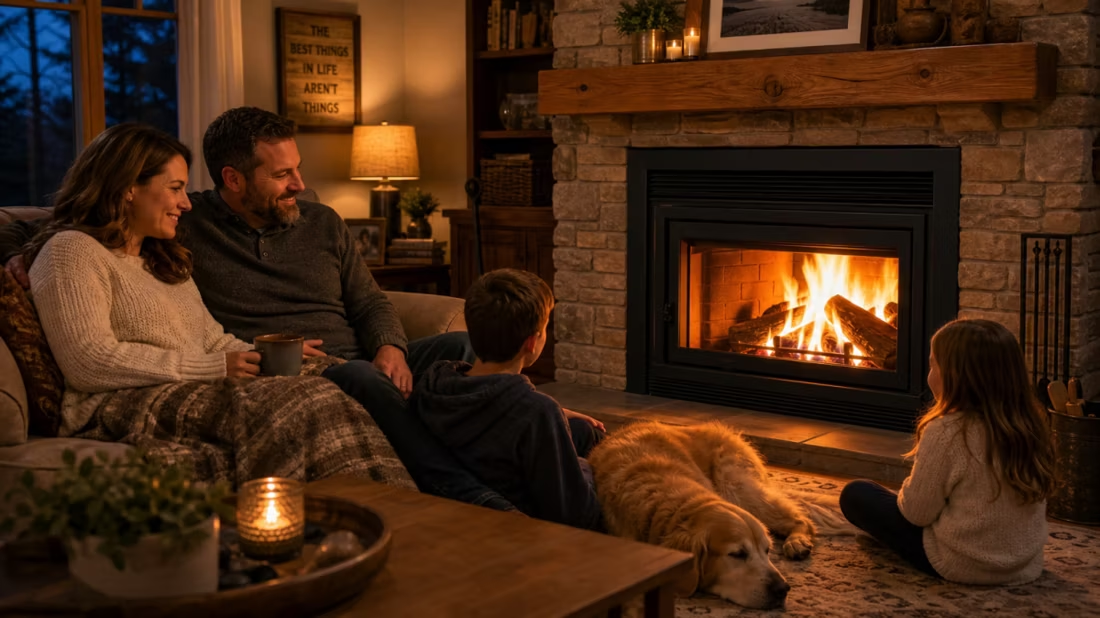
Four fuels. One honest answer for Tipton County.
Three steps. No salesperson until you're ready.
Tell us about your project
Your zip code, your situation, and the fuel you're leaning toward—or let the answers point you to one.
See what's actually available
The brands dealers within 100 miles genuinely carry—real options, never a catalog mirage.
Get your dealer & Project Guide
A trusted local dealer, plus the free Project Guide & Parts List that names every component of the job.
Frequently Asked Questions
Which fireplace fuel makes the most sense in Tipton County?
For most Tipton County homes, the answer is gas or electric. With a short, mild winter heating season and average winter lows around 28°F, this county's heating season is short and mild compared to most of the country, so homeowners generally already have an electric heat pump or gas furnace doing the primary work—a hearth here is more about ambiance and supplemental comfort than survival heat. Gas fireplaces and inserts deliver real flame with none of the fuel handling, which is why they're the most commonly installed unit locally. Electric fireplaces are a close second, especially for bedrooms, dens, or homes where running a gas line isn't practical. Wood-burning fireplaces still exist, mostly as decorative features in older Covington and Atoka farmhouses, and pellet stoves are genuinely rare here despite regional pellet producers like Lignetics and Hamer Pellet Fuel operating nearby—the mild climate just doesn't create the sustained heating demand that makes a pellet stove worthwhile for most households.
Do I need a permit to install a gas fireplace in Tipton County?
Yes, in most cases. Any new gas line or gas appliance connection needs a permit through your local building and codes department, and the gas-line work itself should go through a licensed gas fitter regardless of whether you're inside Covington, Atoka, or Munford city limits or out in unincorporated county areas. Electric fireplace installs usually skip the permit process unless you're hardwiring a built-in unit that requires a new dedicated circuit. Most hearth retailers we match homeowners with handle the permitting paperwork directly as part of the install, so it's rarely something you're navigating alone.
Is a wood-burning fireplace still a realistic option here?
It's possible, but it's a minority choice in Tipton County today. Oak, hickory, maple, and pine are all available from the bottomland hardwood forests along the Hatchie and Mississippi, so fuel supply isn't the obstacle—it's that a short, mild winter simply doesn't demand the kind of sustained wood heat that colder regions rely on. Most wood fireplaces you'll find in the county are in older homes around Covington and Atoka, installed decades ago and kept more for occasional cool-weather ambiance than as a heating strategy. If you specifically want one, a local retailer can still walk you through EPA-certified options and venting requirements, but expect fewer dealers stocking wood units compared to gas or electric.
Are pellet stoves available through local dealers in Tipton County?
Technically yes, but demand is thin. Several regional pellet producers—Lignetics, Hamer Pellet Fuel, and Greenway Renewable Energy—distribute product through West Tennessee, so pellets themselves aren't hard to find. What's missing is the local installer base and appliance stock, since Tipton County's mild winters mean most homeowners get their supplemental heat from an electric fireplace or gas insert instead. If you're set on a pellet stove, expect to work with a dealer who covers a wider service radius rather than one based specifically in Covington or Atoka, and budget extra lead time for parts and service compared to the gas and electric dealers who work here every week.
How does installation and service work for homes outside Covington?
Most gas and electric fireplace dealers are based along the Highway 51 corridor near Covington and Atoka but run installation and service crews out to Munford, Brighton, Drummonds, and the rural properties along the Hatchie bottoms. Expect a modest trip fee for the farthest addresses, and expect scheduling to tighten up in late fall as households start prepping fireplaces for the first cold snap—booking your annual gas inspection or electric unit checkup in September or October, before the rush, is the easier path. For properties well outside the main towns, it's worth confirming ahead of time whether your installer services your specific area, since coverage can thin out toward the county line.
What does a fireplace installation typically cost in Tipton County?
Costs track closely with the two fuels most Tipton County homeowners actually choose. Gas fireplace, insert, or stove installs generally run $3,500–$8,000, with the higher end reflecting new gas-line runs rather than converting an existing hearth. Electric fireplaces are the more affordable route—$200–$2,500 for the unit itself, plus $300–$900 in labor unless you're doing a straightforward plug-and-play placement. Wood-burning installs are less common locally but typically land in the $4,000–$8,000 range when they do happen, largely because fewer dealers specialize in them here. Pellet stove installs, being rare in the county, tend to cost similarly to national averages but may carry higher labor costs simply due to limited local installer availability. The county + fuel pages above break these numbers down further with local retailer pricing.
Does a fireplace add value to my home?
On average, a fireplace adds back to the home about the same amount you spent installing it. Add the monthly savings from heating the rooms you actually use instead of the whole house—often hundreds of dollars a year—and the value case is strong before you even count what a fire does for how your family uses the room.
Can a fireplace actually lower my heating bill?
Yes—by creating a comfort zone. A furnace heats every square foot of the house just to warm the one room you're in; a gas fireplace on low burns roughly a sixth of the gas a typical furnace does. Set the furnace around 55–60 degrees as a baseline, then heat the rooms your family actually uses. Families who heat this way commonly save $20–$60 a month.
What is an in-home preview and do I need one?
It's a visit where a hearth professional measures your space, confirms the model you picked actually works in your home, and walks the specs—framing, gas line, venting, finish work—before anything is ordered. Some details you just can't know until you see the house. Never make a down payment without one; it's the single most-skipped step that burns buyers.
I know I want a fireplace—where do I actually start?
Do two things today: snap a photo of the wall or fireplace you want to transform, and take a tape measure to the space—width, height, depth. Those two artifacts answer most of a hearth professional's first questions. Then settle fuel (wood, gas, pellet, or electric) and set a realistic budget: $3,900–$5,500 covers fireplace, vent, and basic install for most homes.
Stove and Fireplace Dealers in Tipton County
Listings include WhyFire partner dealers, dealers we have verified as authorized for the brands we recommend, and established local businesses that carry hearth products. Every listing shows which one it is. The ones marked Preferred run on WhyFire's software, so they can show you real pricing and book your appointment right here. No manufacturer pays for placement. How we verify dealers →
31w - Mason, Tn
Acme Brick Company
Bishop Hearth And Home, Inc.
The Chimney Doctor
Get matched with a local Tipton County dealer.
Pick your fuel below and we'll put together a free Project Guide & Parts List—the right unit, the vent kit it needs, and the local dealer we recommend for your project.
Find Your Fireplace →