
Find your fireplace match, from Ducktown to Benton.
Wood, gas, pellet, and electric fireplace resources for the whole county—from the Copper Basin up through the Ocoee River corridor to the Cherokee National Forest boundary. Pick a fuel and get matched with a local dealer who actually installs it here.
Every Project Starts From One of These Five Situations
3,474 heating degree days in the shadow of the Cherokee National Forest.
Polk County sits tucked into the Appalachian foothills of southeastern Tennessee, bordered on most sides by the Cherokee National Forest and cut through by the Ocoee River. Winters here are moderate compared to the northern tier—an average low near 29°F and 3,474 heating degree days is roughly half the heating load of a place like Duluth, Minnesota—but the mountain hollows around Ducktown and Copperhill still see reliable overnight chill from late fall through early spring. Oak, hickory, maple, and pine are the wood species most households in the county burn, and a load of oak or hickory in a modern stove will comfortably hold heat through a cold Appalachian night.
With no designated air quality non-attainment issues in the county, there are no burn curtailment days or smoke-management restrictions to plan around here—wood heat is simply straightforward. Firewood cutting permits come through the Cherokee National Forest office, and stove or insert installation permits run through the Polk County Building Department. With just under 3,700 residents spread across Benton, Ducktown, Copperhill, and the rural stretches along Highway 64, natural gas utility service is limited to pockets near the county's more populated areas; propane fills the gap almost everywhere else. This hub rolls up hearth retailers, service techs, and fuel suppliers across the whole county. Pick your fuel below for local dealers, install costs, and unit recommendations specific to your town.
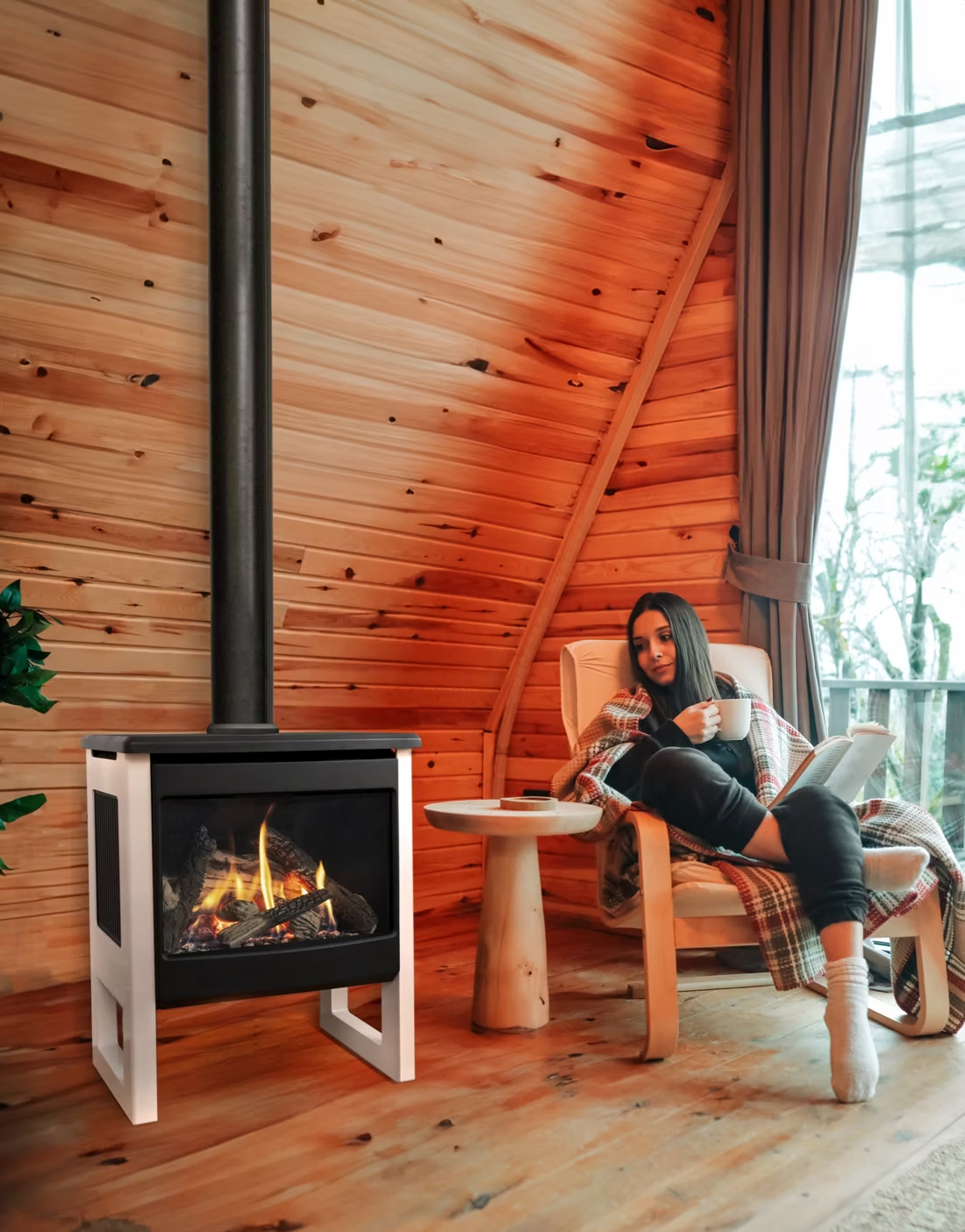
Four fuels. One honest answer for Polk County.
Three steps. No salesperson until you're ready.
Tell us about your project
Your zip code, your situation, and the fuel you're leaning toward—or let the answers point you to one.
See what's actually available
The brands dealers within 100 miles genuinely carry—real options, never a catalog mirage.
Get your dealer & Project Guide
A trusted local dealer, plus the free Project Guide & Parts List that names every component of the job.
Frequently Asked Questions
Which fireplace fuel makes the most sense in Polk County?
All four fuels work here, and the choice usually comes down to how remote your property is and how much you want to manage a fire yourself. Wood remains the default in the rural hollows around Ducktown and Copperhill—oak and hickory from the Cherokee National Forest or a local cutter will hold overnight heat through the coldest Appalachian nights, and with no air quality restrictions in the county there's no curtailment schedule to plan around. Gas is convenient where utility service reaches, mainly closer to Benton, though most of the county relies on propane instead. Pellet stoves have a following too, with Lignetics, Hamer Pellet Fuel, and Greenway Renewable Energy all distributed regionally. Electric fireplaces actually go a bit further here than in harsher climates—with an average winter low of 29°F and 3,474 heating degree days, a quality electric insert can genuinely supplement or even carry the shoulder-season heating load in a smaller home, not just serve as ambiance.
Do I need a permit to install a wood stove in Polk County?
Generally yes. New wood stoves and inserts need to meet EPA 2020 New Source Performance Standards to be sold and installed, and the installation permit itself goes through the Polk County Building Department. Gas installations require a separate permit and a licensed gas fitter, whether you're tying into utility service near Benton or running off a propane tank further out in the county. Electric fireplaces typically skip the permit process unless you're hardwiring a built-in unit that needs a dedicated circuit. Most retailers we match homeowners with handle this paperwork as part of the install, so it's rarely something you're sorting out alone.
How does firewood permitting work with the Cherokee National Forest?
A significant share of the wood burned in Polk County comes from personal-use cutting permits issued through the Cherokee National Forest, which borders the county on most sides. Permits typically cover a set volume of standing dead or downed timber and specify which units are open to cutting in a given season—oak, hickory, maple, and pine are all common finds. It's worth checking current unit closures and permit costs directly with the Forest Service office before you plan a cutting trip, since availability shifts year to year with fire risk and forest management activity. Homeowners who don't want to cut their own wood can also find local firewood dealers who season and split hardwood specifically for stove use rather than open burning.
Is natural gas available in Polk County, or is it mostly propane?
Utility natural gas service is limited in Polk County and concentrated mostly around the more populated pockets near Benton; the rest of the county, including Ducktown, Copperhill, and the rural stretches along the Ocoee River, relies on propane for gas fireplaces and stoves. This isn't unusual for a mountain county this size, but it does change your install slightly—a propane-fueled unit needs a tank and delivery service set up rather than a simple utility hookup, and your dealer will size the appliance and regulator accordingly. If you're near Benton, it's worth confirming with your installer whether utility gas actually reaches your specific address before assuming propane is your only option.
How does installation and service work across a spread-out rural county like this?
Service techs and installation crews are concentrated near Benton but regularly travel out to Ducktown, Copperhill, and the smaller communities tucked into the Cherokee National Forest boundary. Expect a modest trip fee for the farthest calls, and expect scheduling to fill up once temperatures drop in late fall—booking your annual chimney sweep or gas inspection in late summer, ahead of the first cold snap, keeps you off the waiting list. For properties well off the main roads, it's also worth asking your installer about parts availability, since a delayed part can mean a longer wait for a return visit than it would closer to town.
What does a fireplace installation typically cost in Polk County?
Costs track fairly close to regional averages for rural Appalachian counties, with labor running a bit lower than in nearby metro markets. Wood stove or insert installs typically run $3,800–$8,000, with full chimney construction for new builds pushing higher. Gas fireplaces, inserts, and stoves—whether tied into utility gas near Benton or set up with a propane tank further out—generally run $4,000–$10,000 depending on tank or line work. Pellet stove or insert installs land around $4,000–$7,000. Electric fireplaces are the most affordable entry point, from $200–$2,800 for the unit plus $300–$1,000 in labor for anything beyond a plug-and-play placement. The county + fuel pages above break these numbers down further with local retailer pricing.
Wood, gas, pellet, or electric—how do I choose?
Match the fuel to your life, not the other way around. Wood: lowest fuel cost and total power-outage independence, but you're hauling and stacking. Gas: press a button, set a thermostat, no maintenance to speak of. Pellet: wood economics with automatic feeding, in exchange for weekly cleaning and a need for electricity. Electric: plugs in anywhere with honest supplemental heat. Nobody regrets the fuel that fits how they actually live.
What are the biggest mistakes people make buying a fireplace?
Five come up constantly: budgeting for the unit but not the full job (vent, gas line, electrical, finish work); drowning in options instead of starting from style and fuel; buying without an in-home preview; handing installation to a handyman instead of a pro; and giving up out of sheer indecision. Every one is avoidable with a clear plan—step one, step two, step three.
I know I want a fireplace—where do I actually start?
Do two things today: snap a photo of the wall or fireplace you want to transform, and take a tape measure to the space—width, height, depth. Those two artifacts answer most of a hearth professional's first questions. Then settle fuel (wood, gas, pellet, or electric) and set a realistic budget: $3,900–$5,500 covers fireplace, vent, and basic install for most homes.
Can I install a fireplace myself?
If you're putting a fire in your house on purpose, it's best to work with an expert. Unless you're genuinely experienced in framing, gas line, vent pipe, and the national code on clearances to combustibles, have a professional do it—and ideally the same company that sells you the fireplace, so warranty, service, and liability all live under one roof.
Stove and Fireplace Dealers in Polk County
Listings include WhyFire partner dealers, dealers we have verified as authorized for the brands we recommend, and established local businesses that carry hearth products. Every listing shows which one it is. The ones marked Preferred run on WhyFire's software, so they can show you real pricing and book your appointment right here. No manufacturer pays for placement. How we verify dealers →
Tri-State Heating And Air Conditioning
Middle Tn Natural Gas - Dayton
Hearthside Fireplace Patio & Barbeque Center
Therm-Con, Llc
America's Hearth & Patio Warehouse
Get matched with a trusted Polk County dealer.
Pick your fuel below and we'll put together a free Project Guide & Parts List—the right unit, the vent kit it needs, and the local dealer we recommend for your project.
Find Your Fireplace →