
Heat your Decatur County home right, whatever the fuel.
Wood, gas, pellet, and electric fireplace resources for Decaturville, Parsons, Scotts Hill, and every community along the Tennessee River in Decatur County. Find the right unit for a mixed-humid climate and connect with a local dealer who can actually install it.
Every Project Starts From One of These Five Situations
Mild winters, hardwood heat, and Tennessee River living in Decatur County.
Decatur County sits along the Tennessee River in Climate Zone 4A, with an average winter low around 28°F and a much milder winter heating load than a place like Duluth, Minnesota logs each winter. Heating season here runs a shorter stretch, generally November into March, which means a fireplace or stove doesn't have to carry a home the way it would farther north. What the county does have in abundance is hardwood: oak and hickory from the surrounding bottomland forests split into some of the longest-burning, hottest firewood available anywhere, with maple and pine rounding out the mix for kindling and shoulder-season burns.
On this hub you'll find hearth retailers, service technicians, and fuel suppliers serving the whole county—from Decaturville and Parsons out to Scotts Hill and Bath Springs. Pick your fuel below for local dealer listings, installation cost ranges, and recommended units. Whether you're heating a river-bottom farmhouse with a wood stove or adding a propane fireplace insert to a Parsons ranch home, this page is the starting point—not a store, but a way to get matched with a trusted local pro who knows what actually works here.
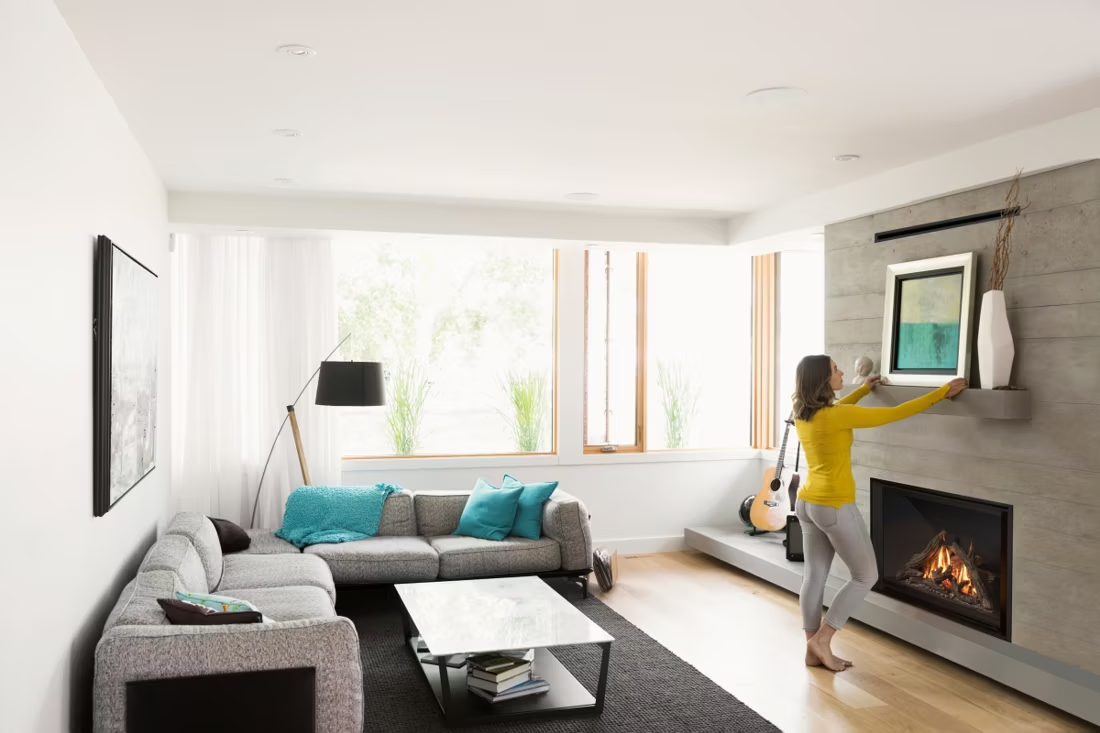
Four fuels. One honest answer for Decatur County.
Three steps. No salesperson until you're ready.
Tell us about your project
Your zip code, your situation, and the fuel you're leaning toward—or let the answers point you to one.
See what's actually available
The brands dealers within 100 miles genuinely carry—real options, never a catalog mirage.
Get your dealer & Project Guide
A trusted local dealer, plus the free Project Guide & Parts List that names every component of the job.
Frequently Asked Questions
Which fuel works best in Decatur County?
With a fairly mild winter heating load and winter lows that average in the upper 20s, Decatur County doesn't demand the same brute-force heat output that a northern climate does—which opens up more options. Wood is the traditional standby here, and it's a good one: oak and hickory from local bottomland forests split into dense, long-burning fuel that a lot of Decaturville and Parsons households already cut or buy locally. Propane fireplaces and inserts are common in rural stretches of the county without natural gas lines—instant heat, easy to size for a single room, and no wood to split or stack. Pellet stoves are a solid middle ground; Lignetics, Hamer Pellet Fuel, and Greenway Renewable Energy all distribute in this part of Tennessee, so supply isn't an issue. Electric fireplaces do more real work here than they would in a harsher climate—in a county this mild, a good electric insert can supplement a room's heat load rather than just serve as ambiance. Most homes end up pairing a primary wood or propane unit with electric in a bedroom or den.
Do I need a permit to install a fireplace in Decatur County?
Generally yes, for anything beyond a plug-in electric unit. New wood stoves and inserts need to meet current EPA New Source Performance Standards, and installation typically requires a permit through the Decatur County building department, along with proper clearances to combustibles and a code-compliant chimney or class-A vent. Propane fireplace and insert installs need both a building permit and a licensed gas-fitter to run and pressure-test the line—most rural Decatur County homes run on propane rather than piped natural gas, so this step matters. Pellet stoves need a permit for the vent penetration even though they don't need a full masonry chimney. Electric fireplaces are usually permit-free if they're plug-in, but built-in electric units that require new wiring or a dedicated circuit do need an electrical permit. Local retailers handling the installation typically pull these permits as part of the job.
Are there air quality restrictions on wood burning in Decatur County?
No. Decatur County isn't a nonattainment area and has no local burn bans, inversion advisories, or seasonal wood-smoke restrictions—a real contrast to places like the Klamath Basin or parts of California and Oregon where winter inversions trap smoke. The one rule that does apply universally is federal: any new wood stove sold has to meet EPA New Source Performance Standards, which mostly affects manufacturers rather than homeowners. If you're burning oak or hickory that's been properly seasoned for six months to a year, you'll get a hot, mostly-complete burn with minimal visible smoke regardless.
Can one local hearth retailer handle all four fuel types?
In a county with a population around 3,300, you're not going to find four separate fuel specialists—you'll typically find one or two general hearth retailers based in Parsons or Decaturville that stock wood stoves and propane units as their core lines, with pellet stoves carried as a secondary product depending on demand, and electric fireplaces sold more as an accessory than a focus. That's normal for a rural county this size. If you're trying to compare fuels side by side, it's worth asking the retailer directly what's currently on their showroom floor, since small-market inventory shifts season to season based on what customers are asking for.
How does service work in rural areas of Decatur County?
Most chimney sweeps and gas or pellet technicians serving Decatur County are based in or near Parsons and travel out to Decaturville, Scotts Hill, Bath Springs, and the smaller communities along the river. Given the county's size and low population, expect a modest travel charge for calls outside the immediate Parsons area—often bundled into the service call rather than itemized separately. Fall is the easiest time to book annual chimney sweeping or propane appliance inspection; waiting until the first cold snap in November means longer lead times. If you're heating a remote property along the Tennessee River, it's worth scheduling service early and keeping a backup heat source—wood as a backup for a propane system, or vice versa—since a single rural technician may be covering a wide territory.
What's the typical cost range for fireplace installation across all fuel types in Decatur County?
Costs run lower here than in higher-cost metro markets, though ranges still vary by fuel and scope. Wood stove or insert installation: roughly $3,500–$7,500 for a typical retrofit, more if new chimney or hearth work is involved. Propane fireplace, insert, or stove: about $3,500–$9,000 depending on gas line runs and venting—lower if an existing propane tank and line are already in place. Pellet stove or insert: generally $3,500–$6,500 installed. Electric fireplace: $200–$2,500 for the unit itself, plus $300–$1,000 in labor for anything beyond a straightforward plug-in, which covers most wall-mount and insert installs. For a project-specific estimate, the fuel pages above break down local retailer pricing in more detail.
Does a fireplace add value to my home?
On average, a fireplace adds back to the home about the same amount you spent installing it. Add the monthly savings from heating the rooms you actually use instead of the whole house—often hundreds of dollars a year—and the value case is strong before you even count what a fire does for how your family uses the room.
Wood, gas, pellet, or electric—how do I choose?
Match the fuel to your life, not the other way around. Wood: lowest fuel cost and total power-outage independence, but you're hauling and stacking. Gas: press a button, set a thermostat, no maintenance to speak of. Pellet: wood economics with automatic feeding, in exchange for weekly cleaning and a need for electricity. Electric: plugs in anywhere with honest supplemental heat. Nobody regrets the fuel that fits how they actually live.
Can a fireplace actually lower my heating bill?
Yes—by creating a comfort zone. A furnace heats every square foot of the house just to warm the one room you're in; a gas fireplace on low burns roughly a sixth of the gas a typical furnace does. Set the furnace around 55–60 degrees as a baseline, then heat the rooms your family actually uses. Families who heat this way commonly save $20–$60 a month.
I know I want a fireplace—where do I actually start?
Do two things today: snap a photo of the wall or fireplace you want to transform, and take a tape measure to the space—width, height, depth. Those two artifacts answer most of a hearth professional's first questions. Then settle fuel (wood, gas, pellet, or electric) and set a realistic budget: $3,900–$5,500 covers fireplace, vent, and basic install for most homes.
Stove and Fireplace Dealers in Decatur County
Listings include WhyFire partner dealers, dealers we have verified as authorized for the brands we recommend, and established local businesses that carry hearth products. Every listing shows which one it is. The ones marked Preferred run on WhyFire's software, so they can show you real pricing and book your appointment right here. No manufacturer pays for placement. How we verify dealers →
Walt Mestan Dba The Fireplace Center
Acme Brick Company
Jones Mobile Home Service Inc
54 Lawn & Garden
Greater Dickson Gas Authority
Bell Gas
Pittman Propane
Hlc Cullipher LLC
Rogers Lp Gas LLC
Find your fireplace in Decatur County.
Pick your fuel below and I'll match you with a trusted local dealer in Decatur County, plus a free Project Guide & Parts List with the exact parts—including the vent kit—for your project.
Find Your Fireplace →