
Find your fireplace in Coffee County, Tennessee.
From Manchester and Tullahoma out to Hillsboro, Summitville, and Beechgrove, this hub rolls up hearth retailers, service techs, and fuel suppliers across the whole county. Pick a fuel and get matched with a local dealer who actually installs it here.
Every Project Starts From One of These Five Situations
3,679 heating degree days and a heating season built around gas and electric comfort.
Coffee County sits in south-central Tennessee around the county seat of Manchester, with Tullahoma—home to Arnold Engineering Development Complex—stretching into the county's western edge. Average winter lows near 29°F and 3,679 heating degree days put this squarely in mild-winter territory, a fraction of what a place like Madison, Wisconsin racks up in a single season. The heating season here typically runs a manageable November through March, and most homes are built and heated around that shorter, milder window rather than the long, deep-cold stretches that define wood-heavy regions further north or out west.
That climate shapes which fuels actually get installed. Gas and electric fireplaces are the standard here—Duck River Electric Membership Corporation serves most of the county's residential accounts, and gas inserts and fireplaces are common upgrades in both new builds and older homes near Manchester and Tullahoma. Wood and pellet stoves are a smaller slice of the market: oak, hickory, maple, and pine are all locally abundant—more often split for smoking meat or campfires than stacked for a full winter's primary heat—and while regional pellet brands like Lignetics, Hamer Pellet Fuel, and Greenway Renewable Energy do distribute in the area, demand here runs thinner than in colder markets they also serve. A handful of rural Coffee County homeowners still choose a wood or pellet stove for backup heat or ambiance, and we'll match you with a dealer who handles that honestly rather than upselling a unit your climate doesn't need. There are no non-attainment or burn-ban restrictions in the county, so the choice comes down to your home, your budget, and how you actually want to heat it.
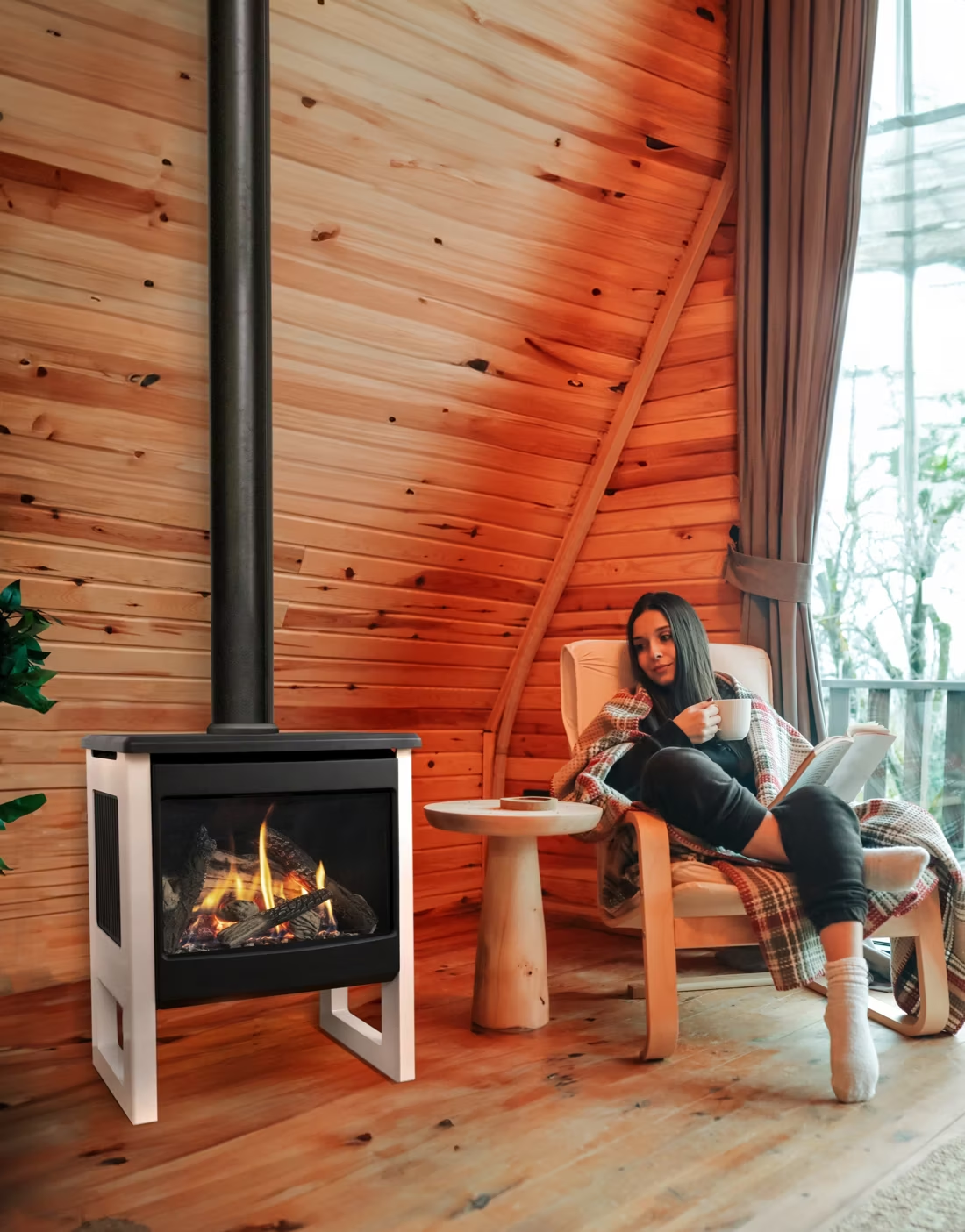
Four fuels. One honest answer for Coffee County.
Three steps. No salesperson until you're ready.
Tell us about your project
Your zip code, your situation, and the fuel you're leaning toward—or let the answers point you to one.
See what's actually available
The brands dealers within 100 miles genuinely carry—real options, never a catalog mirage.
Get your dealer & Project Guide
A trusted local dealer, plus the free Project Guide & Parts List that names every component of the job.
Frequently Asked Questions
Which fireplace fuel makes the most sense in Coffee County?
For most Coffee County homes, gas and electric are the practical choices. With 3,679 heating degree days and winter lows averaging 29°F, the heating load here is moderate—nothing close to what drives wood or pellet demand in colder parts of the country. Gas fireplaces and inserts are popular in Manchester and Tullahoma where service is available, offering instant heat without the daily upkeep of a solid fuel stove. Electric fireplaces, backed by Duck River Electric Membership Corporation service across most of the county, work well as supplemental heat or as the primary hearth feature in a home already conditioned by a central HVAC system. Wood and pellet stoves are still installed occasionally—usually in rural properties without easy gas access, or by homeowners who simply want a wood-burning stove for ambiance and backup—but they're a smaller share of installs here than in cooler climates.
Why aren't wood and pellet stoves more common here, given how much oak and hickory grows locally?
It comes down to climate, not availability. Oak, hickory, maple, and pine are all plentiful in Coffee County, and plenty of households split and burn wood for grilling, smoking, and campfires. But with a heating season that typically runs November through March and average lows only in the high 20s, most homes simply don't carry enough winter heating load to justify a wood stove as a primary heat source the way a home in a 6,000-plus HDD climate would. Pellet stoves face a similar reality—brands like Lignetics, Hamer Pellet Fuel, and Greenway Renewable Energy distribute through the region, but they're serving markets with heavier winters more than they're serving Coffee County specifically. If you want a wood or pellet stove anyway, for backup heat or the look and feel of a real fire, local dealers can absolutely install one—it's just not the default recommendation for most homes here.
Do I need a permit to install a gas or electric fireplace in Coffee County?
Gas fireplace and insert installations typically require a permit through your local building department, plus a licensed gas fitter to make the line connection safely—this applies whether you're in Manchester, Tullahoma, or unincorporated parts of the county. Electric fireplaces usually skip the permitting process for plug-in units, but a built-in electric fireplace that needs a dedicated circuit may require an electrical permit and inspection. If you do go the wood or pellet stove route, expect a building permit tied to proper clearances and, for wood, EPA-certified equipment. Most hearth retailers we match homeowners with handle this paperwork directly as part of the installation.
What does a fireplace installation typically cost in Coffee County?
Costs track fairly closely with national averages given the county's moderate climate and straightforward permitting. Gas fireplaces, inserts, and stoves generally run $4,000–$10,000 depending on whether a new gas line has to be run to the hearth. Electric fireplaces are the most affordable option—often $200–$2,500 for the unit, plus $300–$1,000 in labor if it's a built-in requiring a dedicated circuit rather than a plug-and-play insert. Wood or pellet stove installs, when homeowners do choose that route, typically fall in the $4,000–$8,000 range once venting and clearances are factored in. The county + fuel pages above break these numbers down further with local retailer pricing.
Can I find a retailer that services both Manchester and Tullahoma, or the more rural parts of the county?
Yes—most hearth retailers based in Manchester or Tullahoma run installation and service routes across the whole county, including Hillsboro, Summitville, and Beechgrove. Coverage and trip fees can vary for the farthest addresses, so it's worth confirming service radius before booking, especially for gas line work that may require a return visit for inspection. We match you with a dealer whose fuel lineup and service area actually cover your address rather than defaulting to the biggest name in Manchester.
When's the best time to schedule installation or service in Coffee County?
Late summer and early fall—before the first cold snap in November—is the ideal window for both new installs and annual maintenance. Gas fireplace inspections and pilot system checks are quick but get backed up once temperatures drop and everyone remembers their fireplace at the same time. If you're installing a gas line for a new fireplace or insert, scheduling ahead also gives you buffer time in case the building department's inspection queue runs behind. Wood or pellet stove owners should plan chimney or vent cleaning for the same late-summer window, well ahead of the first fire of the season.
How much should I budget for a fireplace?
For an average home—covering the fireplace, the vent pipe, and basic installation—a budget between $3,900 and $5,500 gives you a lot of options across wood, gas, and pellet. By the time you add finish work, gas line, and electrical, the average complete installation lands between $5,000 and $12,000 all-in. In a remodel or new build, a good rule is to put about 2.5% of the total project cost toward the fireplace.
What is an in-home preview and do I need one?
It's a visit where a hearth professional measures your space, confirms the model you picked actually works in your home, and walks the specs—framing, gas line, venting, finish work—before anything is ordered. Some details you just can't know until you see the house. Never make a down payment without one; it's the single most-skipped step that burns buyers.
Can a fireplace actually lower my heating bill?
Yes—by creating a comfort zone. A furnace heats every square foot of the house just to warm the one room you're in; a gas fireplace on low burns roughly a sixth of the gas a typical furnace does. Set the furnace around 55–60 degrees as a baseline, then heat the rooms your family actually uses. Families who heat this way commonly save $20–$60 a month.
Does a fireplace add value to my home?
On average, a fireplace adds back to the home about the same amount you spent installing it. Add the monthly savings from heating the rooms you actually use instead of the whole house—often hundreds of dollars a year—and the value case is strong before you even count what a fire does for how your family uses the room.
Stove and Fireplace Dealers in Coffee County
Listings include WhyFire partner dealers, dealers we have verified as authorized for the brands we recommend, and established local businesses that carry hearth products. Every listing shows which one it is. The ones marked Preferred run on WhyFire's software, so they can show you real pricing and book your appointment right here. No manufacturer pays for placement. How we verify dealers →
Factory Furniture
A-1 Chimney Specialist
Spar-Gas
All Gas
Allgas, Inc. Of Tn - Winchester
Middle Tn Natural Gas - McMinnville
Get matched with a local Coffee County dealer.
Pick your fuel below and we'll put together a free Project Guide & Parts List—the right unit, the vent kit it needs, and the local dealer we recommend for your project.
Find Your Fireplace →