
Heat built for Roberts County's coldest months.
Wood, gas, pellet, and electric fireplace resources for every town in Roberts County—from Sisseton to Wilmot to Peever. With 8,195 heating degree days and average winter lows near 4°F, this is heating-season country. Find the right unit and get matched with a trusted local hearth dealer.
Every Project Starts From One of These Five Situations
Prairie cold meets serious heating needs in Roberts County, South Dakota.
Roberts County sits in the far northeastern corner of South Dakota, wedged between the North Dakota and Minnesota borders along Lake Traverse and the Bois de Sioux River. With just under 5,700 residents spread across a mostly rural landscape of small towns and farmland, this is 6A climate territory—average winter lows around 4°F and roughly 8,195 heating degree days a season, putting it in the same cold-climate tier as Fargo, ND, just across the state line. The heating season here typically runs from October into April. Local firewood tends to come from oak and cottonwood along the river bottoms and Lake Traverse shoreline, along with ponderosa pine from shelterbelt plantings—species that have kept farmhouses and small-town homes warm here for generations.
What you'll find on this hub: hearth retailers, service technicians, and fuel suppliers covering every community in the county—Sisseton, the county seat, along with Wilmot, Rosholt, Peever, Summit, Claire City, New Effington, and Corona. Because the county's population is small and spread thin, most dealers are based in Sisseton or nearby regional towns and travel out to serve the surrounding countryside. Pick your fuel below to get into the specifics—local dealers, installation costs, recommended units, and the resources that match your project, whether you're heating a farmhouse near Lake Traverse or a home in town.
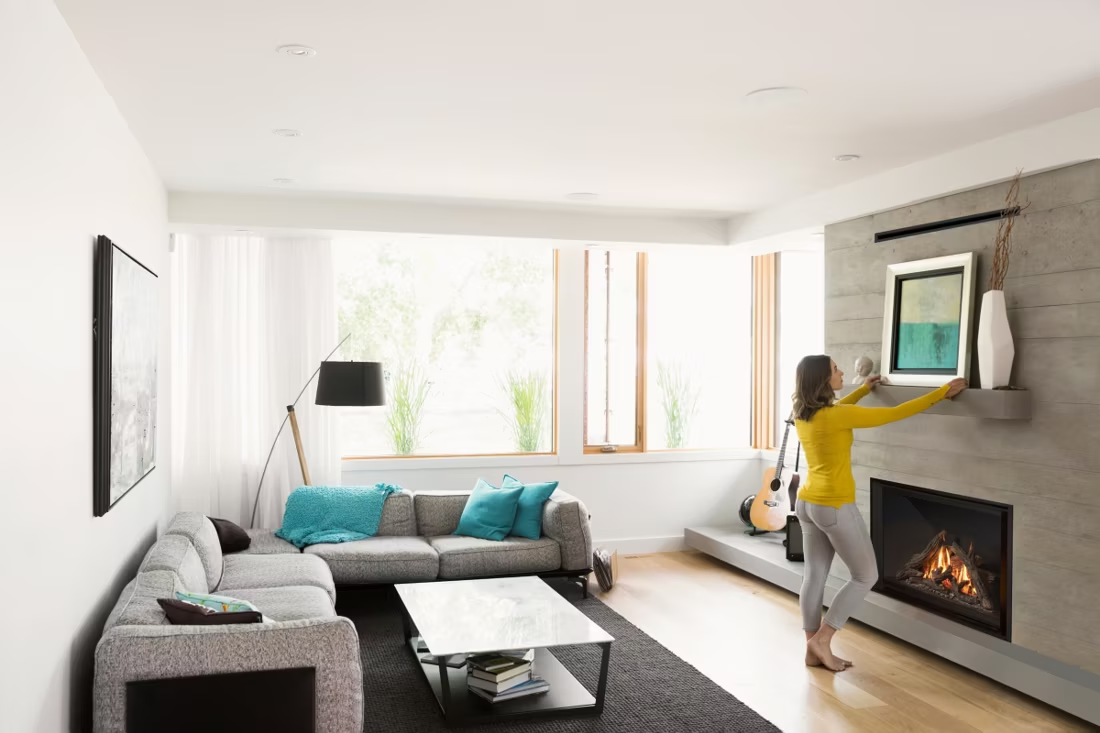
Four fuels. One honest answer for Roberts County.
Three steps. No salesperson until you're ready.
Tell us about your project
Your zip code, your situation, and the fuel you're leaning toward—or let the answers point you to one.
See what's actually available
The brands dealers within 100 miles genuinely carry—real options, never a catalog mirage.
Get your dealer & Project Guide
A trusted local dealer, plus the free Project Guide & Parts List that names every component of the job.
Frequently Asked Questions
Which fuel works best in Roberts County?
It depends on your home and your priorities, but Roberts County's cold—8,195 heating degree days and winter lows averaging around 4°F—narrows the field toward serious heat sources. Wood remains a practical choice for farmhouses and rural properties, especially where oak or cottonwood from the Lake Traverse bottoms is available at low cost; a catalytic stove can hold a burn through a long overnight cold spell the way it does in Fargo just across the border. Gas is the convenience option, though piped natural gas service is limited outside Sisseton, so most rural gas installations run on propane rather than utility gas. Pellet is a middle-ground option—steady, thermostat-controlled heat with less labor than wood, supported regionally by brands like Lignetics. Electric works well as supplemental heat in a bedroom or living room but isn't enough on its own to carry a Roberts County winter. Many households here combine wood or pellet as the primary heat source with propane or electric as backup.
Do I need a permit to install a fireplace in Roberts County?
In most cases, yes. New wood stoves, inserts, gas appliances, and pellet stoves typically require a building permit through the Roberts County zoning and building office in Sisseton, and any gas line work should be done by a licensed propane installer or gas fitter given the county's reliance on propane over piped natural gas. Electric fireplaces generally don't need a permit unless the installation involves new wiring or a dedicated circuit for a built-in unit. Most local hearth retailers handle the permitting paperwork as part of the installation, which is especially helpful for rural properties where the nearest building office may be a 20-30 minute drive.
Are there air quality restrictions on wood burning in Roberts County?
No. Unlike counties in wildfire-prone or inversion-prone regions, Roberts County has no non-attainment status, no winter inversion pattern, and no local burn advisories tied to wood smoke. That means wood burning here isn't restricted the way it is in parts of the West. That said, an EPA-certified stove still burns cleaner and more efficiently than an old uncertified unit, which matters given how many hours a Roberts County stove runs each winter—efficiency, not air quality compliance, is the main reason to upgrade here.
Can one local hearth retailer handle all four fuel types?
It varies. In a county this size—under 6,000 residents spread across a handful of small towns—you're less likely to find one dealer stocking wood, gas, pellet, and electric all with equal depth. Some Sisseton-area retailers carry wood and pellet as their core lines, given local demand for cordwood and pellet heat, while gas and electric may be handled through a smaller secondary display or special order. If you're cross-shopping fuels, ask directly what's in stock versus special-order—for a rural county like this, lead times on special orders matter more than they would in a bigger metro market.
How does service work in rural areas of Roberts County?
Most technicians serving Roberts County are based in or near Sisseton and travel out to Wilmot, Rosholt, Peever, Summit, and the farmsteads along Lake Traverse and the Bois de Sioux. Expect a modest travel fee for calls outside town, and expect to book ahead—with a population under 6,000 spread over a large rural footprint, there are fewer technicians covering more ground than in a metro county. Scheduling chimney sweeps, propane appliance service, or pellet stove maintenance in September or early October, before the 8,195-degree-day heating season kicks in, is far easier than trying to get an emergency appointment in January.
What's the typical cost range for fireplace installation across all fuel types in Roberts County?
Costs vary by fuel and by how much travel a rural installation requires. Wood stove or insert installation: roughly $4,000–$8,500 for a typical install, more if a full chimney system needs to go in from scratch on a farmhouse. Propane fireplace, insert, or stove: roughly $4,000–$10,000 depending on whether a propane tank and line already exist on the property. Pellet stove or insert: roughly $4,000–$7,000 for a standard install. Electric fireplace: $200–$3,000 for the unit itself, plus $400–$1,200 in labor for anything beyond a plug-in model. Rural travel time can add modestly to labor costs compared with an in-town Sisseton installation—ask your dealer whether a travel fee applies before you commit.
What is an in-home preview and do I need one?
It's a visit where a hearth professional measures your space, confirms the model you picked actually works in your home, and walks the specs—framing, gas line, venting, finish work—before anything is ordered. Some details you just can't know until you see the house. Never make a down payment without one; it's the single most-skipped step that burns buyers.
Can a fireplace actually lower my heating bill?
Yes—by creating a comfort zone. A furnace heats every square foot of the house just to warm the one room you're in; a gas fireplace on low burns roughly a sixth of the gas a typical furnace does. Set the furnace around 55–60 degrees as a baseline, then heat the rooms your family actually uses. Families who heat this way commonly save $20–$60 a month.
Wood, gas, pellet, or electric—how do I choose?
Match the fuel to your life, not the other way around. Wood: lowest fuel cost and total power-outage independence, but you're hauling and stacking. Gas: press a button, set a thermostat, no maintenance to speak of. Pellet: wood economics with automatic feeding, in exchange for weekly cleaning and a need for electricity. Electric: plugs in anywhere with honest supplemental heat. Nobody regrets the fuel that fits how they actually live.
Does a fireplace add value to my home?
On average, a fireplace adds back to the home about the same amount you spent installing it. Add the monthly savings from heating the rooms you actually use instead of the whole house—often hundreds of dollars a year—and the value case is strong before you even count what a fire does for how your family uses the room.
Stove and Fireplace Dealers in Roberts County
Listings include WhyFire partner dealers, dealers we have verified as authorized for the brands we recommend, and established local businesses that carry hearth products. Every listing shows which one it is. The ones marked Preferred run on WhyFire's software, so they can show you real pricing and book your appointment right here. No manufacturer pays for placement. How we verify dealers →
Larry's Lumber
Andor Inc.
Hometown Building Center
Find your fireplace fit for Roberts County.
Tell us your fuel and your town, and we'll match you with a trusted local dealer and send a free Project Guide & Parts List—the exact parts, including the vent kit, and the dealer we recommend for your Roberts County project.
Find Your Fireplace →