
Reliable heat for Lake County's coldest nights.
Gas and electric fireplace resources for Madison and every town across Lake County's glacial-lake prairie—plus honest guidance on where wood and pellet fit (and where they don't). Get matched with a trusted local hearth retailer.
Every Project Starts From One of These Five Situations
Prairie-lake winters call for dependable gas and electric heat.
Lake County sits on the flat glacial-lake plain of southeastern South Dakota, named for the string of lakes—Madison, Herman, Silver—left behind by retreating ice sheets. With a heating season about as demanding as Fargo, North Dakota's and average winter lows near 5°F, the county's winters run nearly as cold as Fargo, North Dakota. But the terrain that shaped the lakes also left the county without significant forestland: scattered cottonwood along the shorelines, oak in old shelterbelts, and a handful of planted ponderosa pine windbreaks are about the extent of local wood. That's not enough to support a firewood culture the way it does in the Black Hills, so wood-burning stoves stay a niche choice here rather than a default one.
What you'll find on this hub: gas and electric hearth retailers, service technicians, and fuel suppliers serving Madison and the rest of Lake County—Chester, Nunda, Ramona, Wentworth, Winfred, and the farms in between. Because the local market is small (county population is just over 8,200), some homeowners end up working with dealers based in Sioux Falls, about 45 minutes east, for wider selection and faster service. Pick your fuel below to see what's realistic for your home, what it costs, and which local dealer can actually get it installed.
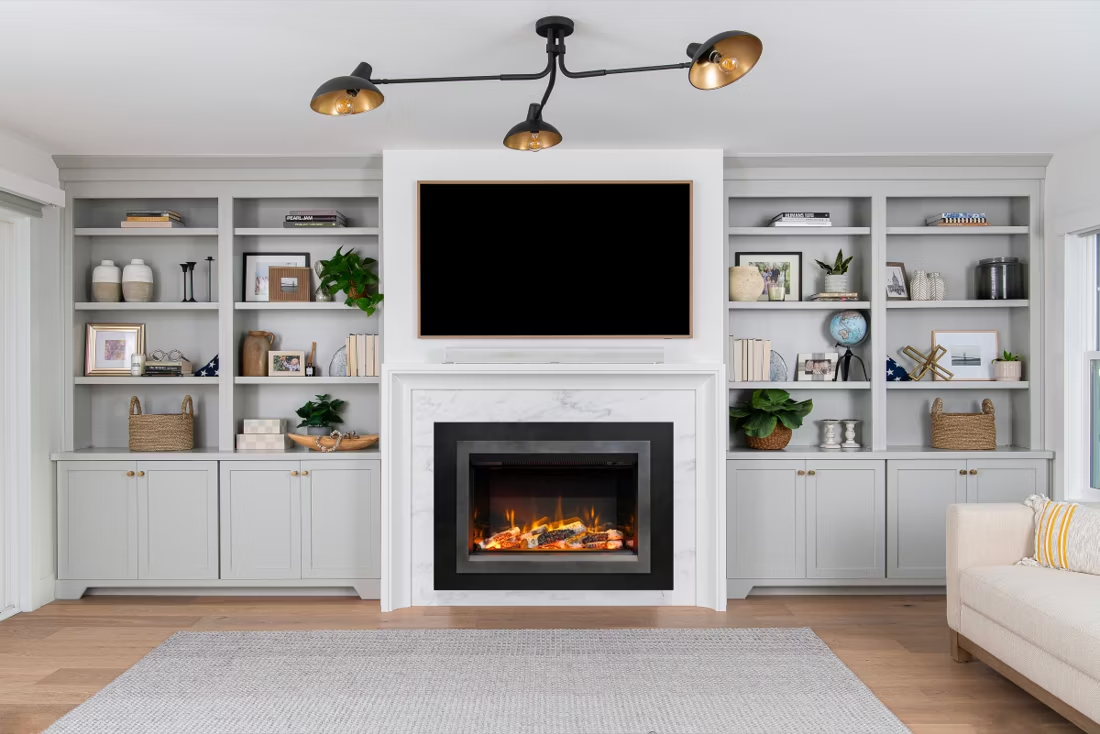
Four fuels. One honest answer for Lake County.
Three steps. No salesperson until you're ready.
Tell us about your project
Your zip code, your situation, and the fuel you're leaning toward—or let the answers point you to one.
See what's actually available
The brands dealers within 100 miles genuinely carry—real options, never a catalog mirage.
Get your dealer & Project Guide
A trusted local dealer, plus the free Project Guide & Parts List that names every component of the job.
Frequently Asked Questions
Which fuel works best in Lake County?
For most Lake County homes, it comes down to gas or electric. Propane is the practical choice for primary heat outside Madison's natural gas footprint—instant heat, no wood supply to manage, and it keeps working through the county's frequent winter power outages if you choose a battery-backup or millivolt system. Electric fireplaces are common for supplemental warmth in bedrooms and additions, run off the local rural electric cooperative service. Wood and pellet stoves exist here, but they're the exception rather than the rule—Lake County's glacial-lake prairie never supported the kind of forestland that makes a local firewood or pellet-dealer network practical. If you want wood heat, plan on trucking in firewood or driving to Sioux Falls for pellet supply and service.
Do I need a permit for a gas or electric fireplace install in Lake County?
Usually, yes, for gas. New gas fireplaces, inserts, and stoves need a building permit plus a separate gas-line permit, and the gas connection itself has to be done by a licensed gas fitter. Within Madison, permits run through the city building inspector; in unincorporated Lake County, they go through the county planning and zoning office. Electric fireplaces are simpler—plug-in units generally don't need a permit, but built-in or hardwired electric fireplaces that involve a new circuit do. Most gas and electric retailers serving the county handle the permit paperwork themselves as part of the installation quote.
Are wood stoves realistic in Lake County, given the terrain?
They're realistic, just uncommon. Lake County's flat, lake-dotted prairie was never forested the way the Black Hills or northern Minnesota were—what's here is shelterbelt cottonwood and oak, plus scattered planted ponderosa pine, not enough to sustain a local firewood economy. A small number of homeowners still install wood stoves or inserts, usually for backup heat during ice-storm power outages or in lake cabins around Madison, Herman, and Silver Lake, and they typically source firewood from outside the county rather than cutting locally. There are no local air quality restrictions on wood burning—Lake County has none of the inversion or non-attainment issues you'd see in a mountain basin—so if you want a wood stove for backup heat, the limiting factor is finding a dealer who stocks and installs one, not any regulatory hurdle.
What about pellet stoves—why aren't they common in Lake County?
Pellet fuel itself is available—brands like Lignetics and Indeck Energy Services supply the broader Midwest market, and you can usually find bagged pellets at farm stores in the region. What's missing is the local dealer and service network. With a county population around 8,200, there isn't enough demand to support a dedicated pellet stove retailer in Madison, so residents who want a pellet appliance typically end up buying and servicing through a Sioux Falls-area dealer instead. It's a viable fuel here; it's just not one you'll find stocked on a Lake County showroom floor.
Can one local retailer handle both gas and electric fireplace installs, given how small the market is?
Yes, and in a county this size, that's actually the norm rather than the exception. Because the customer base is limited, most hearth retailers serving Lake County carry both gas and electric lines rather than specializing in just one—it lets a small showroom cover more of the market. Some homeowners in Madison and the surrounding towns end up working with a retailer based in Sioux Falls, roughly 45 minutes away, for a wider selection of display models before committing. Either way, one visit typically covers both fuel types, which simplifies comparing a gas insert against an electric alternative for the same room.
What's the typical cost range for fireplace installation across fuel types in Lake County?
Gas fireplace, insert, or stove: roughly $4,000–$10,000 depending on whether a new propane line or venting run is needed—installs that tie into existing gas service land on the lower end. Electric fireplace: $200–$3,000 for the unit itself, plus $400–$1,200 in labor for anything beyond a plug-and-play wall unit, such as a built-in with new wiring. Wood and pellet installs are harder to price locally since so few county dealers carry them—expect to budget similarly to gas ($4,500–$9,000) if you go that route through a Sioux Falls retailer, plus travel and delivery costs for the appliance itself.
Can a fireplace actually lower my heating bill?
Yes—by creating a comfort zone. A furnace heats every square foot of the house just to warm the one room you're in; a gas fireplace on low burns roughly a sixth of the gas a typical furnace does. Set the furnace around 55–60 degrees as a baseline, then heat the rooms your family actually uses. Families who heat this way commonly save $20–$60 a month.
How much should I budget for a fireplace?
For an average home—covering the fireplace, the vent pipe, and basic installation—a budget between $3,900 and $5,500 gives you a lot of options across wood, gas, and pellet. By the time you add finish work, gas line, and electrical, the average complete installation lands between $5,000 and $12,000 all-in. In a remodel or new build, a good rule is to put about 2.5% of the total project cost toward the fireplace.
Wood, gas, pellet, or electric—how do I choose?
Match the fuel to your life, not the other way around. Wood: lowest fuel cost and total power-outage independence, but you're hauling and stacking. Gas: press a button, set a thermostat, no maintenance to speak of. Pellet: wood economics with automatic feeding, in exchange for weekly cleaning and a need for electricity. Electric: plugs in anywhere with honest supplemental heat. Nobody regrets the fuel that fits how they actually live.
Should the dealer who sells my fireplace also install it?
Ideally, yes. A fireplace project involves vent pipe, gas line, electrical, and often tile or stone. Hire three or four separate trades and you own the liability and the game of telephone between them. One company selling and installing means one accountable party, start to finish—ask about factory training, on-time completion records, and what happens if an inspection fails.
Stove and Fireplace Dealers in Lake County
Listings include WhyFire partner dealers, dealers we have verified as authorized for the brands we recommend, and established local businesses that carry hearth products. Every listing shows which one it is. The ones marked Preferred run on WhyFire's software, so they can show you real pricing and book your appointment right here. No manufacturer pays for placement. How we verify dealers →
Cozy Home & Lighting, LLC
Ramsdell F&m Ltd.
Fireplace Professionals, Inc
Find your fireplace in Lake County.
Tell us about your home and we'll match you with a trusted local dealer and send a free Project Guide & Parts List—the exact parts, including the vent kit, and the local pro who can install it right for Lake County's winters.
Find Your Fireplace →