
Heating a Black Hills winter, one home at a time.
Wood, gas, pellet, and electric fireplace resources for Hot Springs, Edgemont, Oelrichs, and the ranch country between them. Find the right unit and connect with a trusted local hearth retailer.
Every Project Starts From One of These Five Situations
Southern Black Hills heating, built for long winters.
Fall River County sits at the southern edge of the Black Hills, where the terrain runs from the pine-covered foothills around Hot Springs down into open shortgrass prairie near Edgemont. At roughly 6,583 heating degree days, the county's winters run comparable to Bismarck, ND—long, cold, and windy, with average lows near 14°F and stretches of single-digit nights common from December through February. With only about 4,700 residents spread across a large, rural county, homes here are often on acreage well outside city limits, and many families still rely on ponderosa pine, oak, and cottonwood cut from their own land or from the nearby Black Hills National Forest under a Forest Service permit.
What you'll find on this hub: hearth retailers, service technicians, and fuel suppliers serving the whole county—from Hot Springs and its mineral springs district to Edgemont near the Wyoming line and the ranches and small towns in between. Pick your fuel below to see local dealers, typical installation costs, and recommended units for a Fall River County home. Whether you're heating a Hot Springs bungalow or a working ranch house outside Oelrichs, this is the starting point.
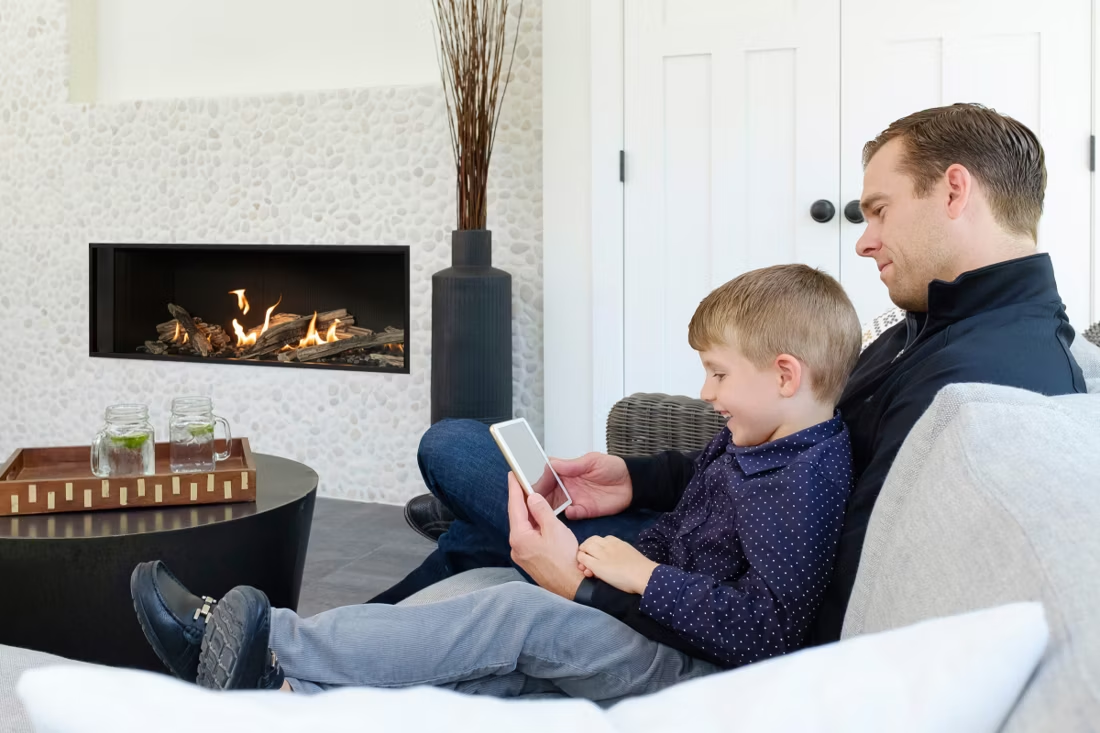
Four fuels. One honest answer for Fall River County.
Three steps. No salesperson until you're ready.
Tell us about your project
Your zip code, your situation, and the fuel you're leaning toward—or let the answers point you to one.
See what's actually available
The brands dealers within 100 miles genuinely carry—real options, never a catalog mirage.
Get your dealer & Project Guide
A trusted local dealer, plus the free Project Guide & Parts List that names every component of the job.
Frequently Asked Questions
Which fuel makes the most sense for a home in Fall River County?
It depends on where you live and what you're used to. Wood is a natural fit for the county's rural, acreage-heavy layout—many households already have access to ponderosa pine, oak, or cottonwood, and a Black Hills National Forest cutting permit keeps fuel costs low if you're near the Hills. Gas works well for in-town Hot Springs homes with propane service (natural gas is limited this far from a distribution main), offering instant heat without the wood-handling labor. Pellet stoves are a solid middle ground—you get wood-like heat without splitting and stacking, and regional brands like Lignetics keep bagged fuel reasonably accessible. Electric fireplaces are best treated as supplemental heat for bedrooms or a den—with average lows around 14°F and 6,583 heating degree days, electric alone won't keep pace with a Fall River County winter as a primary heat source.
Do I need a permit to install a wood stove or fireplace in Fall River County?
In most cases, yes, though requirements differ depending on whether you're inside Hot Springs city limits or in unincorporated county land. Within Hot Springs, building permits are typically required for new wood stoves, inserts, gas fireplaces, and pellet stoves, and gas work requires a licensed gas-fitter for the line connection. Outside city limits, permitting can be less formal, but insurance carriers still generally expect a code-compliant, professionally installed unit before they'll cover it. Electric fireplaces usually don't require a permit unless you're hardwiring a built-in unit into a new circuit. Most hearth retailers serving the county handle the permitting paperwork as part of the installation, so it's worth asking upfront rather than assuming you'll need to navigate it solo.
Are there any burning restrictions or air quality rules to worry about in Fall River County?
No—Fall River County doesn't have the kind of winter inversion or non-attainment issues that trigger curtailment days in some Western counties. There's no local air quality advisory system limiting wood burning here. That said, if you're cutting your own firewood on Black Hills National Forest land, you still need a valid cutting permit from the Forest Service office, and any new wood stove you install should meet current EPA emissions standards to qualify for insurance and resale purposes down the line, even without a mandatory local ordinance requiring it.
How far will I have to drive, or wait, for chimney sweeping or gas service in a county this rural?
Plan ahead more than you would in a denser market. Because Fall River County has under 5,000 residents spread across a large area, most service technicians are based in Hot Springs or drive down from Rapid City, and a single tech might cover Edgemont, Oelrichs, and the ranch roads in between on the same trip. Expect a modest travel fee for calls outside Hot Springs proper, and book your annual sweep or gas inspection in late summer or early fall—by the time the first hard freeze hits, techs are often booked out for weeks. If you're heating with wood as a primary source, an August or September sweep gives you a real cushion before the cold sets in.
What does a fireplace or stove installation typically cost across the different fuel types here?
Costs in Fall River County track fairly close to regional Black Hills pricing, sometimes with a modest markup for the drive out from Hot Springs or Rapid City. Wood stove or insert installation typically runs $4,000–$8,500, more if new chimney work is needed for a home without an existing flue. Gas fireplace, insert, or stove installs run $4,000–$10,000 depending on whether propane line work is required—homes converting an existing wood-burning fireplace to a gas insert tend to land on the lower end. Pellet stove installations generally run $4,000–$7,000. Electric fireplaces are the most affordable entry point—$200–$3,000 for the unit itself, plus $400–$1,200 in labor for anything beyond a plug-and-play wall unit. See the county + fuel pages above for cost detail tied to specific local retailers.
Is it realistic to heat a Fall River County home with wood or pellets as the main source?
Yes, and plenty of households in the county already do. With winters comparable to Bismarck, ND in total heating demand, a properly sized wood stove burning seasoned ponderosa pine or oak—both common locally—can carry a well-insulated home through the coldest stretches, and it keeps working during a power outage, which matters on rural electric co-op lines that can go down in a bad winter storm. Pellet stoves are a strong option too, especially for households that want less daily labor, though they do require electricity to run the auger and blower, so some owners pair a pellet stove with a small wood stove or backup heater for outage coverage. A local retailer can help size the unit correctly for your square footage and insulation level—undersizing is the most common mistake in a county with this much cold-weather demand.
I know I want a fireplace—where do I actually start?
Do two things today: snap a photo of the wall or fireplace you want to transform, and take a tape measure to the space—width, height, depth. Those two artifacts answer most of a hearth professional's first questions. Then settle fuel (wood, gas, pellet, or electric) and set a realistic budget: $3,900–$5,500 covers fireplace, vent, and basic install for most homes.
Wood, gas, pellet, or electric—how do I choose?
Match the fuel to your life, not the other way around. Wood: lowest fuel cost and total power-outage independence, but you're hauling and stacking. Gas: press a button, set a thermostat, no maintenance to speak of. Pellet: wood economics with automatic feeding, in exchange for weekly cleaning and a need for electricity. Electric: plugs in anywhere with honest supplemental heat. Nobody regrets the fuel that fits how they actually live.
What is an in-home preview and do I need one?
It's a visit where a hearth professional measures your space, confirms the model you picked actually works in your home, and walks the specs—framing, gas line, venting, finish work—before anything is ordered. Some details you just can't know until you see the house. Never make a down payment without one; it's the single most-skipped step that burns buyers.
Should the dealer who sells my fireplace also install it?
Ideally, yes. A fireplace project involves vent pipe, gas line, electrical, and often tile or stone. Hire three or four separate trades and you own the liability and the game of telephone between them. One company selling and installing means one accountable party, start to finish—ask about factory training, on-time completion records, and what happens if an inspection fails.
Stove and Fireplace Dealers in Fall River County
Listings include WhyFire partner dealers, dealers we have verified as authorized for the brands we recommend, and established local businesses that carry hearth products. Every listing shows which one it is. The ones marked Preferred run on WhyFire's software, so they can show you real pricing and book your appointment right here. No manufacturer pays for placement. How we verify dealers →
Builders First Source - Hot Springs
Metal Products
Repair My Flame
Knecht Home Center - Rapid City
Hebron Brick
Builders First Source - Rapid City
Find your fireplace in Fall River County.
Pick your fuel below and we'll match you with a trusted local dealer and send over a free Project Guide & Parts List—the exact parts, including the vent kit, for a project sized to your home.
Find Your Fireplace →