
Wood, gas, pellet, and electric heat for every town in Douglas County.
From Armour to Corsica, Delmont, Grand View, and New Kirk, this hub covers hearth options for every household in Douglas County—and connects you with a trusted local dealer who can actually install what you choose.
Every Project Starts From One of These Five Situations
Prairie heating for Douglas County, South Dakota.
Douglas County is small—about 1,555 people spread across Armour, the county seat, and the smaller communities of Corsica, Delmont, Grand View, and New Kirk. The land here is gently rolling glacial-till farmland with almost no natural windbreak, so a Climate Zone 5A winter here feels a lot like one in Fargo, ND—the raw temperature is only part of the story; open-plains wind chill adds real bite to the heating season. Cottonwood and oak grow thick along the creek bottoms and old farmstead groves, and decades of USDA-encouraged shelterbelt plantings have made ponderosa pine a common row crop of its own—a lot of Douglas County households still cut their own wood from a windbreak row or creek bottom every fall.
Because the county's population is so small, there's no big hearth showroom inside Douglas County itself—most residents work with retailers and installers based in Mitchell or Yankton who travel out for consultations and installs. This hub rolls up everything relevant to Douglas County across all four fuels: wood, gas (mostly propane here, since natural gas mains don't reach most of the county), pellet, and electric. Pick your fuel below for local cost ranges, recommended units, and dealers who actually service this stretch of south-central South Dakota.
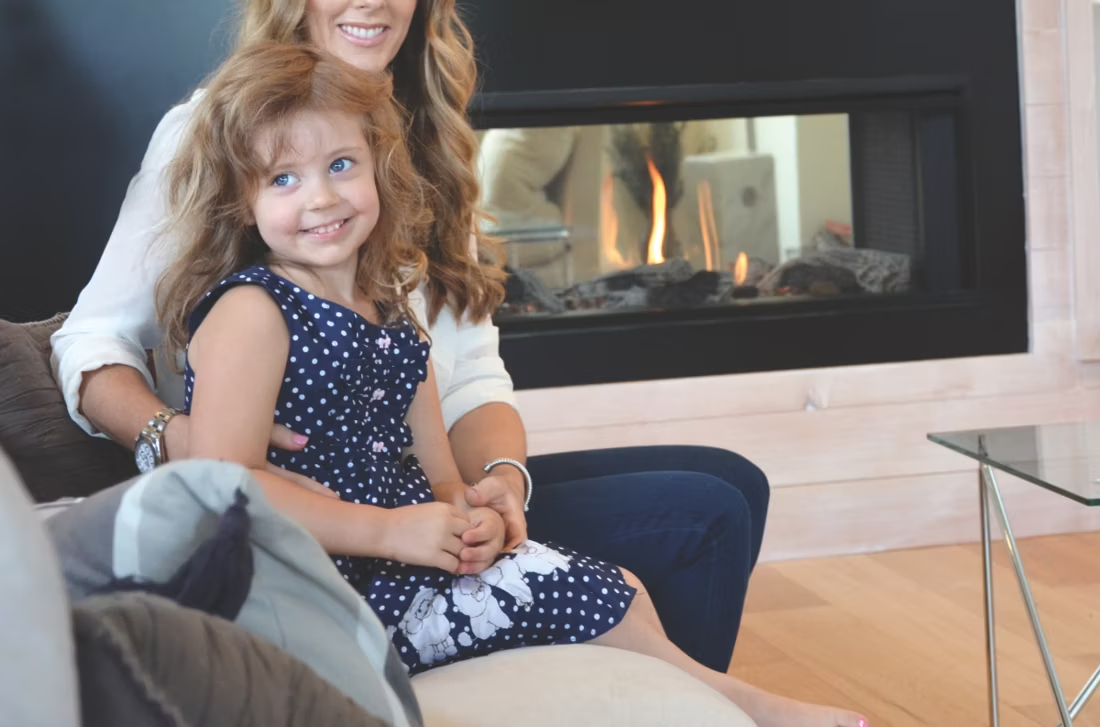
Four fuels. One honest answer for Douglas County.
Three steps. No salesperson until you're ready.
Tell us about your project
Your zip code, your situation, and the fuel you're leaning toward—or let the answers point you to one.
See what's actually available
The brands dealers within 100 miles genuinely carry—real options, never a catalog mirage.
Get your dealer & Project Guide
A trusted local dealer, plus the free Project Guide & Parts List that names every component of the job.
Frequently Asked Questions
Which fuel works best in Douglas County?
It depends on the house and how hands-on you want to be. Wood is the traditional choice on Douglas County farmsteads—cottonwood and oak from creek-bottom stands, plus ponderosa pine thinned from old shelterbelt rows, keep fuel costs near zero for households willing to cut and split their own. Gas here almost always means propane rather than natural gas, since municipal gas mains don't reach most of the county outside Armour—propane offers the same push-button convenience without needing a gas main. Pellet stoves are a solid middle ground: Lignetics and Indeck Energy Services pellets are stocked at farm supply stores in Mitchell, and pellet heat skips the woodpile labor while still burning a renewable fuel. Electric fireplaces work well as supplemental heat in a farmhouse living room or a converted upstairs bedroom, but on a windswept 5A winter they're not doing the primary heating lift. Most Douglas County homes end up running two fuels—wood or propane for the bulk of the season, something electric or pellet for the rooms that need a little extra warmth.
Do I need a permit to install a fireplace in Douglas County?
Usually, yes, though it depends on where you live. Inside Armour, Corsica, or Delmont, building permits for a new wood stove, insert, gas appliance, or pellet stove typically go through the town office; outside city limits, unincorporated Douglas County properties file through the county courthouse in Armour. Any propane line work requires a licensed gas-fitter and a separate permit for the line itself, regardless of which side of a town line you're on. Electric fireplaces generally skip the permit process unless you're hardwiring a built-in unit into a new circuit. Most retailers based in Mitchell or Yankton who do installs out here are used to filing the paperwork on both sides of the county line, so it's worth asking your installer to handle it rather than doing it yourself.
Are there air quality restrictions on wood burning in Douglas County?
No—Douglas County doesn't have the geography that causes wood-smoke problems elsewhere. There's no mountain valley to trap a winter inversion and no nonattainment designation on the books; the open, windswept plains disperse smoke quickly most of the year. The one exception is during extended dry spells, when the county or a local fire district may issue a temporary outdoor burn ban tied to drought conditions rather than wood-smoke air quality—that affects brush and debris burning more than indoor wood stove use. New wood stove installations still need to meet current EPA emissions standards, which is a national requirement rather than a local one.
Can one local hearth retailer handle all four fuel types?
Several of the multi-fuel retailers based in Mitchell carry wood, gas/propane, pellet, and electric under one roof, which is convenient if you're still deciding between fuels—you can look at working display units side by side rather than piecing together quotes from separate specialists. Smaller propane-focused dealers out of Yankton tend to concentrate on gas and pellet rather than stocking a full wood-stove lineup. If you already know your fuel—say, you've settled on a wood insert for a farmhouse living room—a wood-focused specialist may have deeper inventory and installer experience than a generalist showroom.
How does service work in a rural county like this one?
Almost every technician who services Douglas County is based elsewhere and drives in—from Mitchell, Yankton, or occasionally Sioux Falls for specialty gas work. Expect a modest trip charge for service calls out to Corsica, Delmont, Grand View, or New Kirk, and know that gravel and minimum-maintenance roads can slow a winter service call after a heavy snow. Scheduling your annual chimney sweep or gas inspection in late summer or early fall, before the first hard freeze, is the easiest way to avoid a multi-week wait during peak heating season.
What's the typical cost range for fireplace installation across all fuel types in Douglas County?
Wood stove or insert: roughly $4,000–$8,500 for a typical install, more if a new chimney or hearth pad is needed. Propane fireplace, insert, or stove: about $4,000–$10,000 depending on whether a new propane line and tank hookup are part of the job. Pellet stove or insert: around $4,000–$7,000 installed. Electric fireplace: $200–$2,500 for the unit itself, plus $300–$1,000 in labor if it's more than a plug-and-play install. Because installers are traveling in from Mitchell or Yankton, factor in a modest travel fee on top of these ranges—ask upfront so it's not a surprise on the final invoice.
Wood, gas, pellet, or electric—how do I choose?
Match the fuel to your life, not the other way around. Wood: lowest fuel cost and total power-outage independence, but you're hauling and stacking. Gas: press a button, set a thermostat, no maintenance to speak of. Pellet: wood economics with automatic feeding, in exchange for weekly cleaning and a need for electricity. Electric: plugs in anywhere with honest supplemental heat. Nobody regrets the fuel that fits how they actually live.
Can a fireplace actually lower my heating bill?
Yes—by creating a comfort zone. A furnace heats every square foot of the house just to warm the one room you're in; a gas fireplace on low burns roughly a sixth of the gas a typical furnace does. Set the furnace around 55–60 degrees as a baseline, then heat the rooms your family actually uses. Families who heat this way commonly save $20–$60 a month.
Does a fireplace add value to my home?
On average, a fireplace adds back to the home about the same amount you spent installing it. Add the monthly savings from heating the rooms you actually use instead of the whole house—often hundreds of dollars a year—and the value case is strong before you even count what a fire does for how your family uses the room.
How much should I budget for a fireplace?
For an average home—covering the fireplace, the vent pipe, and basic installation—a budget between $3,900 and $5,500 gives you a lot of options across wood, gas, and pellet. By the time you add finish work, gas line, and electrical, the average complete installation lands between $5,000 and $12,000 all-in. In a remodel or new build, a good rule is to put about 2.5% of the total project cost toward the fireplace.
Stove and Fireplace Dealers in Douglas County
Listings include WhyFire partner dealers, dealers we have verified as authorized for the brands we recommend, and established local businesses that carry hearth products. Every listing shows which one it is. The ones marked Preferred run on WhyFire's software, so they can show you real pricing and book your appointment right here. No manufacturer pays for placement. How we verify dealers →
Kaiser Heating & Cooling
Larry's Heating & Cooling
Find your fireplace in Douglas County.
Tell us about your home and we'll match you with a trusted local dealer serving Douglas County, plus a free Project Guide & Parts List—the exact parts, vent kit, and recommended dealer for your project, no big-box guesswork required.
Find Your Fireplace →