
Heat that holds through a Black Hills winter.
Wood, gas, pellet, and electric fireplace resources for every town in Butte County—from Belle Fourche to Newell and Nisland. Find the right unit for ranch-country cold and connect with a trusted local hearth retailer.
Every Project Starts From One of These Five Situations
Ranch-country heating in Butte County, South Dakota.
Butte County sits in the northwest corner of South Dakota, where open ranchland meets the northern edge of the Black Hills National Forest. With an average winter low of 13°F, the heating season here runs long—comparable to Bismarck, North Dakota, and considerably colder than most of the Great Plains further south. Ponderosa pine from Forest Service permit cutting is the dominant firewood, with oak and cottonwood common along the Belle Fourche River bottoms. This is wide-open country with widely scattered homes, so a heating system that runs reliably through a Highway 212 blizzard matters more here than it might in a denser suburb.
What you'll find on this hub: hearth retailers, service technicians, and fuel suppliers covering every community in the county—Belle Fourche as the anchor town, plus Newell, Nisland, Vale, and Fruitdale. Pick your fuel below to see local dealers, typical installation costs, and recommended units for this climate. Whether you're heating a ranch house outside Nisland or a home near the Black Hills National Forest boundary, this is the starting point.
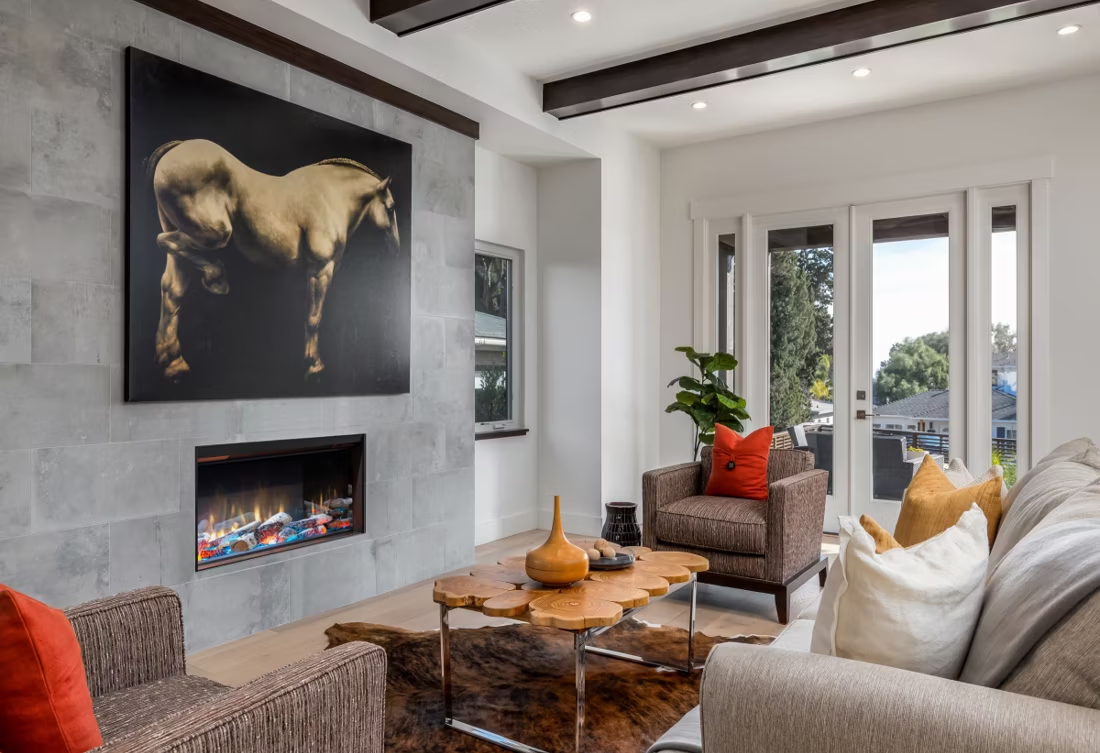
Four fuels. One honest answer for Butte County.
Three steps. No salesperson until you're ready.
Tell us about your project
Your zip code, your situation, and the fuel you're leaning toward—or let the answers point you to one.
See what's actually available
The brands dealers within 100 miles genuinely carry—real options, never a catalog mirage.
Get your dealer & Project Guide
A trusted local dealer, plus the free Project Guide & Parts List that names every component of the job.
Frequently Asked Questions
Which fuel works best in Butte County?
It depends on your home and how remote it sits. Wood remains the backbone fuel for many rural Butte County homes—Black Hills National Forest cutting permits keep ponderosa pine affordable, and a good catalytic stove will carry a house through a stretch of single-digit nights without relying on the grid. Propane is the practical gas option out here since natural gas mains don't reach most of the county; propane fireplaces and inserts give you instant heat with none of the wood-hauling labor. Pellet stoves are a solid middle ground—Lignetics bags are regionally available, and pellet heat is more hands-off than splitting cottonwood or oak. Electric is supplemental at best in this climate—fine for a bedroom or a den, but not something we'd recommend as a primary heater when winter lows average 13°F. Most homes here end up running two fuels: wood or pellet for the bulk of the season, propane or electric as backup or secondary-room heat.
Do I need a permit to install a fireplace in Butte County?
Generally yes. New wood stoves, wood inserts, gas fireplaces, gas inserts, gas stoves, and pellet stoves typically require a building permit through the Butte County Building Department, and gas installations need a separate gas line permit pulled by a licensed installer. New wood-burning appliances need to meet current EPA emissions standards—this matters if you're replacing an older barrel stove or an uncertified insert. Electric fireplaces usually skip the permit process unless you're doing a built-in installation with new wiring. Most local hearth retailers handle the paperwork as part of the installation, so you're not usually filing it yourself.
Are there air quality restrictions on wood burning in Butte County?
No—unlike counties with winter temperature inversions or non-attainment status, Butte County doesn't have formal burn curtailment days or wood-smoke advisories. The open, windswept terrain along the northern Black Hills doesn't trap smoke the way a basin or valley community can. That said, new wood stove installs still need to meet current EPA emissions standards, and it's worth keeping an eye on Black Hills National Forest fire restrictions during dry summer and fall stretches, since those can affect outdoor burning and firewood cutting access even though they don't apply to indoor heating appliances.
Can one local hearth retailer handle all four fuel types?
Some can. A dealer like Belle Fourche Hearth & Home typically carries wood, gas (propane), and pellet, with electric units available as a smaller side line—a good stop if you want to compare options under one roof. Smaller operations in Newell or Nisland may focus more narrowly, often wood and propane only, since those two fuels cover most rural heating needs in this part of the county. If you're set on comparing all four fuel types side by side, expect to make the drive to Belle Fourche or over to Spearfish, where the larger multi-fuel showrooms are concentrated.
How does service work in rural areas of Butte County?
Most technicians covering Butte County are based in Belle Fourche or Spearfish and travel out to Newell, Nisland, Vale, and the ranches scattered along the county roads. Expect a modest travel fee for the more remote calls, and expect scheduling to tighten up once the first real cold snap hits—booking your annual chimney sweep or gas inspection in September or October, ahead of the November-through-March heating stretch, is easier than trying to get someone out during a January blizzard. If you're heating with wood as your primary source, keep a few days of dry ponderosa pine on hand and consider a pellet or propane backup unit for redundancy during extended cold or if a technician can't get out right away.
What's the typical cost range for fireplace installation across all fuel types in Butte County?
Wood stove or insert: roughly $4,000–$8,500 for a typical install, higher if new chimney chase work is needed for a ranch house without existing masonry. Propane fireplace, insert, or stove: about $4,000–$10,000 depending on whether a new propane line and tank setup is required versus tapping into existing service. Pellet stove or insert: generally $4,000–$7,000 installed. Electric fireplace: $200–$3,000 for the unit itself, plus $400–$1,200 in labor for anything beyond a simple plug-in unit. Exact pricing depends on your specific home and site conditions—the county + fuel pages above break costs down further by fuel type.
Does a fireplace add value to my home?
On average, a fireplace adds back to the home about the same amount you spent installing it. Add the monthly savings from heating the rooms you actually use instead of the whole house—often hundreds of dollars a year—and the value case is strong before you even count what a fire does for how your family uses the room.
Wood, gas, pellet, or electric—how do I choose?
Match the fuel to your life, not the other way around. Wood: lowest fuel cost and total power-outage independence, but you're hauling and stacking. Gas: press a button, set a thermostat, no maintenance to speak of. Pellet: wood economics with automatic feeding, in exchange for weekly cleaning and a need for electricity. Electric: plugs in anywhere with honest supplemental heat. Nobody regrets the fuel that fits how they actually live.
Should the dealer who sells my fireplace also install it?
Ideally, yes. A fireplace project involves vent pipe, gas line, electrical, and often tile or stone. Hire three or four separate trades and you own the liability and the game of telephone between them. One company selling and installing means one accountable party, start to finish—ask about factory training, on-time completion records, and what happens if an inspection fails.
Can a fireplace actually lower my heating bill?
Yes—by creating a comfort zone. A furnace heats every square foot of the house just to warm the one room you're in; a gas fireplace on low burns roughly a sixth of the gas a typical furnace does. Set the furnace around 55–60 degrees as a baseline, then heat the rooms your family actually uses. Families who heat this way commonly save $20–$60 a month.
Stove and Fireplace Dealers in Butte County
Listings include WhyFire partner dealers, dealers we have verified as authorized for the brands we recommend, and established local businesses that carry hearth products. Every listing shows which one it is. The ones marked Preferred run on WhyFire's software, so they can show you real pricing and book your appointment right here. No manufacturer pays for placement. How we verify dealers →
Builders First Source - Spearfish
Knecht Home Center-Spearfish
Get matched with a local dealer in Butte County.
Tell us about your home and fuel preference, and we'll match you with a trusted local hearth dealer plus a free Project Guide & Parts List—the exact parts, vent kit, and recommended installer for your Butte County project.
Find Your Fireplace →