
Find the right fireplace for your Saluda County home.
Wood, gas, pellet, and electric fireplace resources for every community in Saluda County—from the town of Saluda to Ridge Spring, Ward, and Monetta. Get matched with a trusted local hearth retailer who knows what actually works in this part of the Piedmont.
Every Project Starts From One of These Five Situations
Mild-winter heating in Saluda County, South Carolina.
Saluda County sits in the South Carolina midlands between Columbia and Augusta, a mostly rural county of about 4,280 people spread across farmland, timberland, and small-town main streets. This is climate zone 3A—a far cry from the nine-month heating seasons of places like Duluth, Minnesota. Saluda County has a modest heating load, with winter lows averaging around 32°F. Cold snaps into the teens happen a few times a season, but the real heating window here runs from about mid-November through February, not October through May. Wood heat still runs deep in Piedmont farm culture—oak, pine, and hickory are the cordwood species you'll find split and stacked behind most rural properties in the county.
What you'll find on this hub: hearth retailers, service technicians, and fuel suppliers covering the whole county—from the county seat of Saluda down to Ridge Spring and Ward, and out to Monetta near the Aiken County line. Pick your fuel below to see local dealers, typical installation costs, and the specifics for your project. Given the county's small population, some of the businesses serving Saluda County are based in nearby Newberry, Aiken, or Columbia and travel in—we've noted that where it applies.
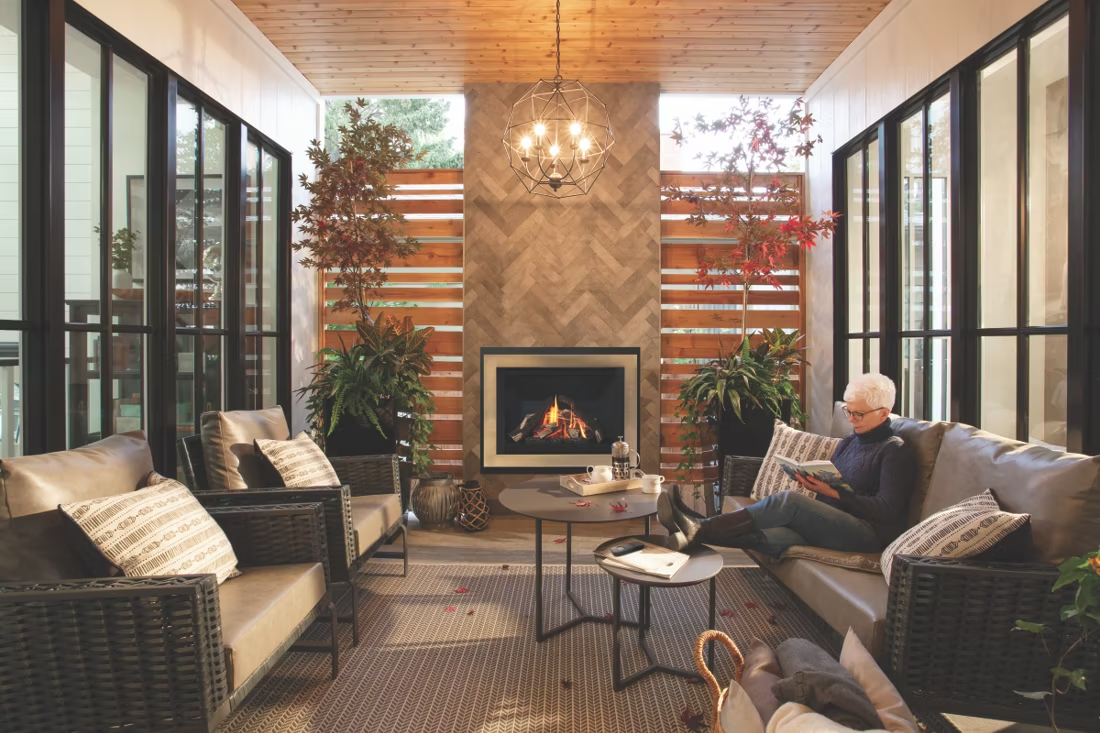
Four fuels. One honest answer for Saluda County.
Three steps. No salesperson until you're ready.
Tell us about your project
Your zip code, your situation, and the fuel you're leaning toward—or let the answers point you to one.
See what's actually available
The brands dealers within 100 miles genuinely carry—real options, never a catalog mirage.
Get your dealer & Project Guide
A trusted local dealer, plus the free Project Guide & Parts List that names every component of the job.
Frequently Asked Questions
Which fuel works best in Saluda County?
It depends on the home and how you use it, but the math here is different than it would be in a colder climate. With a modest heating load and winter lows averaging 32°F, Saluda County's heating needs are modest compared to a place like Fargo, North Dakota. Wood remains a strong choice for rural properties with woodlots—oak and hickory burn hot and long, pine is common for kindling and shoulder-season fires, and there's no air-quality restriction here to worry about. Propane fireplaces and inserts are the practical convenience option for county homes without natural gas access—instant heat, no wood handling. Pellet stoves are a solid middle ground, and local supply from Lignetics, Hamer Pellet Fuel, and Greenway Renewable Energy keeps fuel accessible without a long drive. Electric fireplaces do more real work here than they would up north—in a climate this mild, electric heat can reasonably serve as a primary source in a smaller home or a supplemental source in a larger one, not just ambiance.
Do I need a permit to install a fireplace in Saluda County?
In most cases, yes. New wood stoves, wood inserts, gas or propane fireplaces, gas inserts, and pellet stoves typically require a building permit through Saluda County's building and codes office. Because this is a small, rural county, the permitting process tends to be more direct than in a large metro building department—but it still exists, and inspections still happen. Propane fireplace and insert installations require a licensed propane technician for the gas connection and tank hookup, since there's no natural gas utility serving most of the county. Wood-burning appliances need to meet current clearance and code requirements around combustibles. Electric fireplaces generally don't need a permit unless you're doing a built-in installation with new wiring. Most local hearth retailers pull the permit as part of the install—you typically don't have to navigate this yourself.
Are there air quality restrictions on wood burning in Saluda County?
No—Saluda County has no flagged air quality concerns, no non-attainment designation, and no winter inversion pattern like you'd find in a mountain valley or basin. There are no seasonal burn curtailment days here the way there are in some Western counties. That doesn't mean burning is unregulated—county fire codes and common-sense outdoor burning rules still apply, especially during dry stretches—but you won't run into the kind of wood-smoke advisory system that shows up in geographically enclosed areas. For most homeowners in Saluda County, this means wood heat is genuinely low-friction: no yellow or red advisory days to plan around.
Can one local hearth retailer handle all four fuel types?
Given Saluda County's population of roughly 4,280, it's common for the hearth retailer serving your project to be based outside the county—in Newberry, Aiken, or the greater Columbia area—rather than headquartered in Saluda, Ridge Spring, or Ward directly. Many of these regional dealers do carry multiple fuel types, which is useful if you're still deciding between wood, propane, pellet, and electric. Fuel suppliers, on the other hand—firewood sellers, propane companies, pellet distributors—are more likely to have a presence right in the county. If a retailer's fuel coverage is limited, we'll note it, so you're not driving out for a consultation on a fuel they don't actually install.
How does service work in the rural parts of Saluda County?
Most technicians covering Saluda County travel in from a home base in a neighboring county, which means service calls to farm roads outside Saluda, Ridge Spring, Ward, or Monetta may carry a modest travel fee—often in the $40–$80 range depending on distance. Fall (September–October) is the easiest window to book annual chimney sweeps or gas inspections before the first cold snap; winter emergency calls, especially after an ice storm, can mean a longer wait. Given the county's short, mild heating season, some homeowners schedule their annual service in early fall specifically so it doesn't compete with the handful of technicians covering a wide rural territory.
What's the typical cost range for fireplace installation across all fuel types in Saluda County?
Wood stove or insert installation: roughly $3,800–$8,000 for a typical retrofit, more for new masonry chimney construction. Propane fireplace, insert, or stove: roughly $4,000–$9,500, with cost driven mostly by whether an existing propane line and tank are already in place. Pellet stove or insert: roughly $4,200–$7,000 for a standard install. Electric fireplace: $200–$3,000 for the unit itself, plus $300–$1,000 in labor for anything beyond a plug-and-play placement—which covers most wall-mount and insert installs in this county. Costs run a bit lower here than in colder, higher-elevation markets, partly because venting and chimney work tend to be simpler in a mild climate zone like 3A. See the county + fuel pages above for retailer-specific pricing.
Does a fireplace add value to my home?
On average, a fireplace adds back to the home about the same amount you spent installing it. Add the monthly savings from heating the rooms you actually use instead of the whole house—often hundreds of dollars a year—and the value case is strong before you even count what a fire does for how your family uses the room.
Can a fireplace actually lower my heating bill?
Yes—by creating a comfort zone. A furnace heats every square foot of the house just to warm the one room you're in; a gas fireplace on low burns roughly a sixth of the gas a typical furnace does. Set the furnace around 55–60 degrees as a baseline, then heat the rooms your family actually uses. Families who heat this way commonly save $20–$60 a month.
Wood, gas, pellet, or electric—how do I choose?
Match the fuel to your life, not the other way around. Wood: lowest fuel cost and total power-outage independence, but you're hauling and stacking. Gas: press a button, set a thermostat, no maintenance to speak of. Pellet: wood economics with automatic feeding, in exchange for weekly cleaning and a need for electricity. Electric: plugs in anywhere with honest supplemental heat. Nobody regrets the fuel that fits how they actually live.
What is an in-home preview and do I need one?
It's a visit where a hearth professional measures your space, confirms the model you picked actually works in your home, and walks the specs—framing, gas line, venting, finish work—before anything is ordered. Some details you just can't know until you see the house. Never make a down payment without one; it's the single most-skipped step that burns buyers.
Stove and Fireplace Dealers in Saluda County
Listings include WhyFire partner dealers, dealers we have verified as authorized for the brands we recommend, and established local businesses that carry hearth products. Every listing shows which one it is. The ones marked Preferred run on WhyFire's software, so they can show you real pricing and book your appointment right here. No manufacturer pays for placement. How we verify dealers →
Barnes Oil And Propane
Ridge Lp Gas Inc.
Advanced Chimney Sweep, LLC
Fulmer Heating & Cooling
Find your fireplace in Saluda County.
Tell us your fuel and your town—Saluda, Ridge Spring, Ward, or Monetta—and we'll match you with a trusted local dealer and send a free Project Guide & Parts List: the exact parts, including the vent kit, and the recommended dealer for your project.
Find Your Fireplace →