
Keep Your Family Warm and Safe—No Matter What
With average lows around 33°F and just 2,573 heating degree days a year, wood isn't the primary heat source here that it is in colder states—but plenty of Midlands homeowners still want a wood stove or insert for backup heat, real firelight, and the pull of an oak fire on a rare hard freeze.
Every Project Starts From One of These Five Situations
A wood stove is a bonus here, not a lifeline.
Columbia sits at 282 feet in climate zone 3A, with an average winter low near 33°F and roughly 2,573 heating degree days a season. For comparison, a city like Duluth, Minnesota racks up nearly four times that many degree days—which is why wood stoves are a mainstay of daily life there and a specialty purchase here. Air quality isn't a driver either way: Richland County has no non-attainment status, winter inversion, or wildfire-smoke concerns that shape wood-burning rules the way they do out West.
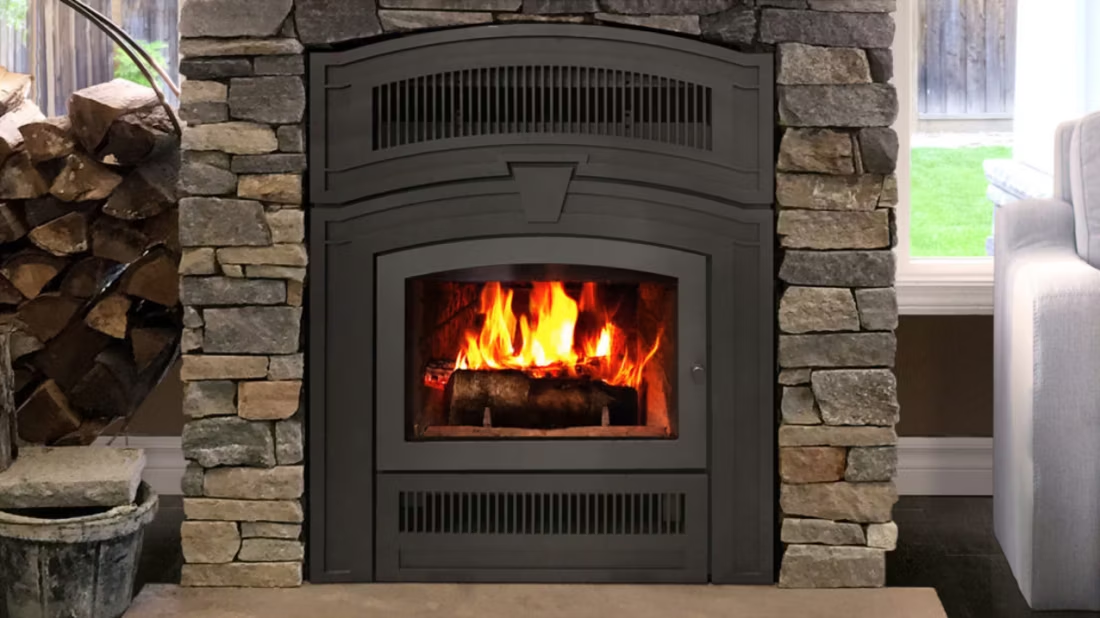
That said, wood hasn't disappeared from Columbia hearths—it's just changed roles. Older neighborhoods like Shandon, Rosewood, and Elmwood Park are full of homes with open masonry fireplaces that look good but heat poorly, and converting one to a wood-burning insert with oak, pine, or hickory (the three species most commonly sold and burned locally) turns decoration into real, non-electric heat. That non-electric part matters here: the February 2014 ice storm knocked out power to large swaths of the Midlands, including areas served by Dominion Energy South Carolina, for days at a time. A wood stove is one of the few heat sources that keeps working when the grid doesn't.
Three steps. No salesperson until you're ready.
Tell us about your project
Your zip code, your situation, and the fuel you're leaning toward—or let the answers point you to one.
See what's actually available
The brands dealers within 100 miles genuinely carry—real options, never a catalog mirage.
Get your dealer & Project Guide
A trusted local dealer, plus the free Project Guide & Parts List that names every component of the job.
Frequently Asked Questions
How much does a wood stove or insert cost to install in Columbia?
Wood-burning installs are a small niche in the Midlands hearth market, so pricing tracks close to the regional Southeast average rather than a Columbia-specific figure: expect roughly $3,000 to $7,000 for a stove or insert, liner, and hearth pad. The low end usually covers dropping an insert into an existing masonry fireplace—common in Shandon and Rosewood homes—while the high end covers new Class A chimney construction where no flue exists yet. Because far fewer local dealers stock wood units compared to gas, it's worth getting quotes from at least two hearth shops before committing.
Does wood heat actually make sense in Columbia's climate?
Not as a whole-home primary heat source. Columbia sits in climate zone 3A with an average winter low near 33°F and about 2,573 heating degree days a year—compare that to Duluth, Minnesota, which sees roughly four times as many degree days, and it's clear why wood stoves are essential equipment there and a specialty item here. Most Midlands homeowners who install one use it for a handful of genuinely cold nights each winter, as backup heat during outages, or simply for the look and warmth of a real fire.
What firewood species are available locally?
Oak, pine, and hickory are the three species most commonly sold and burned around Richland County. Oak and hickory season well and burn hot and long, which makes them the better pick for the occasional deep-cold night; pine is easier to find and lights fast, but it builds up more creosote and needs more frequent chimney attention if you burn it often. Whatever you choose, plan on 6 to 12 months of seasoning—green Southern hardwood holds a lot of moisture and won't burn clean straight off the truck.
Do I need a permit to install a wood stove in Columbia?
Yes. A new wood stove or insert requires a building permit through your local building department—Richland County's or the City of Columbia's, depending on your address—and the unit needs to meet current EPA emissions standards. Because Columbia has no non-attainment status or winter inversion issues, there are no seasonal burn-day restrictions like homeowners face in parts of the West or Pacific Northwest; the permit process here is mainly about safe clearances, venting, and hearth protection, not air quality curtailment.
Can I convert an existing fireplace to a wood-burning insert?
This is the most common wood project in Columbia by far. Many homes in older neighborhoods like Shandon, Rosewood, and Elmwood Park were built with open masonry fireplaces that look great but throw almost no usable heat and pull warm room air straight up the flue. Dropping a wood insert into that existing firebox, with a stainless liner run to the top of the chimney, turns a decorative fireplace into a real heat source for the rare hard freeze—without changing the look of the house from the outside.
Is a wood stove worth it for power outage backup?
It's one of the better reasons to install one in the Midlands. The February 2014 ice storm left large areas served by Dominion Energy South Carolina without power for several days in freezing temperatures, and ice events of that kind recur here every few years. A wood stove or insert doesn't need electricity to produce heat—only certain blower accessories do—so it's a legitimate hedge against ice-storm outages, even for a household that would otherwise never light it more than a few nights a year.
What size wood stove makes sense for occasional use in Columbia?
Smaller than you might expect. Because Columbia winters rarely call for all-day, all-season burning, a stove sized for whole-home heat in a cold climate will smolder and build creosote fast when it's only asked to take the edge off a 30-degree evening. Most Midlands installs are small to mid-size units rated for around 1,000 to 1,500 square feet, sized to heat one room well rather than the whole house. A local hearth dealer can size it correctly based on the specific room, insulation, and how often you actually plan to use it.
Where can I buy or have firewood delivered in Columbia?
Several local tree services and firewood suppliers around Richland and Lexington counties sell seasoned oak, pine, and hickory by the rick or cord, usually with delivery available. A full cord of seasoned hardwood typically runs $250 to $350 in the Midlands market. Columbia isn't near the kind of national forest land that supports self-cutting permit programs, so buying seasoned wood from a local supplier is the standard route here rather than cutting your own.
Should I get a wood stove, or go with gas or electric instead?
For most Columbia homes, gas or electric ends up being the more practical everyday choice—a gas fireplace gives instant heat with no fuel storage, and Dominion Energy South Carolina serves the Midlands at a residential rate around 14.6 cents per kWh, making electric fireplaces a low-cost, no-venting option for supplemental warmth in a bedroom or den. Wood makes the most sense if you specifically want a real wood fire for ambiance, already have a masonry fireplace worth converting, or want non-electric backup heat for ice-storm outages. It's a smaller slice of the local hearth market, but Columbia dealers can still source and install wood units well.
Why won't my new wood stove get going like my old one?
New wood stoves are 70%+ efficient, so far less heat goes up the flue—which also means less draft to get a fire established. The rule: build a genuinely hot fire for about 45 minutes before you choke it down. Skip that and you get smoke in the room, creosote in the chimney, and a fire that never takes off. Most performance complaints trace straight back to this.
Why is my open fireplace making my house colder?
Open fireplaces suck—literally. As the fire burns, it consumes air your furnace already paid to heat and pulls it out through the chimney, so the house is actually colder after the fire goes out than before you lit it. An insert fixes this: it seals the chimney, puts fixed glass across the front, and turns that hole in your house into a real heat source.
What is an in-home preview and do I need one?
It's a visit where a hearth professional measures your space, confirms the model you picked actually works in your home, and walks the specs—framing, gas line, venting, finish work—before anything is ordered. Some details you just can't know until you see the house. Never make a down payment without one; it's the single most-skipped step that burns buyers.
Does a fireplace add value to my home?
On average, a fireplace adds back to the home about the same amount you spent installing it. Add the monthly savings from heating the rooms you actually use instead of the whole house—often hundreds of dollars a year—and the value case is strong before you even count what a fire does for how your family uses the room.
Nearby Dealers
Hearth shops serving Columbia and the surrounding area. Every listing shows whether it is a WhyFire partner, a dealer we have verified as authorized for the brands we recommend, or a local business carrying hearth products. No manufacturer pays for placement. How we verify dealers →
Meetze Plumbing Co Inc
Edisto Gas - Columbia
Comfort Control Air
Palmetto Propane, Fuels, & Ice
Find your wood fireplace in Columbia.
Tell us about your home and we'll connect you with a local Midlands hearth dealer who installs wood stoves and inserts—plus a free Project Guide & Parts List with the exact vent kit and parts for your project.
Find Your Fireplace →