
Find the right fireplace for your Barnwell County home.
Wood, gas, pellet, and electric fireplace resources for every town in Barnwell County, from the county seat in Barnwell to Blackville, Elko, Hilda, Kline, Snelling, and Williston. Find the right unit for a mild-winter climate and connect with a trusted local dealer.
Every Project Starts From One of These Five Situations
Mild winters, real wood heritage, in Barnwell County, South Carolina.
Barnwell County sits in South Carolina's coastal plain along the Savannah River, in climate zone 3A with a short heating season and an average winter low near 34°F. Compare that to Duluth, Minnesota, which has a heating season nearly five times as long most winters—Barnwell's heating season is short, typically running from late November through February, and rarely demands round-the-clock fire duty. That said, wood heat has deep roots here. Oak, pine, and hickory from the pine plantations and hardwood bottomlands around the county are the standard firewood mix, prized for hickory's long, hot coal bed and oak's steady burn. There's no non-attainment status or winter inversion issue on record for the county, so wood burning here isn't subject to the curtailment periods you'd find in tighter air basins out West.
What you'll find on this hub: hearth retailers, service technicians, and fuel suppliers covering every community in the county—from the town of Barnwell out to Blackville, Elko, Hilda, Kline, Snelling, and Williston. Pick your fuel below to get into the specifics: local dealers, typical installed cost, recommended unit sizing for a mild climate, and the resources that match your project. Whether you're heating a farmhouse outside Williston or adding ambiance to a home near downtown Barnwell, this is the starting point.
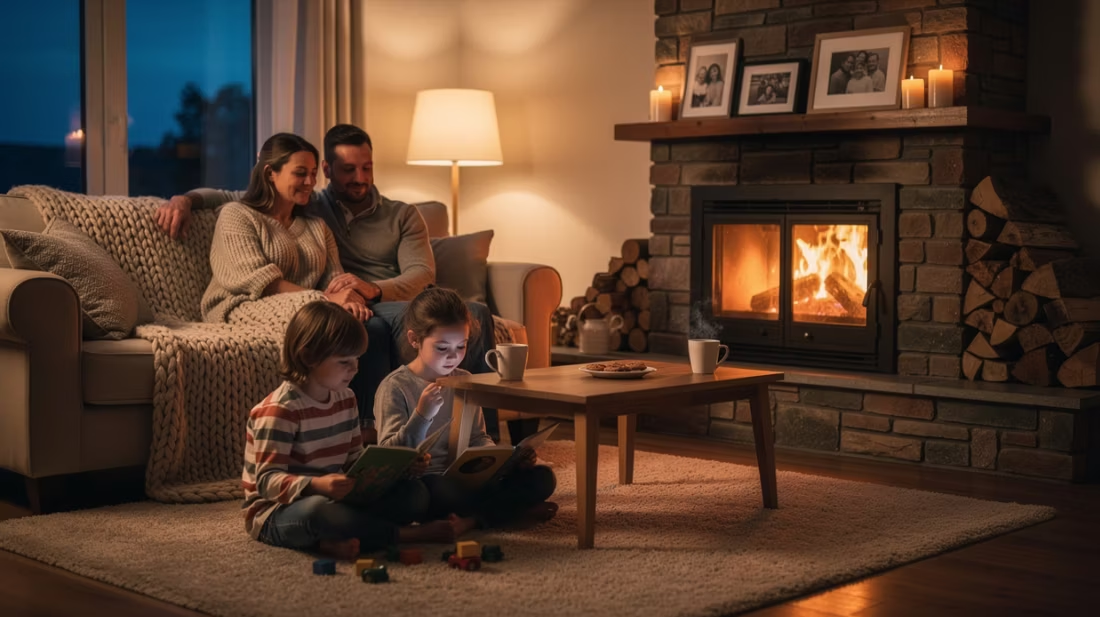
Four fuels. One honest answer for Barnwell County.
Three steps. No salesperson until you're ready.
Tell us about your project
Your zip code, your situation, and the fuel you're leaning toward—or let the answers point you to one.
See what's actually available
The brands dealers within 100 miles genuinely carry—real options, never a catalog mirage.
Get your dealer & Project Guide
A trusted local dealer, plus the free Project Guide & Parts List that names every component of the job.
Frequently Asked Questions
Which fuel works best in Barnwell County?
With such a short heating season and winter lows that average around 34°F, Barnwell County doesn't demand the same heating firepower as colder states—so the choice comes down more to preference and use case than survival. Wood stoves and inserts remain popular for ambiance and supplemental heat, and local oak and hickory burn hot and long enough that you rarely need a catalytic all-nighter unit. Gas fireplaces and stoves—mostly propane in this rural county—are the low-effort option for instant heat on the handful of genuinely cold nights each winter. Pellet stoves, stocked with regional brands like Lignetics and Hamer Pellet Fuel, split the difference: wood-look heat without the daily woodpile chore. Electric fireplaces do real work here too, since the mild climate means a good electric unit can handle supplemental heating in a bedroom or den without straining a breaker. Most Barnwell County homeowners end up choosing based on ambiance and convenience first, heat output second.
Do I need a permit to install a fireplace in Barnwell County?
In most cases, yes. New wood stoves, wood inserts, gas fireplaces, gas inserts, gas stoves, and pellet stoves typically require a building permit through your local jurisdiction's building department, and gas installations also need a licensed gas-fitter for the propane line connection. Wood-burning appliances sold and installed today are required to meet current EPA emissions standards regardless of jurisdiction. Electric fireplaces generally skip the permit process unless you're doing a built-in installation with new wiring or a dedicated circuit. Most local hearth retailers in the county handle permitting as part of the installation quote, so it's rarely something homeowners have to navigate solo.
Are there any wood-burning restrictions in Barnwell County?
No—Barnwell County has no recorded air quality non-attainment status, winter inversion pattern, or wildfire-smoke concern, so there are no curtailment days or voluntary burn advisories like you'd find in a tighter geographic basin. That said, current EPA certification standards still apply to new stove installations, and it's worth choosing a certified unit for efficiency's sake even without local pressure to do so—oak and hickory burn clean in a well-designed EPA stove, and you'll get more heat per cord than in an old uncertified box stove.
What's the typical installed cost across fuel types in Barnwell County?
Ranges vary by fuel and by how much existing infrastructure (chimney, gas line, electrical) is already in place. Wood stove or insert: roughly $4,000–$8,000 installed for most homes, since Barnwell's mild climate rarely calls for the largest, most expensive catalytic units. Gas fireplace, insert, or stove: roughly $4,000–$10,000, with propane tank and line work as the main cost swing in rural parts of the county. Pellet stove or insert: roughly $4,000–$7,000 for a typical install. Electric fireplace: as little as $200–$1,500 for the unit itself, with $300–$1,000 in labor for anything beyond a plug-and-play wall mount. See the county + fuel pages above for cost detail tied to specific local retailer pricing.
How does fireplace service and installation work in a small rural county like Barnwell?
Barnwell County's population is under 11,000 spread across a handful of small towns, so most hearth retailers and service technicians cover the whole county from one location, with some traveling in from nearby Aiken, Orangeburg, or the Augusta, Georgia area for specialty gas or pellet work. That's a manageable radius—most installers can reach Blackville, Williston, or Snelling within an hour of Barnwell. Because the heating season is short, scheduling annual chimney sweeps or gas inspections in the early fall (before the first cold snap) is easier than trying to book a technician once winter actually arrives.
How do I size a fireplace correctly for Barnwell County's climate?
Because Barnwell County only sees a short heating season each year, an oversized unit is a more common mistake here than an undersized one. A stove or insert sized for a much colder climate will run cooler and smokier than it should on Barnwell's typical 30-to-45-degree winter nights, since you'll rarely load it to capacity. A good local dealer will size the unit to your actual square footage and typical low temperatures rather than defaulting to the biggest model on the showroom floor—that's one of the reasons matching with a dealer who knows the local climate matters more than shopping by BTU rating alone.
What is an in-home preview and do I need one?
It's a visit where a hearth professional measures your space, confirms the model you picked actually works in your home, and walks the specs—framing, gas line, venting, finish work—before anything is ordered. Some details you just can't know until you see the house. Never make a down payment without one; it's the single most-skipped step that burns buyers.
Does a fireplace add value to my home?
On average, a fireplace adds back to the home about the same amount you spent installing it. Add the monthly savings from heating the rooms you actually use instead of the whole house—often hundreds of dollars a year—and the value case is strong before you even count what a fire does for how your family uses the room.
Can a fireplace actually lower my heating bill?
Yes—by creating a comfort zone. A furnace heats every square foot of the house just to warm the one room you're in; a gas fireplace on low burns roughly a sixth of the gas a typical furnace does. Set the furnace around 55–60 degrees as a baseline, then heat the rooms your family actually uses. Families who heat this way commonly save $20–$60 a month.
Should the dealer who sells my fireplace also install it?
Ideally, yes. A fireplace project involves vent pipe, gas line, electrical, and often tile or stone. Hire three or four separate trades and you own the liability and the game of telephone between them. One company selling and installing means one accountable party, start to finish—ask about factory training, on-time completion records, and what happens if an inspection fails.
Stove and Fireplace Dealers in Barnwell County
Listings include WhyFire partner dealers, dealers we have verified as authorized for the brands we recommend, and established local businesses that carry hearth products. Every listing shows which one it is. The ones marked Preferred run on WhyFire's software, so they can show you real pricing and book your appointment right here. No manufacturer pays for placement. How we verify dealers →
Thompson Gas - Barnwell
Lower State Gas Company
Holley Heating & Air
Southern Propane- Orangeburg
Carolina Propane
Jennings Air And Mechanical
Advanced Chimney Sweep, LLC
Fireside Outdoor Kitchens
Get matched with a fireplace dealer in Barnwell County.
Tell us about your home and fuel preference, and I'll match you with a trusted local dealer and send over a free Project Guide & Parts List—the exact parts, vent kit, and recommended dealer for your Barnwell County project.
Find Your Fireplace →