
Automated heat built for a five-month prairie winter.
At 483 metres and an average winter low of -18.3°C, this stretch of Central Saskatchewan asks a lot of any heat source. I match homeowners here with a trusted local dealer who can size a pellet stove or insert correctly, then send a free Project Guide & Parts List with the exact vent kit your home needs.
Every Project Starts From One of These Five Situations
Consistent heat without the woodpile or the wait.
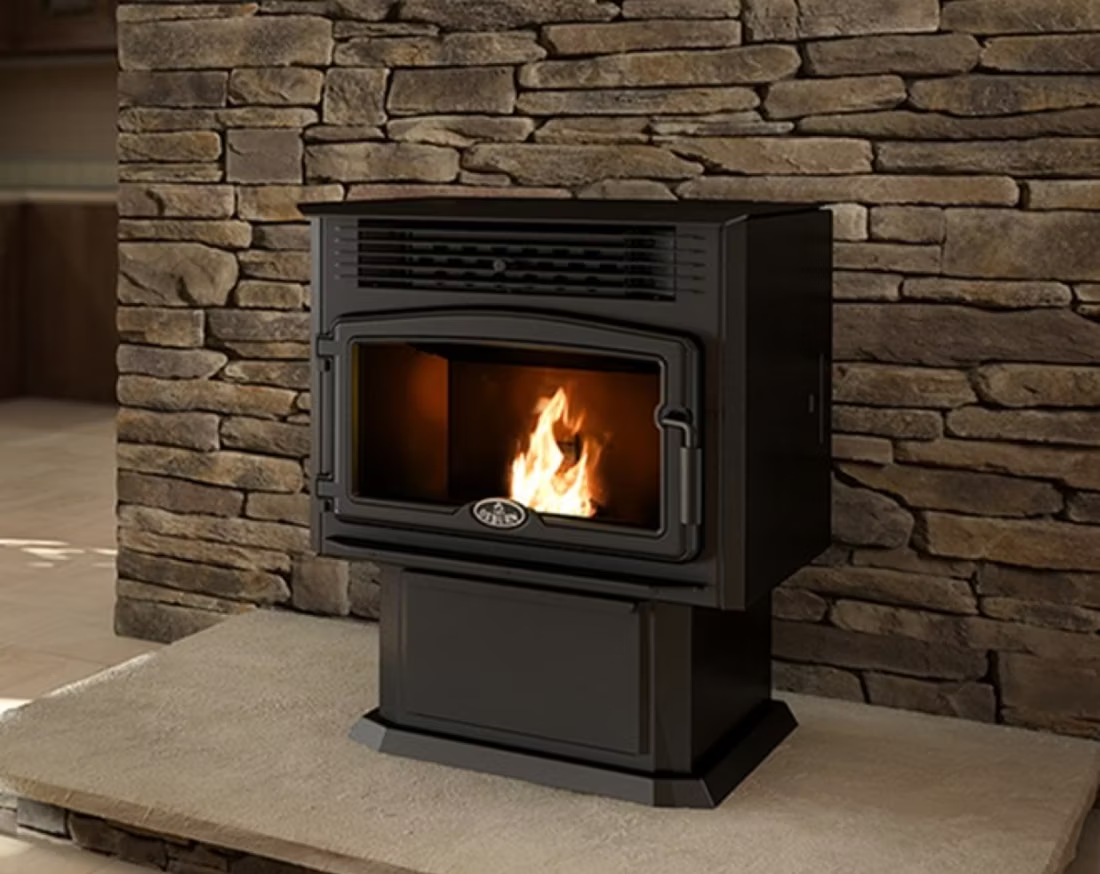
Climate zone 7B doesn't leave much room for a heat source that can't keep up, and this part of Central Saskatchewan sees a long, severe heating season where sub-zero nights start early and hold late. Plenty of households still cut trembling aspen, paper birch, jack pine, or white spruce under a free Saskatchewan Ministry of Environment, Forest Service Branch permit for dead-and-down own-use wood, available year-round on nearby forest fringe land. But splitting, stacking, and feeding a firebox by hand isn't for everyone, and that's where pellet appliances earn their place—thermostat-controlled, hopper-fed heat that runs for a day or more on a single load without anyone tending it.
SaskEnergy natural gas is available across the area, so pellet isn't filling a gap the way it might somewhere off-grid—it's a deliberate choice for homeowners who want a renewable, domestic fuel with gas-like convenience. Regional brands like La Crete Sawmills and Pinnacle Premium run $400 to $575 a tonne locally, and a typical pellet install lands between $6,000 and $10,000 depending on venting and whether you're placing a freestanding stove or an insert. The one tradeoff worth planning around: pellet stoves draw on SaskPower's grid to run the auger and blower, so an extended outage during a January cold snap will stop the appliance unless you've got a battery backup or a wood stove elsewhere in the house as a fallback.
Three steps. No salesperson until you're ready.
Tell us about your project
Your postal code, your situation, and the fuel you're leaning toward—or let the answers point you to one.
See what's actually available
The brands dealers within 100 miles genuinely carry—real options, never a catalog mirage.
Get your dealer & Project Guide
A trusted local dealer, plus the free Project Guide & Parts List that names every component of the job.
Frequently Asked Questions
How much does a pellet stove installation cost in Central Saskatchewan?
Most installs run $6,000 to $10,000 CAD. A pellet insert going into an existing masonry firebox with a straightforward through-wall vent lands toward the lower end. A new freestanding stove in a home without existing venting—not unusual in newer subdivisions around the Central Business District—costs more once you add a full vent run and hearth pad. Your municipal building department requires a permit regardless of which route you take, and most local dealers include that paperwork as part of the quote.
Do I need a permit or inspection for a pellet stove here?
Yes. Your municipal building department issues the installation permit, and CSA B365 governs how the appliance and venting have to be installed. Pellet stoves don't always get lumped in with the WETT inspections wood stoves need, but a lot of insurers in this region ask for one anyway before they'll write or renew a policy—the inspector is really confirming clearances and venting regardless of fuel type. Worth asking your insurer directly before you finalize which model you're buying.
What size pellet stove do I need for a winter with -18°C lows?
With average lows around -18.3°C and stretches that go colder, undersizing is the mistake to avoid. A stove rated for 1,200 to 1,800 square feet is typical for a main living space in this area, and hopper capacity matters as much as BTU output—a larger hopper means fewer 3 a.m. reloads during an extended cold snap, similar to what homeowners deal with in Winnipeg or Edmonton during a hard prairie freeze. A local dealer will size against your actual floor plan and insulation rather than square footage alone.
What happens to a pellet stove if the power goes out?
It stops, which is the main tradeoff against a wood stove. Pellet appliances need electricity to run the auger feeding pellets and the blower pushing heat into the room, and SaskPower outages do happen during winter storms here. Some models accept a battery backup that will carry the unit through a shorter outage, but for a true multi-day outage, a lot of households in Central Saskatchewan keep a wood stove or insert as a backup, burning trembling aspen or jack pine cut under a free Forest Service Branch permit.
Where do pellets come from, and what do they cost locally?
Regional brands including La Crete Sawmills and Pinnacle Premium are the ones most local dealers stock or can order, typically running $400 to $575 a tonne depending on the season and how far in advance you buy. Buying in late summer before demand picks up usually gets you the better end of that range. Pellets need to stay dry—a garage or shed works, but bags sitting directly on a concrete floor or exposed to moisture will swell and jam an auger, so plan storage before delivery day, not after.
Should I get a pellet stove or a gas fireplace instead?
SaskEnergy service covers this area, so gas is a real option alongside pellet, and the choice usually comes down to fuel preference and upfront cost. Gas fireplaces run $6,000 to $15,000 installed and fire instantly with a remote, no fuel storage required. Pellet stoves cost less to install at $6,000-$10,000, burn a renewable domestic fuel instead of a utility-metered one, and give off a visible flame closer to a wood fire—but they need a hopper refill every day or two and won't run without power the way a standing pilot gas unit often will.
How much maintenance does a pellet stove need through a Saskatchewan winter?
Daily ash removal and a weekly burn-pot cleaning are standard once you're running a pellet stove through a long, severe heating season like this one. Plan on a full professional service, including venting and auger inspection, once a year—late summer is the easier time to book, before installers get busy with pre-winter work. Homes running the stove as a primary heat source rather than backup should also have the exterior vent checked mid-season, since a full winter's worth of exhaust can build up faster than expected.
Wood or pellet—which makes more sense for my house here?
Wood, split from trembling aspen, paper birch, jack pine, or white spruce cut under a free Forest Service Branch permit, costs the least in fuel and keeps working during a power outage—a real consideration given how often prairie storms take down lines. Pellet trades that fuel cost for convenience: no splitting or stacking, thermostat control, and a cleaner burn, at the price of needing electricity and a $400-$575 per tonne fuel bill. Some households here run pellet in the main living area for daily convenience and keep a wood stove in a secondary space as backup heat.
Will my insurance company have any special requirements for a pellet stove?
Most insurers want proof the appliance meets CSA B365 installation standards, and many still ask for a WETT inspection even though that certification originated for wood-burning appliances specifically. It's a quick step your local dealer handles routinely—they know which inspectors are active in Central Saskatchewan and can get the paperwork lined up so it doesn't hold up your coverage once the stove is running.
Why do fireplace quotes vary so much?
Because a fireplace is an iceberg—there's more behind the wall than in front of it. A low quote often covers only the unit; the full scope includes vent pipe, gas line or electrical, framing, and the tile or stone that has to come off and go back on. Make every bidder price the whole job. If a dealer can't speak to the full scope with confidence, that's your signal to keep looking.
Is it worth replacing an old fireplace that still sort of works?
Ask three questions: Is it ugly? Is it drafty? Does it actually work? Most old fireplaces fail at least two. Beyond looks, an old unit leaks air around the damper year-round and—if it's gas with a standing pilot—quietly burns a couple hundred dollars a year. A modern replacement seals the wall, heats the room, and changes how the whole space gets used.
How often does a pellet stove need cleaning?
A clean pellet stove is a happy pellet stove. Plan on cleaning the burn pot about once a week when you're burning regularly—ash and clinkers gum up the air holes just like a pellet barbecue. Most pellet stove problems trace back to skipped cleaning that nobody explained up front. Some designs make it easy with a trapdoor burn pot: pull a lever and the gunk drops into the ash pan.
Why is a fireplace insert so efficient?
An insert does two things: it seals the chimney completely, so you stop losing air you already paid to heat, and it radiates warmth into the room through the firebox and glass. Most add a heat-exchange fan that pulls cool room air underneath, wraps it around the hot firebox, and pushes it back out warm. Your home is more efficient before you've even lit the first fire.
Nearby Dealers
Hearth shops serving Central Business District and the surrounding area. Every listing shows whether it is a WhyFire partner, a dealer we have verified as authorized for the brands we recommend, or a local business carrying hearth products. No manufacturer pays for placement. How we verify dealers →
Flo-Essence Plumbing, Hearth & Decor
Artista Interiors Boutique
Timberstone Distribution Saskatoon
E & L Building Contractors
Pellet Brands Stocked Around Central Business District
Typical price runs $400-$575 per ton—buy early-season for the best rates. Manufacturers will point you to the nearest stocking dealer.
La Crete Sawmills
Pinnacle Premium
Get your Central Saskatchewan pellet stove project mapped out.
Tell me about your home and I'll match you with a trusted local dealer and send a free Project Guide & Parts List—sized for winters that average -18.3°C, with the vent kit and parts specified for your project.
Find Your Fireplace →