
Ambiance and heat that plugs into Hydro-Québec's low rates.
Winter lows here average -17.1°C and the season runs long across Val-des-Monts and the wider Outaouais region. An electric fireplace won't replace a woodstove in a lakefront camp, but at $0.078/kWh it's one of the cheapest ways to add real zone heat and ambiance to a room. I'll match you with a trusted local dealer and a plan sized for your space.
Every Project Starts From One of These Five Situations
A simple plug-in against Outaouais winters.
Val-des-Monts sits in rural Outaouais at 141 metres, a municipality dotted with small lakes and cottages rather than a dense urban grid. Wood heat is standard here, split from sugar maple, yellow birch, American beech, and red oak with a Ministère des Ressources naturelles et des Forêts permit running about $1.85/m3 up to 22.5 m3, valid April 1 to March 31. Gas is genuinely rare in this municipality: Énergir's network only reaches parts of greater Montréal and a few urban corridors, and it does not extend out to Val-des-Monts, so a mains gas fireplace simply is not an option for most addresses here. That leaves electric and pellet as the practical alternatives to a wood-burning setup, and electric has one clear advantage: Hydro-Québec bills residential power at roughly $0.078/kWh, among the lowest rates in the country, which makes a plug-in or hardwired electric unit cheap to run as supplemental heat in a bedroom, den, or finished basement.
Most electric fireplace installs in Val-des-Monts run $500 to $1,600, well below wood, gas, or pellet install costs, because there's no chimney, no venting, and no combustion to plan around. A freestanding or wall-mounted unit just needs a standard outlet; a built-in model wired into its own circuit needs an electrician and a permit through the municipal building department, but not a WETT inspection or CSA B365 compliance the way a wood appliance would. That simplicity makes electric a natural fit for the many camps and lakefront cottages scattered through the municipality's lakes, where owners want reliable ambiance and a bit of heat without adding a flue to a seasonal structure.
Three steps. No salesperson until you're ready.
Tell us about your project
Your postal code, your situation, and the fuel you're leaning toward—or let the answers point you to one.
See what's actually available
The brands dealers within 100 miles genuinely carry—real options, never a catalog mirage.
Get your dealer & Project Guide
A trusted local dealer, plus the free Project Guide & Parts List that names every component of the job.
Frequently Asked Questions
How much does it cost to install an electric fireplace in Val-des-Monts?
Typical installs run $500 to $1,600 CAD. A plug-in freestanding or wall-mounted unit sits at the low end since it just needs a standard 120V outlet—a common choice for a cottage or camp around one of the municipality's lakes. A built-in model wired into its own dedicated circuit costs more because it needs a licensed electrician and, depending on the scope, a permit through the municipal building department. Either way you're spending a fraction of what a wood or gas install runs here, since there's no chimney or venting to build.
Will an electric fireplace actually heat a room through a Val-des-Monts winter?
It will hold its own in a single room, but it isn't a whole-home heat source for a place where winter lows average -17.1°C. Most electric fireplace inserts put out around 1,500 watts, roughly 5,000 BTU, which comfortably takes the chill off a bedroom, den, or finished basement but won't carry a whole cottage through a January cold snap the way a wood stove burning seasoned sugar maple or yellow birch would. Think of it as targeted zone heat and ambiance layered on top of your main heat source, not a replacement for it.
What does it cost to run an electric fireplace here?
With Hydro-Québec billing residential power at about $0.078/kWh, a typical 1,500-watt unit running on high costs roughly 12 cents an hour to operate—one of the cheapest supplemental heat sources available in the province. Most owners run theirs on a lower thermostat setting most of the day, which drops that further. Compare that to a $400-$575 per tonne pellet bill or the labour of splitting sugar maple and beech, and the appeal for a den or bedroom is obvious, even if it's not meant to replace your main heat source.
Do I need a permit to install an electric fireplace in Val-des-Monts?
A plug-in unit that runs off an existing outlet generally doesn't need a permit. A built-in or hardwired model tied into a new dedicated circuit does require an electrician and typically a permit through the municipal building department, since it involves new wiring rather than combustion venting. Unlike a wood appliance, there's no WETT inspection or CSA B365 installation code to satisfy—that requirement is specific to wood-burning systems, not electric units.
Electric vs. wood vs. pellet—what makes sense for a Val-des-Monts property?
Wood is still the standard primary heat source across much of Val-des-Monts, with sugar maple, yellow birch, American beech, and red oak cut under an MRNF permit running about $1.85/m3 up to 22.5 m3 a season. Pellet stoves, using regional brands like Granules LG, Energex, or Trebio at $400-$575 a tonne, offer more automated, lower-maintenance heat but still need electricity to run the auger and blower. Electric fireplaces don't compete with either for whole-home heat, but at $0.078/kWh they're the cheapest and simplest way to add ambiance and supplemental warmth to a specific room without touching your chimney or wood supply.
What type of electric fireplace works best for a lakefront cottage?
For seasonal camps and cottages scattered around Val-des-Monts' lakes, a wall-mounted or built-in electric unit is popular because it adds a real focal point to a living room without any venting, chimney, or combustion byproducts to manage while the place sits empty between visits. Freestanding electric stoves are a good option too, especially where owners want something that can move if the cottage layout changes. Either style installs in a fraction of the time a wood or gas project takes, which matters if you're working with a short window before the property gets used again.
Can I put an electric fireplace in a rental unit or basement apartment?
Yes, and it's one of the more common uses in Val-des-Monts, where secondary units and basement apartments are common on larger rural lots. Since a plug-in electric fireplace needs no venting, chimney, or gas line, there's no landlord approval process around combustion appliances the way there would be for wood or gas. It's a straightforward way to add heat and ambiance to a rented space without any structural changes.
Why not just get a gas fireplace instead?
Gas is genuinely uncommon in Val-des-Monts. Énergir's distribution network covers pockets of greater Montréal and a few other urban corridors, but it doesn't reach this municipality, so a natural gas fireplace would mean running on propane instead, which adds tank setup and delivery to the cost. For most homes here, electric is the more practical convenience fuel—no tank, no delivery schedule, and a Hydro-Québec bill that's already one of the lowest rates in Canada.
What happens to my electric fireplace during a power outage?
It goes dark, which is worth planning around in a rural municipality like Val-des-Monts where outages happen during winter storms. Unlike a wood stove burning sugar maple or beech, an electric fireplace has no function without grid power. Most households here that rely on electric for daily ambiance and supplemental heat keep a wood stove or pellet appliance as their real backup for the nights when Hydro-Québec's lines actually go down.
How much does an electric fireplace cost to run?
With the heater on, a typical unit draws about 1,500 watts—at average electric rates that's roughly 20 cents an hour. Run the flame effect alone and it costs pennies; the flames are LED-driven and use about as much power as a light bulb. There's no pilot light, no fuel delivery, and essentially no maintenance.
What fireplace styles should I know before shopping?
Four cover most of the market: screen-front traditional (mesh front, open feel, fits craftsman homes), traditional door set (the classic look you grew up with), modern linear (wide, low, the statement piece for entertaining), and clean face contemporary (no trim—your tile or stone runs right to the fire's edge). Walk in knowing those four terms and you're ahead of most buyers.
Does an electric fireplace need a vent or chimney?
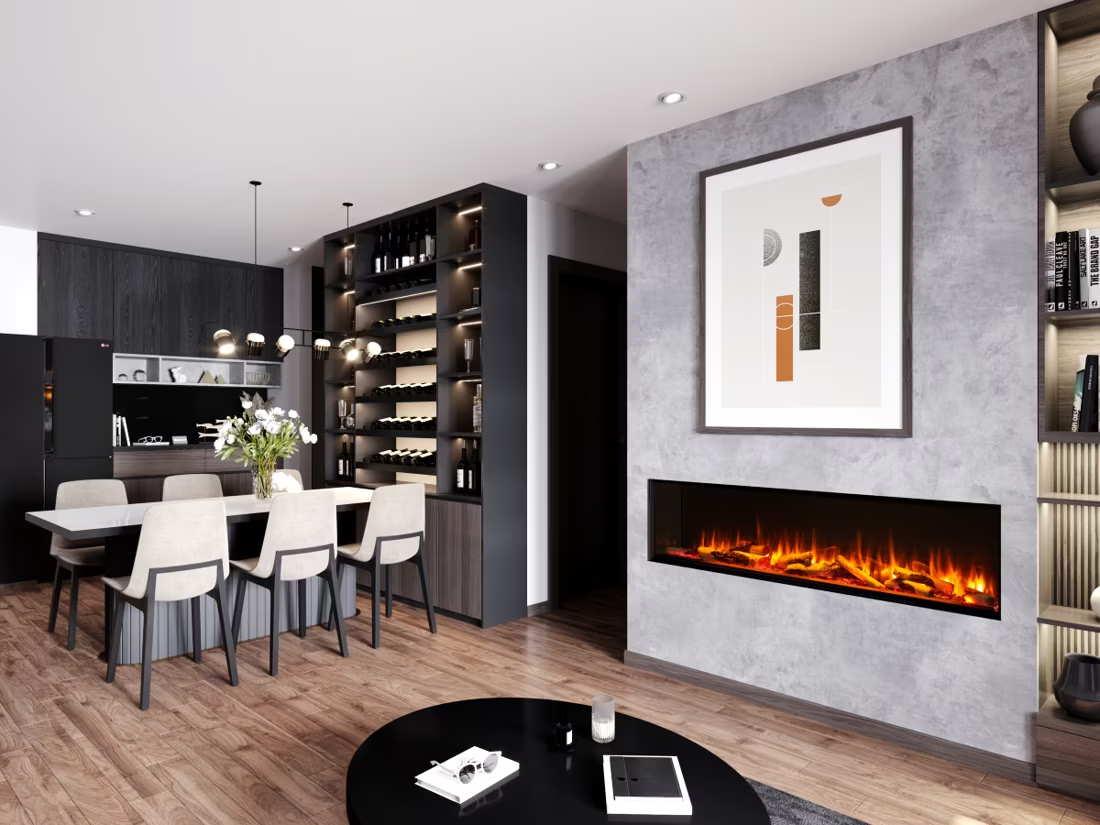
No—that's its superpower. An electric fireplace needs a wall and an outlet, period. No vent pipe, no gas line, no clearances to design around, which is why it works in bedrooms, offices, apartments, and walls where venting a gas or wood unit would be impractical or impossible. Installation is typically the simplest and least expensive of any fireplace type.
Can I put a TV above my fireplace?
Yes—with an asterisk. Fireplaces are hot and TVs don't like heat. Either put a mantel between them to deflect rising warmth, or choose a fireplace with heat-management technology that creates a cool zone on the wall above—the wall stays around 125 degrees, barely warm, while the room still gets full heat. If you like clean lines and don't want a mantel, heat management is the answer.
Nearby Dealers
Hearth shops serving Val-des-Monts and the surrounding area. Every listing shows whether it is a WhyFire partner, a dealer we have verified as authorized for the brands we recommend, or a local business carrying hearth products. No manufacturer pays for placement. How we verify dealers →
Touchette Chauffage & Climatisation
Budget Propane Inc.
Entreprise Proulx
Romantic Fireplaces & Bar B Que
Hubert Heating Limited
Hubert's Fireplaces
Advanced Prefabs Hearth Distribution
Coop Agrodor
Schreiter’s Furniture Store
Fire It Up Fireplaces
Clement Riopel Gaz Propane
Propane Hilliker
Electric Service in Val-des-Monts
An electric fireplace's heater draws about 1,500 watts—pennies per hour at local rates.
Hydro-Québec
Get your free Project Guide & Parts List for a Val-des-Monts electric fireplace.
Tell me about your room, your panel, and whether you're working with a full-time home or a lake cottage, and I'll match you with a trusted local dealer and send a free Project Guide & Parts List sized to your space and Hydro-Québec's rates.
Find Your Fireplace →