
Gas heat in Sainte-Madeleine starts with one question: is your street served?
Énergir's mains reach only parts of the Montérégie region, and a village of under 2,000 people isn't guaranteed coverage. If a natural gas or propane fireplace is right for your home, I'll match you with a local dealer who checks the line first and plans the project around what's actually there.
Every Project Starts From One of These Five Situations
A fuel that works well, if it actually reaches your address.
Sainte-Madeleine is a small municipality in the Montérégie region, not far from Saint-Hyacinthe, sitting at a modest 30 metres of elevation with winters that average a low near -15.1°C and a heating season that runs a good five months of the year, comparable to what a Fredericton or Ottawa household deals with most winters. Most homes here don't run on natural gas at all. Hydro-Québec's residential rate, around 7.8 cents a kilowatt-hour, is among the cheapest electricity in the country, and it keeps baseboard heat and electric fireplaces genuinely affordable, while local woodlots thick with sugar maple, yellow birch, American beech, and red oak supply the households that prefer to burn.
Énergir's distribution network does run through pockets of the Montérégie corridor, but it doesn't blanket every rural municipality, and Sainte-Madeleine sits in mixed territory where one street might be served and the next isn't. That makes a gas fireplace here less a default choice and more a project that starts with confirming what's actually buried under your road. Homes outside Énergir's reach aren't out of luck though—propane, already common for cooking and backup heat on properties throughout this part of Montérégie, runs the same fireplaces and inserts without needing a utility connection at all.
Three steps. No salesperson until you're ready.
Tell us about your project
Your postal code, your situation, and the fuel you're leaning toward—or let the answers point you to one.
See what's actually available
The brands dealers within 100 miles genuinely carry—real options, never a catalog mirage.
Get your dealer & Project Guide
A trusted local dealer, plus the free Project Guide & Parts List that names every component of the job.
Frequently Asked Questions
Is natural gas actually available in Sainte-Madeleine?
Only in parts of it. Énergir's network runs through sections of the Montérégie region near larger centres like Saint-Hyacinthe, but a village of under 2,000 residents doesn't get uniform coverage, and plenty of streets in Sainte-Madeleine simply aren't on the main. The honest first step for anyone considering a natural gas fireplace here is checking your specific address against Énergir's service map—a local dealer familiar with the area will usually do this before quoting anything, rather than assuming the gas is there.
What if my home isn't on Énergir's gas network?
Propane. It's already common on properties throughout this part of Montérégie for cooking, backup heat, and outbuildings, and a propane-fed direct-vent fireplace or insert works essentially the same way as a natural gas unit, just running off a tank instead of a buried line. For most Sainte-Madeleine homes outside Énergir's footprint, propane is the practical route to gas heat rather than a compromise.
How much does a gas fireplace installation cost in Sainte-Madeleine?
Typical installs run $6,000 to $15,000 CAD. A propane tank set with a direct-vent insert into an existing masonry opening lands toward the lower end, while a new built-in unit for a renovation or addition—with fresh gas line runs, venting through a wall, and any Énergir metering work if you're on the network—pushes toward the top. Because gas isn't the default fuel in a village this size, budgeting for the propane tank or the line-extension question up front avoids surprises mid-project.
Why do most homes in Sainte-Madeleine heat with electricity or wood instead of gas?
Cost and infrastructure both point that way. Hydro-Québec's residential rate sits around 7.8 cents a kilowatt-hour, one of the lowest in the country, so electric heat and electric fireplaces are cheap to run without any gas line to install. And Sainte-Madeleine's surrounding Montérégie woodlots supply sugar maple, yellow birch, American beech, and red oak in good supply, which keeps wood stoves and inserts a practical primary or backup heat source for households who prefer to burn. Gas mains were never built out broadly to villages this size when electricity already did the job affordably.
Do I need a permit for a gas fireplace in Sainte-Madeleine?
Yes. You'll need a permit through Sainte-Madeleine's municipal building department, and the gas connection itself—whether Énergir natural gas or a propane tank—has to be done by a licensed gas-fitter under the CSA B149 gas code. That's a different code than the CSA B365 rules that apply to wood-burning appliances, so if you're comparing quotes against a wood project elsewhere in the house, don't expect the same inspection process.
Will my gas fireplace need a WETT inspection?
No. WETT certification applies to wood-burning systems, which insurers in this region commonly require before covering a wood stove or insert. A gas fireplace instead gets signed off by the licensed gas-fitter who handles the hookup under the gas code, and that certificate, along with your municipal permit, is typically what an insurer will ask to see for a gas installation.
Vented or vent-free—what's actually installed in Quebec homes?
Direct-vent is standard here and what most local dealers work with by default. It draws combustion air from outside and exhausts it back outside through sealed venting, which matters through a five-month heating season when the house is closed up tight. Vent-free units exist but come with strict room-sizing limits, and with winter lows near -15.1°C keeping homes sealed for months at a stretch, most dealers serving Sainte-Madeleine steer homeowners toward direct-vent as the safer, lower-maintenance default.
Are there rebates for a gas fireplace in Sainte-Madeleine?
Not really, and it's worth knowing that upfront. Énergir and Transition énergétique Québec programs tend to focus on high-efficiency furnaces, water heaters, and building envelope upgrades, not decorative or supplemental gas fireplaces. If cutting your fuel bill is the goal alongside a hearth upgrade, an electric fireplace paired with Hydro-Québec's low residential rate, or a certified wood insert burning local maple and birch, are the routes more likely to come with incentive dollars attached.
Gas, propane, wood, or electric—what actually makes sense for a Sainte-Madeleine home?
If your street happens to sit on Énergir's network, a natural gas fireplace is a fine, low-maintenance option. If not, propane gets you the same instant-on convenience without the utility question. But for most households in a village this size, the honest comparison is against wood and electric: cordwood from local sugar maple, yellow birch, American beech, or red oak keeps running through a power outage and costs little beyond a cutting permit from the Ministère des Ressources naturelles et des Forêts, while electric heat rides Hydro-Québec's roughly 7.8-cent rate. Gas earns its place mainly for households who want the fireplace experience without hauling wood, and who've confirmed the fuel actually reaches their address.
Can a gas fireplace run on a thermostat?
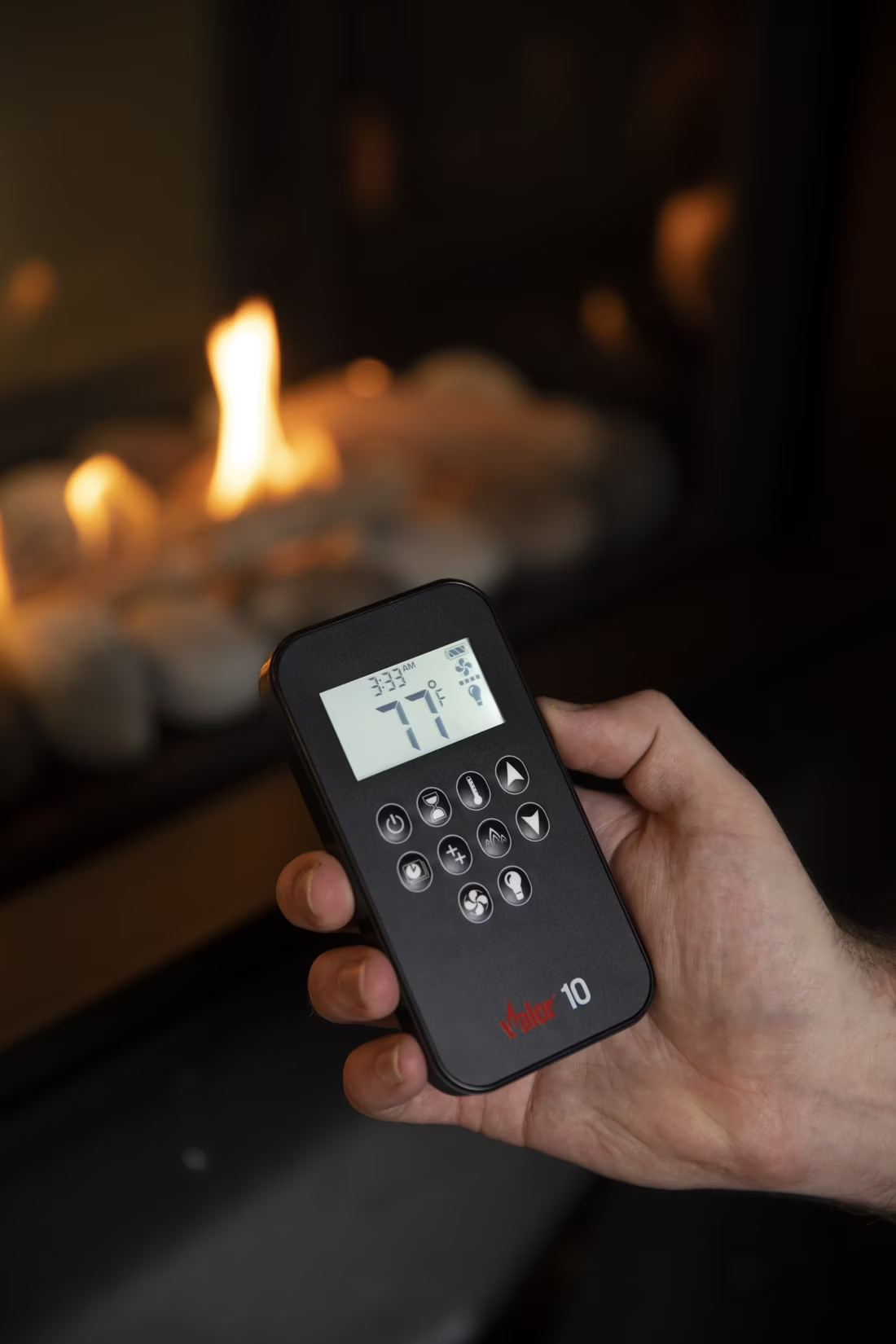
Most modern gas fireplaces can—turn it on and off from the couch with a remote, or set a room temperature and let the fireplace hold the comfort zone for you. If low maintenance matters to your family, this is the feature set that makes gas the convenience pick over wood and pellet.
Why do fireplace quotes vary so much?
Because a fireplace is an iceberg—there's more behind the wall than in front of it. A low quote often covers only the unit; the full scope includes vent pipe, gas line or electrical, framing, and the tile or stone that has to come off and go back on. Make every bidder price the whole job. If a dealer can't speak to the full scope with confidence, that's your signal to keep looking.
Is it worth replacing an old fireplace that still sort of works?
Ask three questions: Is it ugly? Is it drafty? Does it actually work? Most old fireplaces fail at least two. Beyond looks, an old unit leaks air around the damper year-round and—if it's gas with a standing pilot—quietly burns a couple hundred dollars a year. A modern replacement seals the wall, heats the room, and changes how the whole space gets used.
Do I need a permit to install a fireplace?
In most jurisdictions, yes—fireplace and stove installations involve venting, clearances, and often gas or electrical work that gets permitted and inspected. That's a feature, not a hassle: the inspection protects your family and your homeowner's insurance. A professional installer pulls the permit, installs to code, and stands behind the inspection. If someone suggests skipping it, keep looking.
Nearby Dealers
Hearth shops serving Sainte-Madeleine and the surrounding area. Every listing shows whether it is a WhyFire partner, a dealer we have verified as authorized for the brands we recommend, or a local business carrying hearth products. No manufacturer pays for placement. How we verify dealers →
Perfecto Gaz Propane
Suroît Boutique (St-Hyacinthe)
Poele A Combustion D.m. Enr.
Poêles à Combustion Dm
Napert Signature
Piscines Jacques-Cartier
Propane Plus Inc
Arta Boutik
Chauffage Gadbois
Gaz Propane Rainville Inc.
Confort Elite
Actions Multi-Flammes Granby
Thermopompes N & R Sol
Natural Gas Service in Sainte-Madeleine
Confirm service at your address before planning a gas fireplace—a quick call settles it.
énergir
Get your free Project Guide & Parts List for a Sainte-Madeleine gas fireplace.
Tell me about your home and whether you're near Énergir's line or better suited to propane, and I'll match you with a local dealer who checks availability first, then send a free Project Guide & Parts List with the exact vent kit and parts your project needs.
Find Your Fireplace →