
Keep Your Family Warm and Safe—No Matter What
Sainte-Julie sits in sugar maple country with winters that average -15.1°C, and most homes here run on Hydro-Québec electric baseboards day to day. I'll match you with a local dealer who knows the WETT inspection, the MRNF cutting permits, and what's actually installable on your street.
Every Project Starts From One of These Five Situations
Wood heat here backs up cheap electric baseboards, it doesn't replace them.
Sainte-Julie sits in Montérégie's sugar maple country, in climate zone 6A, where winters average a low around -15.1°C and run cold and dry from November into March—closer to what Sherbrooke or Trois-Rivières see most winters than the mild pockets of the Montreal core. That's a real enough season that a lot of long-time residents keep wood heat on hand, less as a design statement than as a backup plan. Sugar maple, yellow birch, American beech, and red oak are the hardwoods that dominate local wood lots and sugarbush thinning operations, and they split, season, and burn as well here as anywhere in the province.
Most Sainte-Julie homes heat primarily with Hydro-Québec electric baseboards, thanks to some of the lowest residential rates in the country at roughly $0.078 per kilowatt-hour, so a wood stove or insert here typically plays a supporting role rather than a primary one. That role matters more than it sounds—Montérégie took some of the worst damage in the 1998 ice storm, and the memory of weeks without power still shapes a lot of local heating decisions. Natural gas, meanwhile, is genuinely rare in this area, since Énergir's lines reach only parts of the region, which leaves wood and pellet as the realistic backup options. Any new install goes through Sainte-Julie's municipal building department under the CSA B365 code, and Montreal's certified-appliance bylaw next door is a useful preview of the same certified, low-emission standard applied here.
Firewood Cutting Permits Near Sainte-Julie
Ministère Des Ressources Naturelles Et Des Forêts (Mrnf)
Three steps. No salesperson until you're ready.
Tell us about your project
Your postal code, your situation, and the fuel you're leaning toward—or let the answers point you to one.
See what's actually available
The brands dealers within 100 miles genuinely carry—real options, never a catalog mirage.
Get your dealer & Project Guide
A trusted local dealer, plus the free Project Guide & Parts List that names every component of the job.
Frequently Asked Questions
How much does a wood stove installation cost in Sainte-Julie?
Most installs here land between $6,000 and $12,000 CAD, and the swing comes from your chimney situation more than the stove itself. A wood insert dropping into an existing masonry firebox—common in the older sectors near Vieux-Sainte-Julie—sits toward the low end. A freestanding stove in a newer bungalow or split-level without a chimney already in place needs a full Class A chimney chase run through the roof, which pushes the job toward $10,000 or more. Either way, a local dealer folds the municipal building department permit and the CSA B365-compliant install into the quote.
What wood should I burn in a Sainte-Julie stove?
This part of Montérégie sits in sugar maple country, and sugar maple, yellow birch, American beech, and red oak are what most local firewood suppliers split and season. Sugar maple and beech both burn dense and hot with a long coal bed, which suits an overnight load on a -15°C January night. Yellow birch lights easier and works well for shoulder-season fires. Whatever species you buy, ask for wood seasoned at least a year—anything green builds creosote fast in a CSA B365-rated system.
Do I need a permit to install a wood stove in Sainte-Julie?
Yes. New wood-burning installations go through Sainte-Julie's municipal building department, and the work itself has to meet the CSA B365 installation code. Most insurers in Quebec also want a WETT inspection on file before they'll cover a wood appliance, so plan on that even if the municipality doesn't require it directly—a dealer who installs regularly in the region will typically arrange both the permit and the WETT sign-off as part of the job.
Where do I get a firewood cutting permit near Sainte-Julie?
Cutting permits for public land in Quebec run through the Ministère des Ressources naturelles et des Forêts, at roughly $1.85 per cubic metre plus taxes, capped at 22.5 cubic metres per permit, valid April 1 to March 31 with regional harvest windows that vary by unit. In practice, most Sainte-Julie households buy split, seasoned cordwood from a private wood lot supplier in Montérégie rather than cutting their own—sugar maple and beech from local sugarbush thinning operations are common and usually already properly dried.
Are there rules about which wood stoves are legal to install near Montreal?
Montreal itself requires wood-burning appliances on the island to be registered and certified to emit no more than 2.5 grams of fine particles per hour, and while Sainte-Julie sits on the south shore rather than the island, the municipal building department here applies its own certified-appliance requirements through the same CSA B365 framework. In practice this means any new stove or insert needs to be an EPA or CSA-certified low-emission unit—standard on nearly everything a hearth dealer sells today—so it's a normal step in permitting, not an obstacle.
What size wood stove do I need for a Sainte-Julie home?
With winter lows averaging -15.1°C and cold snaps that can push colder—similar to what Sherbrooke or Trois-Rivières see most winters—a mid-size stove rated for 1,200 to 2,000 square feet handles most Sainte-Julie homes as a supplemental or backup heat source. Since most homes here already heat primarily with Hydro-Québec electric baseboards, few owners are sizing a stove to carry the whole house; they want enough output to keep the main living area warm through an extended outage, which a mid-size unit does well.
Wood stove or pellet stove—which fits better in Sainte-Julie?
Both are common here, but they solve different problems. A wood stove keeps working with zero electricity, which matters given Montérégie's history with extended outages—this region took the worst of the 1998 ice storm, and plenty of longtime residents still keep a wood stove specifically for that scenario. Pellet stoves from regional brands like Granules LG, Energex, or Trebio, running $400 to $575 a tonne, burn cleaner and are easier to load daily, but the auger and blower need power to run. If outage resilience is the priority, wood wins; if daily convenience matters more and a generator is part of your plan, pellet is worth a look.
How often does a wood stove need to be swept in Sainte-Julie?
An annual sweep and inspection before the season starts—ideally September or early October—is the standard recommendation, and it's usually also a condition of keeping your WETT inspection current for insurance purposes. Homes running a stove as genuine backup heat through Montérégie's cold season, burning dense hardwoods like sugar maple or red oak, tend to build creosote more slowly than softwood-heavy regions, but skipping the annual check is still the most common way a WETT certification lapses.
Is natural gas an option instead of wood in Sainte-Julie?
Not really, at least not easily. Énergir's distribution network reaches only part of Montérégie, and gas fireplace availability here is genuinely rare compared to Ontario or western Canada—most Sainte-Julie homes heat with Hydro-Québec electricity and use wood or pellet as the backup or ambiance layer. If you're set on gas, a dealer can check whether your street sits on an Énergir line, but for most homeowners here wood remains the more realistic backup-heat choice, especially given the outage risk that comes with a serious ice storm.
Why do fireplace quotes vary so much?
Because a fireplace is an iceberg—there's more behind the wall than in front of it. A low quote often covers only the unit; the full scope includes vent pipe, gas line or electrical, framing, and the tile or stone that has to come off and go back on. Make every bidder price the whole job. If a dealer can't speak to the full scope with confidence, that's your signal to keep looking.
Louvered or clean face—which fireplace front is better?
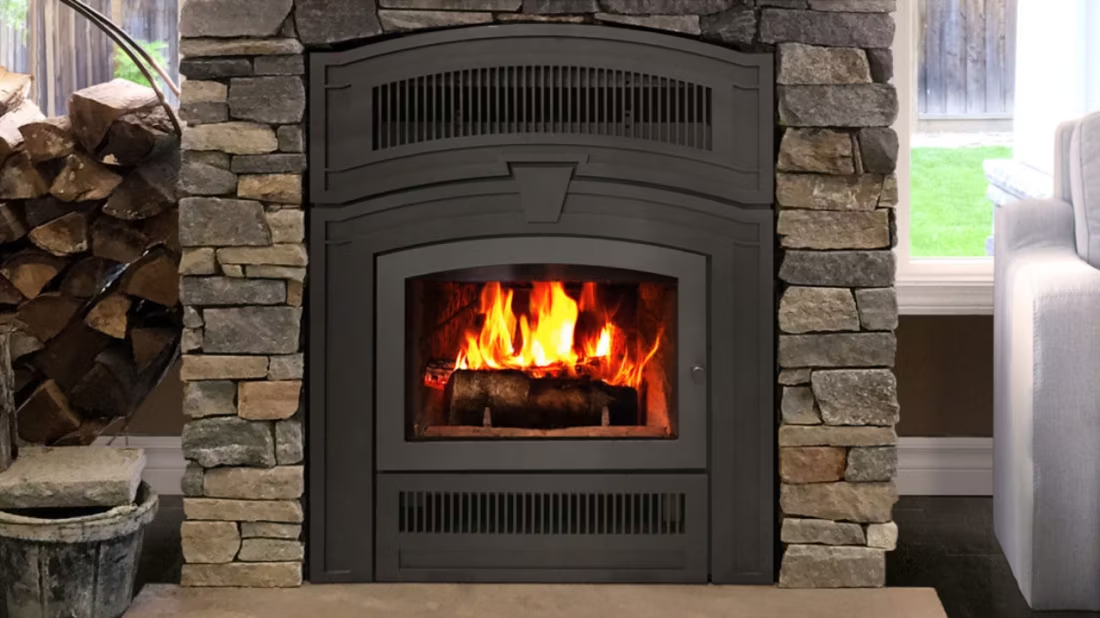
Louvered fronts have grill work above and below the glass for airflow, move heat a little better with a fan, and suit traditional mantels. Clean face designs drop the louvers entirely so finish work runs to the fire's edge—they fit both modern and traditional rooms. When we did our own home we chose clean face: a big viewing area beat a little extra airflow. It depends on your room, not on a rulebook.
Why is my open fireplace making my house colder?
Open fireplaces suck—literally. As the fire burns, it consumes air your furnace already paid to heat and pulls it out through the chimney, so the house is actually colder after the fire goes out than before you lit it. An insert fixes this: it seals the chimney, puts fixed glass across the front, and turns that hole in your house into a real heat source.
What's the difference between an insert and a zero-clearance fireplace?
An insert is a fireplace that slides into a pre-existing wood-burning fireplace—if you don't have one, there's nothing to insert it into. A zero-clearance fireplace is built into a framed wall, which makes it the answer for remodels and new construction. Simple test: existing masonry fireplace means insert; blank or framed wall means zero-clearance.
Nearby Dealers
Hearth shops serving Sainte-Julie and the surrounding area. Every listing shows whether it is a WhyFire partner, a dealer we have verified as authorized for the brands we recommend, or a local business carrying hearth products. No manufacturer pays for placement. How we verify dealers →
Napert Signature
Propane Plus Inc
Arta Boutik
Perfecto Gaz Propane
Confort Elite
Foyer Universel Montreal Inc. (A.m.f.)
Pro Du Foyer
Noeea Foyers Rive-Nord
Piscines Jacques-Cartier
Suroît Boutique (St-Hyacinthe)
Noréa Foyers Montréal
Nergiflex
Get your free Project Guide & Parts List for a Sainte-Julie wood heat project.
Tell me about your home and I'll match you with a local dealer who installs regularly in Montérégie, and send a free Project Guide & Parts List—sized for -15°C nights, with the chimney components, WETT-ready installation details, and permit paperwork mapped out.
Find Your Fireplace →