
Before you buy a gas fireplace, find out if gas even reaches your street.
Pointe-du-Lac sits in the Saguenay/Lac-Saint-Jean region, where winter lows average -21.4°C and Énergir's lines cover only pockets of Quebec. Most homes here heat with electric baseboards or wood, so before we talk fireplace styles, we check whether your address is actually on a served gas line, or whether propane is the realistic path.
Every Project Starts From One of These Five Situations
Here, gas is the exception, not the rule.
Pointe-du-Lac's winters are long and serious: average lows near -21.4°C, a heating season stretching from October into April, and a climate zone (7A) that puts it closer to the demands of Saguenay or Chibougamau than to Montréal's milder river valley. Most homes in the Saguenay/Lac-Saint-Jean region heat with Hydro-Québec electricity, at roughly $0.078 per kWh, among the cheapest residential power in the country, or with wood stoves burning sugar maple, yellow birch, American beech, and red oak cut under Ministère des Ressources naturelles et des Forêts permits. Natural gas, by contrast, is genuinely uncommon: Énergir's pipeline network was built to serve the greater Montréal corridor, the south shore, and a handful of other urban spines, and it does not run through most of this region.
That doesn't rule out a gas fireplace, it just changes the starting question. If your street happens to sit on an Énergir line, a direct-vent gas insert or built-in unit is a real option, typically running $6,000 to $15,000 CAD installed depending on gas line work and venting. For most homes here, though, the practical path to gas heat is a propane-fed unit with its own tank, sized and permitted the same way. Either route goes through the municipal building department, follows the CSA B365 installation code, and is worth pricing against a wood or pellet setup before you commit, since electricity and wood remain the default heat sources in this part of Quebec.
Three steps. No salesperson until you're ready.
Tell us about your project
Your postal code, your situation, and the fuel you're leaning toward—or let the answers point you to one.
See what's actually available
The brands dealers within 100 miles genuinely carry—real options, never a catalog mirage.
Get your dealer & Project Guide
A trusted local dealer, plus the free Project Guide & Parts List that names every component of the job.
Frequently Asked Questions
Is natural gas actually available in Pointe-du-Lac?
In most cases, no. Énergir's distribution network was built around the greater Montréal area, the south shore, and a few connected urban corridors, and it doesn't extend into most of the Saguenay/Lac-Saint-Jean region. Pointe-du-Lac sits outside its served streets almost everywhere. Before pricing a natural gas fireplace, it's worth confirming with Énergir directly whether your specific address has a line nearby. If it doesn't, which is the common outcome here, a propane-fed fireplace delivers the same on-demand flame without needing a utility hookup.
How much does a gas fireplace installation cost here?
Budget $6,000 to $15,000, whether you end up on natural gas or propane. The low end covers a direct-vent insert going into an existing masonry opening with a short gas run; the top end covers a new built-in unit with a fresh propane tank set or an extended gas line, plus venting through a wall or roof. Homes relying on propane should also factor in the tank itself, rented or owned, since that's a separate line item most Énergir-served homes skip.
Why do most homes in Pointe-du-Lac heat with electricity or wood instead of gas?
It comes down to what's actually built to the street. Hydro-Québec's residential rate, about $0.078 per kWh, is low enough that electric baseboards and electric-forward heat pumps are the default in new construction across the Saguenay/Lac-Saint-Jean region. Wood is the traditional backup and primary source in older homes, with sugar maple, yellow birch, American beech, and red oak all common species cut locally under Ministère des Ressources naturelles et des Forêts permits. Gas never built out this far because pipeline economics favoured the denser Montréal corridor instead.
Can I convert an existing wood fireplace to propane gas?
Yes, and it's a reasonable project for an older masonry fireplace that's become inconvenient to load and clean. A propane insert typically slides into the existing firebox with a liner and a new gas line to an outdoor tank, generally landing in the $6,000-$9,500 range depending on tank placement and how far the line has to run. If your current wood appliance is older and uncertified, converting also sidesteps any future WETT inspection questions that insurers commonly ask about on wood-burning units.
What permits does a gas fireplace installation need in Pointe-du-Lac?
You'll need a building permit through the municipal building department, and the gas-fitting work itself has to follow CSA B365 code, typically done by a licensed gas technician regardless of whether you're tying into an Énergir line or setting up a standalone propane tank. Most local dealers who install here handle the paperwork and inspection scheduling as part of the job, which matters more in a region where gas work is less routine for building staff than wood or electric permits.
Vented vs. vent-free—does it matter for a climate this cold?
It does. Direct-vent units draw combustion air from outside and exhaust sealed gases back outdoors, which is the right call for a home built to hold heat through -21.4°C nights. You don't want a vent-free unit adding moisture and combustion byproducts to a tightly sealed house through a six-month heating season. Vent-free units are legal in Quebec within room-size limits, but most dealers serving the Saguenay/Lac-Saint-Jean region default to direct-vent for exactly this reason.
Will a gas fireplace still work if the power goes out?
Most will, with the right ignition system. Units with intermittent pilot ignition run on AA battery backup that kicks in automatically, while some models, Valor is a common example, generate their own current off the pilot's thermocouple and need no battery at all. That matters here: ice storms and heavy snow loads periodically knock out Hydro-Québec service in this region, and a gas fireplace that keeps working without grid power is a real advantage over an electric-only heat source.
What's the practical difference between running propane versus natural gas here?
Natural gas, where Énergir actually reaches, is piped continuously and billed on usage with no tank to manage. Propane requires an on-site tank, rented or owned, refilled by delivery truck, and it costs more per unit of heat, but it works anywhere regardless of pipeline infrastructure. Since most of Pointe-du-Lac falls outside Énergir's served area, propane is the fuel path the majority of local gas fireplace buyers actually end up choosing, even though the appliance itself looks and operates almost identically either way.
Gas, wood, or pellet—which makes the most sense for a Pointe-du-Lac home?
Wood, burning local sugar maple, yellow birch, American beech, or red oak, remains the traditional choice and keeps working without electricity or a fuel delivery truck, a real plus given regional storm outages. Pellet stoves using Quebec brands like Granules LG, Energex, or Trebio, at roughly $400-$575 a ton, burn cleaner and store more compactly than cordwood, typically installing for $6,000-$10,000. Gas, given that Énergir barely touches this region, usually means a propane setup at $6,000-$15,000 installed, a reasonable option if you want instant on-demand flame without stacking wood, but not the default most of your neighbours have chosen.
Can a gas fireplace run on a thermostat?
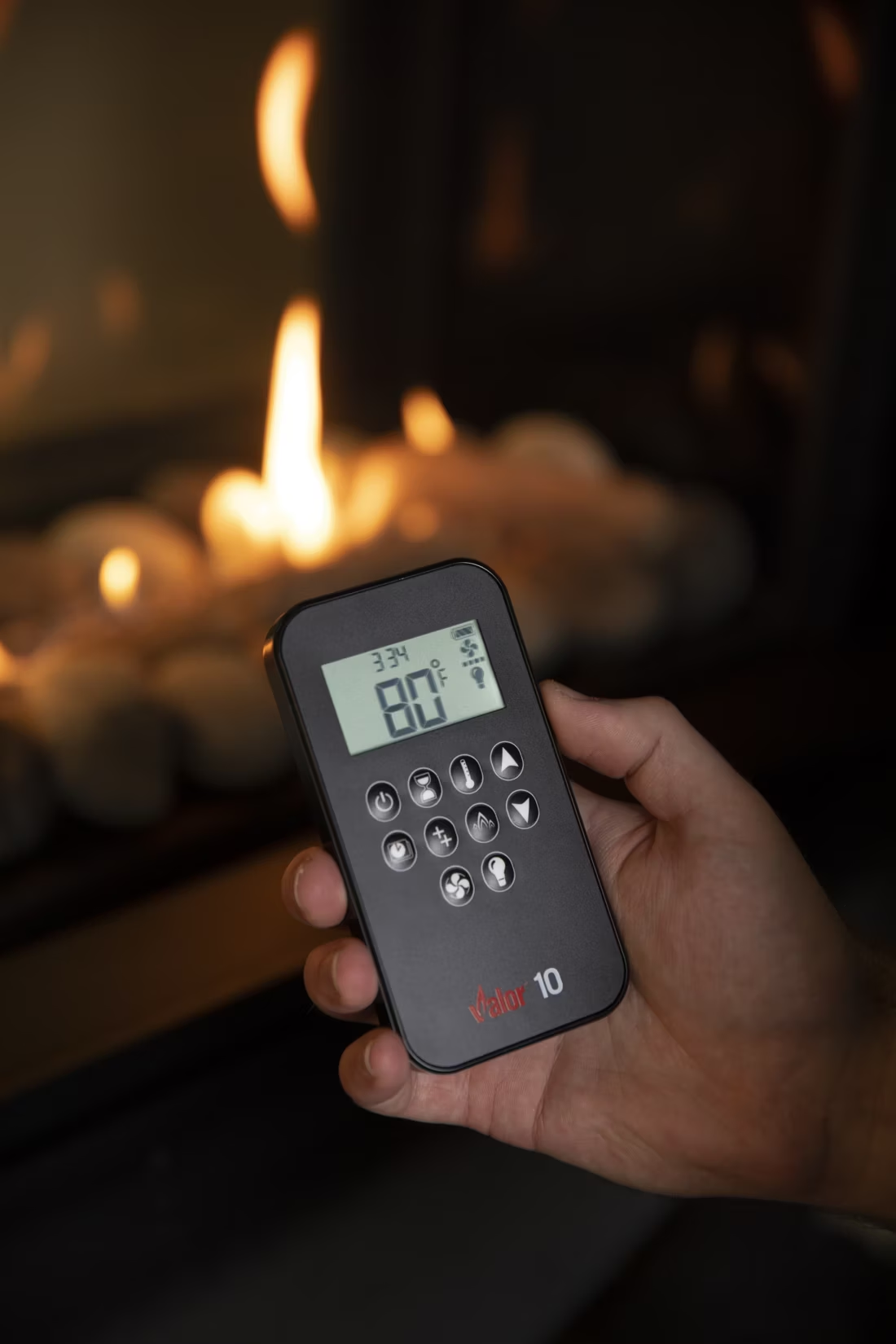
Most modern gas fireplaces can—turn it on and off from the couch with a remote, or set a room temperature and let the fireplace hold the comfort zone for you. If low maintenance matters to your family, this is the feature set that makes gas the convenience pick over wood and pellet.
Why do fireplace quotes vary so much?
Because a fireplace is an iceberg—there's more behind the wall than in front of it. A low quote often covers only the unit; the full scope includes vent pipe, gas line or electrical, framing, and the tile or stone that has to come off and go back on. Make every bidder price the whole job. If a dealer can't speak to the full scope with confidence, that's your signal to keep looking.
What does it take to replace an existing fireplace?
Fireplaces are like icebergs—bigger behind the wall than in front of it. Replacement means removing the surrounding tile or stone (the finish material laps onto the fireplace face), pulling the old unit, setting the new one in the same enclosure, and re-finishing the wall. A hearth professional can determine what's behind your wall without demolition during an in-home preview.
Why is my open fireplace making my house colder?
Open fireplaces suck—literally. As the fire burns, it consumes air your furnace already paid to heat and pulls it out through the chimney, so the house is actually colder after the fire goes out than before you lit it. An insert fixes this: it seals the chimney, puts fixed glass across the front, and turns that hole in your house into a real heat source.
Nearby Dealers
Hearth shops serving Pointe-du-Lac and the surrounding area. Every listing shows whether it is a WhyFire partner, a dealer we have verified as authorized for the brands we recommend, or a local business carrying hearth products. No manufacturer pays for placement. How we verify dealers →
Bmr Saint-Bruno – Nutrinor Quincailleries
Bmr Saint-Cœur-de-Marie – Nutrinor Quincailleries
Bmr Saint-Prime – Nutrinor Quincailleries
Ventil-Air 2001 Inc
Maçonnex (Saguenay)
Rénomax Mistassini
Bmr Normandin – Nutrinor Quincailleries
Natural Gas Service in Pointe-du-Lac
Confirm service at your address before planning a gas fireplace—a quick call settles it.
énergir
Get your free Project Guide & Parts List for a Pointe-du-Lac gas fireplace project.
Tell us about your home and your street, and whether you're hoping for an Énergir line or a propane setup. We'll match you with a trusted local dealer who can confirm what's actually available near you, and send a free Project Guide & Parts List with the exact vent kit and parts your project needs.
Find Your Fireplace →